Table of Contents
In the BBC’s Planet Earth II, a newly hatched marine iguana breaks free of racer snakes and scrambles up volcanic rocks. The chase was filmed on Fernandina, one of Ecuador’s Galápagos Islands, where hatchlings cross exposed ground between their nests and the shore.
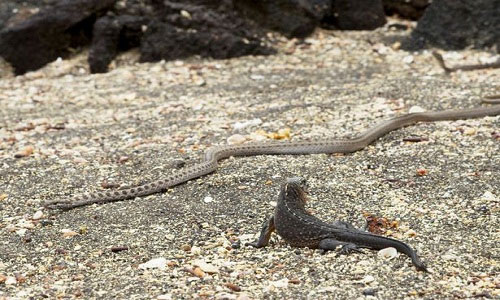
Why were so many snakes in one place?
As the tide rose, hatchlings had to pass a wall of volcanic rock to reach the shore. Racer snakes waiting there reacted as the small iguanas moved through. The BBC’s account of filming explains how the tide and the terrain funneled the hatchlings past the snakes. The footage shows several predators responding to the same prey.
What makes marine iguanas unusual?
Marine iguanas live only in the Galápagos. They are the only lizards that forage at sea. They graze on algae growing on coastal rocks, and larger individuals can dive for food. The Galápagos Conservation Trust’s species profile explains how the lizards are adapted to this habitat.
Related Articles
 Cobra snakes its head in a beer can and an unexpected ending
 The otters 'invited each other' to the shore to watch the iguanas fight
 Identify poisonous snakes in Vietnam
 Baby Three Wallpaper, Baby Three Wallpaper
 Spectacular escape screen of giant octopus through small holes
 The horrifying secret about the scary 'cold blood assassin' in nature is revealed
Reader Comments 0
Sign in with email or Google to join the discussion.