Table of Contents
Rumors suggest Apple is developing a touchscreen MacBook Pro, expected to launch in 2026. The move goes against Steve Jobs' previous views, but fits with the trend of combining the Mac and iPad.
In 2010, during a product launch, Steve Jobs – Apple's co-founder and CEO at the time – openly opposed the idea of a touchscreen MacBook. He called it an 'ergonomic disaster', because according to user testing results, having to constantly reach up and touch the screen vertically would quickly tire out the arm.
Yet more than a decade later, Apple seems willing to ignore its founder's views to enter this 'game'.
Mac and iPad: The lines are blurring
According to analyst Ming-Chi Kuo, the first Mac to support touch will be the MacBook Pro with an OLED screen, expected to enter mass production in late 2026. Apple will use On-cell touch Screen technology, which is already very familiar on Samsung's Galaxy smartphones.
Notably, the low-cost MacBook model running on iPhone chips – expected to launch in late 2025 – will Not have A touchscreen. It will not be until the second generation of this model, expected in 2027, that the feature may appear. The reason, according to Kuo, is that Apple recognizes the working habits of iPad users and believes that touch will help improve productivity.
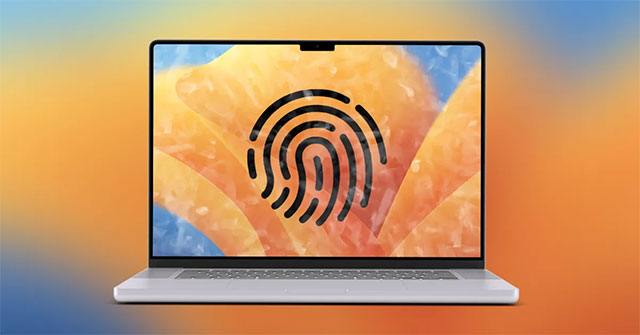
In fact, rumors of a touchscreen Mac have been around for a long time. In 2023, Bloomberg reporter Mark Gurman revealed that Apple engineers were 'quietly involved in the project'. And if you look back, Apple also experimented with touch on the Mac with The Touch Bar (2016) - a thin OLED bar that replaced the function keys. Despite many good ideas, the Touch Bar was eventually killed.
It is worth mentioning that the latest version of macOS – MacOS Tahoe – has been designed in the Liquid Glass Style with rounded details, larger buttons, and a more open interface. Many people believe that this is the preparation step for a 'touch-friendly' Mac operating system in the future.
Over the years, Apple has continued to blur the lines between Mac and iPad. From bringing M-series Chips to the iPad Pro (2021), to features like Stage Manager (iPadOS 16) or the full window system on IPadOS 26. Not to mention Universal Control On macOS Monterey – allowing you to share your mouse and keyboard between your Mac and iPad, and even drag and drop files back and forth smoothly.
All of these pieces of the puzzle have led many to believe that a touchscreen MacBook is just a matter of time.
If Steve Jobs were still alive, he would probably still be against this idea. But Apple today is not afraid to try things that were once considered 'impossible'. And who knows, in a few years we might see a touch-sensitive MacBook Pro – one that combines the power of a Mac with the convenience of an iPad.
FAQ
What should you know about apple may soon launch a touchscreen MacBook pro?
In practical terms, rumors suggest Apple is developing a touchscreen MacBook Pro, expected to launch in 2026. The move goes against Steve Jobs' previous views, but fits with the trend of combining the Mac and iPad.
Why does apple may soon launch a touchscreen MacBook pro matter?
The article highlights that mac and iPad: The lines are blurring According to analyst Ming-Chi Kuo, the first Mac to support touch will be the MacBook Pro with an OLED screen, expected to enter mass production in late 2026.
What is the main takeaway?
The main takeaway is that notably, the low-cost MacBook model running on iPhone chips – expected to launch in late 2025 – will Not have a touchscreen.
Related Articles
 MacBook Pro Version Remembers Steve Jobs4 minutes read
 New MacBook Pro Launches Steve Jobs Birthday Right4 minutes read
 Steve Jobs Has Correctly Predicted E-commerce Since 19966 minutes read
 What's the New MacBook Pro Hot?7 minutes read
 The Truth About Steve Jobs: Is He a God or a Pervert?7 minutes read
 Apple Celebrates 3 Years of Losing Steve Jobs Like?4 minutes read
Reader Comments 0
Sign in with email or Google to join the discussion.