Table of Contents
You can open an XML file in a browser or text editor. For structured editing on Windows, try Microsoft XML Notepad. If you need to check an XSD schema or run an XSLT transformation, choose an editor that supports that task.
Use a browser or text editor for a quick look
Open the XML in a browser to inspect it, or use a text editor to read and change the source. Save a copy before editing data from another program. If it reports a parse error, check the line and column it identifies for mismatched tags or an unescaped character.
Five tools from the original comparison
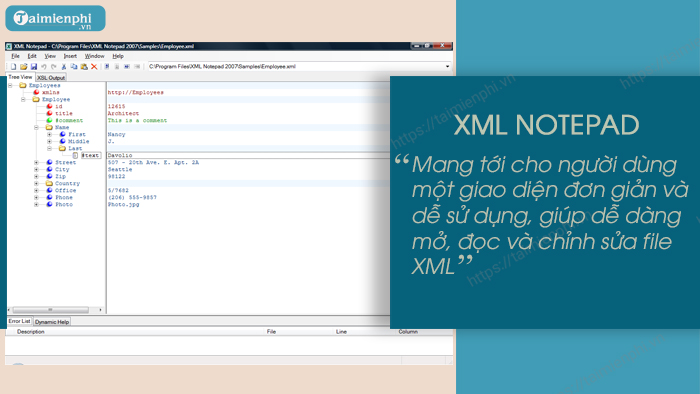
XML Notepad for tree editing
Microsoft XML Notepad shows elements and attributes in a tree, making nested documents easier to navigate. It can also report validation errors when a suitable schema is available.
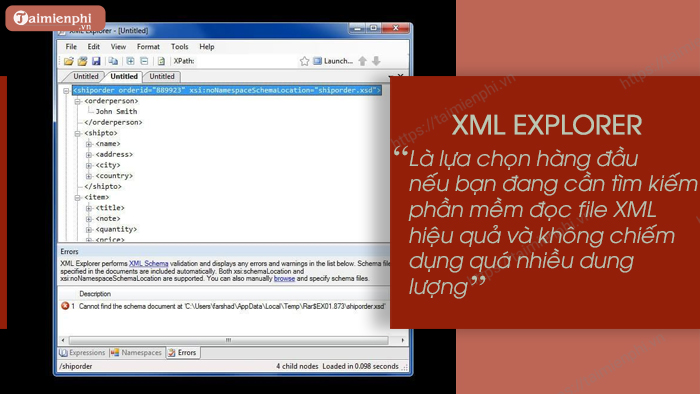
XML Explorer for a read-focused workflow
Use a tree viewer to navigate elements when editing isn’t the goal. If you need to inspect a large export, test the tool with a copy and check its memory use. The practical limit depends on the file and your PC.
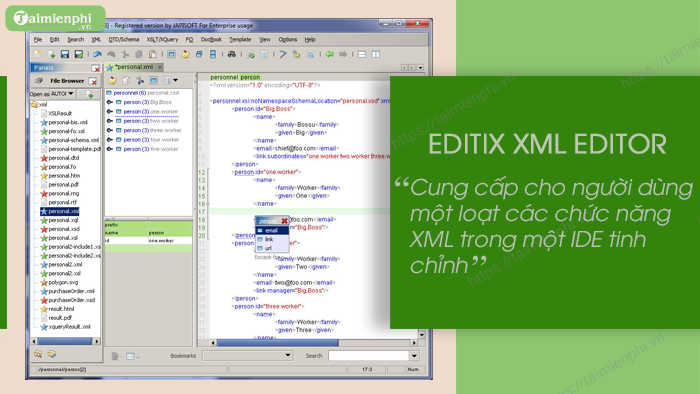
EditiX for XPath and XSLT
Consider an XML-focused editor if your work includes testing XPath expressions or transforming documents with XSLT. Verify support for the version your project requires.
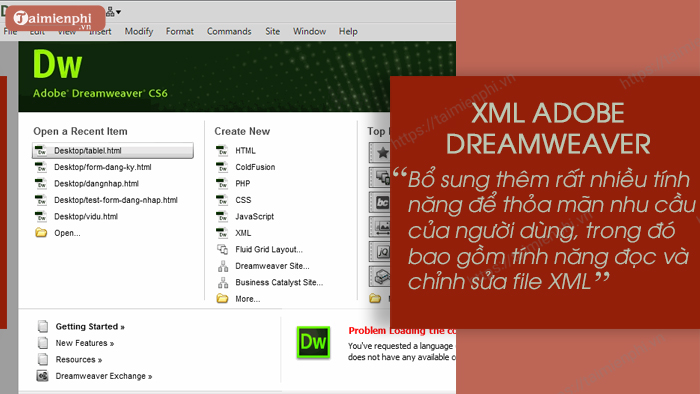
Dreamweaver for an existing web workflow
If you already use Dreamweaver, you can inspect XML source alongside related web files. You don’t need to install it just to view an XML document.
File Viewer Plus for mixed file types
Consider a general-purpose viewer when you need to identify and inspect several kinds of files. Check its current support for your format before relying on it for editing or validation.
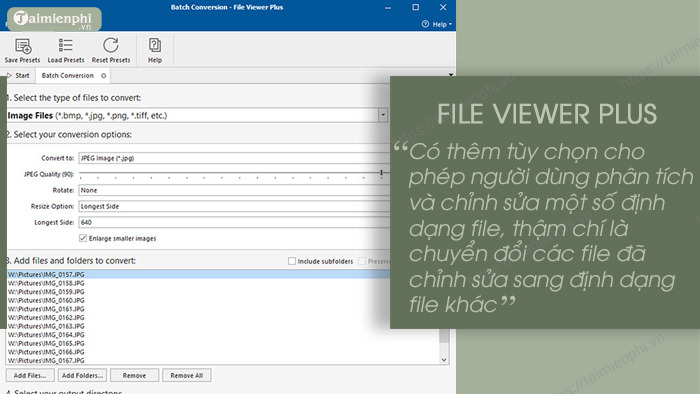
For an overview of the format and opening options, see what an XML file is and how to open it.
Related Articles
 Top 5 best ISO file reading software 2020
 To 'read long-term quickly' please follow this method immediately
 What is an MP3 file? What software do you listen to MP3 music on your computer?
 16 best free PDF reading software
 What are H.264 files? Software that supports reading popular H.264 files
 Summary of the best free PDF reading software
Reader Comments 0
Sign in with email or Google to join the discussion.