Table of Contents
It's not that older people can't tell the difference between truth and falsehood. It's just that they're more partisan.
The world is awash with misinformation, and social media is a constant source of misinformation. We've all been duped by fake news, perhaps without even realizing it. We've probably even shared some of it ourselves. But according to a new study, adults 55 and older are significantly more likely to share political misinformation.
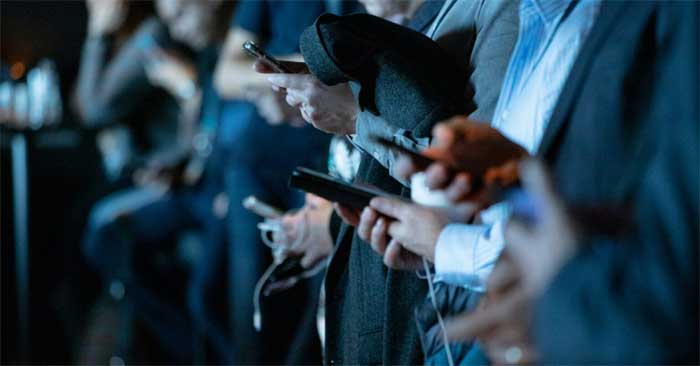
Interestingly, It's not that older You can't tell the difference between real and fake. It's that they're more partisan.
Confirmation bias is a powerful factor
Modern life bombards us with more information than our brains are designed to process. To cope, our minds use shortcuts—thinking methods that help us make sense of the noise. Confirmation bias is one of the most common. We tend to seek out and prioritize information that confirms what we already believe, while dismissing facts that challenge those beliefs.
Prioritizing information that fits our existing beliefs allows us to make decisions more quickly. This makes sense from an evolutionary perspective; it also explains why partisanship is so hard to escape.
Age tends to exacerbate confirmation bias, as some research has shown. Studies have also shown that older adults tend to share more misinformation. It might be easy to attribute this to a lack of familiarity with technology or cognitive decline, but confirmation bias is more likely to be the cause.
In 2022, Van Boven and co-author Ramos, then a visiting doctoral student at the Brazilian School of Public Administration and Business (FGV-EBAPE) in Rio de Janeiro, decided to dig deeper.
At the time, misinformation storms were spreading across both countries surrounding the upcoming midterm elections in the United States and the contentious runoff election between presidential candidates Lula da Silva and Jair Bolsonaro in Brazil.
Researchers recruited 700 participants in Brazil and 1,700 in the United States, aged 18 to 80.
Participants viewed news headlines related to political events in their countries. Some portrayed Republican or conservative ideology in a positive light. Others portrayed Democratic or liberal ideology. Participants were unaware that some of the information had been flagged as false by fact-checking websites.
For example, a false, pro-Republican message circulating widely in the United States read: ' Pope Frances shocks the world and endorses Donald Trump for President .'
Another misleading, pro-liberal headline that has been circulating widely in Brazil reads: ' Bolsonaro wants to cut civil servant salaries by 25%. '
Participants were asked: ' How likely are you to share this news on your social networks? ' In a follow-up experiment, participants were also asked whether this statement, to the best of their knowledge, was true or false.
Researchers also assessed respondents ' political ideology and ability to ' Transcend intuition and analytical thinking '.
Older adults are also generally better at analytical thinking and distinguishing fake news from real news. However, those aged 55 and older are significantly more partisan. This bias, observed in both Brazilians and Americans, means that older adults are less likely to spot fake news within their own ideology, and more likely to spot it within other ideologies.
' They have different standards for judging evidence depending on whether it accurately reflects their views, ' said Van Boven.

What should we do about misinformation?
Most people have biases to some degree. We also know that social media can exacerbate those biases and create ' Echo chambers ' where partisanship becomes extreme. Most research recommends that people try to avoid this.
' Our research shows that encouraging people to behave in less politically biased ways when communicating on social media is equally important ,' said Van Boven.
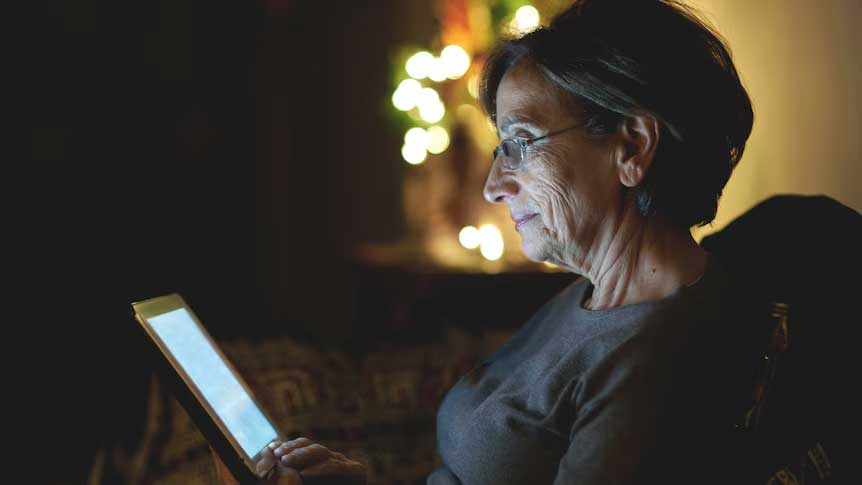
Van Boven recommends that people take an honest and thoughtful look at what they share and try to evaluate their own biases. He also argues that it's important not to be hostile to people with whom you disagree politically.
The study was published on ApaPsycNet.
FAQ
What should you know about here's why older people share more fake news even though they're?
In practical terms, it's not that older people can't tell the difference between truth and falsehood. It's just that they're more partisan.
Why does here's why older people share more fake news even though they're matter?
The article highlights that older adults are also generally better at analytical thinking and distinguishing fake news from real news.
What is the main takeaway?
The main takeaway is that this bias, observed in both Brazilians and Americans, means that older adults are less likely to spot fake news within their own ideology, and more likely to spot it within other ideologies.
Related Articles
 AI Tools for Detecting Fake News May Not Be as Effective as You Think5 minutes read
 Identify Fake News: How to Distinguish True Fake News4 minutes read
 Facebook, Google, Twitter Tightly Control Information Related to4 minutes read
 WhatsApp Has a New Strategy to Prevent the Spread of Fake3 minutes read
 Purchase Experience on Shopee to Avoid Buying Fake Goods10 minutes read
 Facebook Starts to Evaluate the Reliability of Users3 minutes read
Reader Comments 0
Sign in with email or Google to join the discussion.