Table of Contents
From monster-like trees to colorful sinkholes, towering rock formations and molten lava waterfalls, these are some of the most bizarre and fascinating landscapes in the world.
While there are plenty of awe-inspiring man-made destinations around the world, nothing is as creative as nature. From monster-like trees to colorful sinkholes, towering rock formations and waterfalls of molten lava, these are Some of the world's most bizarre and fascinating landscapes.
Kingley Vale, Sussex, UK
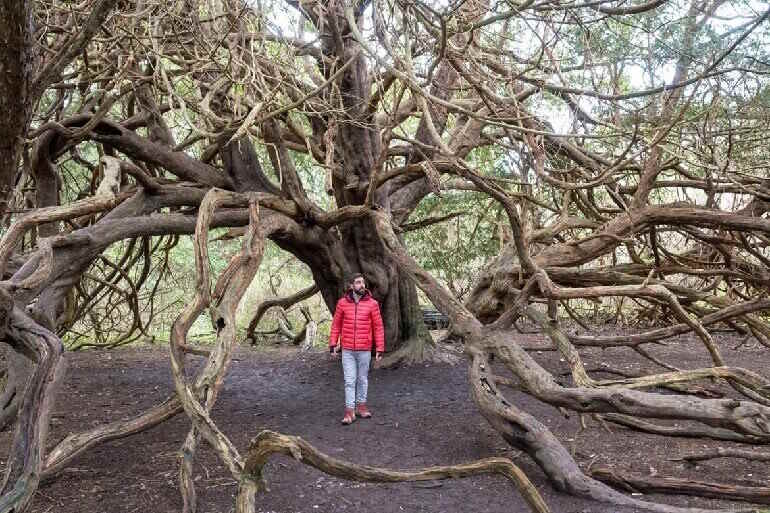
Over the centuries, the yew trees of Kingley Vale look like they've been plucked straight from a Gothic fairy tale. Some are thought to be the oldest living things in Britain, dating back 2,000 years.
These yew groves were destroyed in the 15th century, their wood used for longbows, making this a truly unique group of trees.
Fairy Chimneys, Türkiye
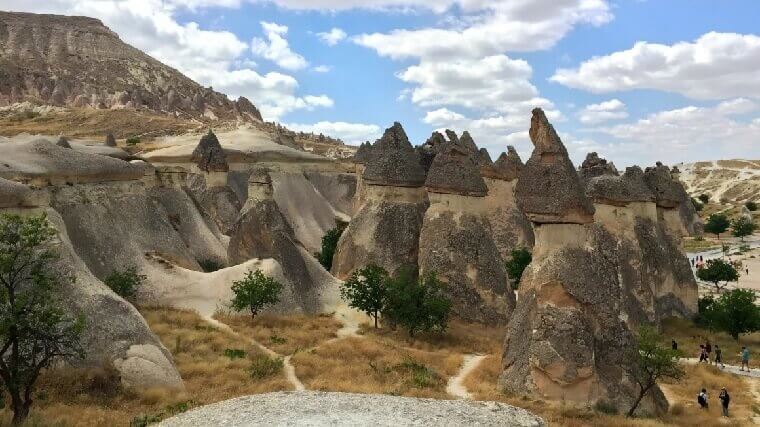
The Fairy Chimneys of Cappadocia, Central Turkey, are a geological wonder. The hard basalt columns are the result of thousands of years of erosion of the surrounding softer rock, creating these otherworldly towers.
What's really special about them, however, is the cave system and city dug underneath by persecuted early Christians, and used whenever invaders passed through nearby trade routes.
Giant's Causeway, Northern Ireland
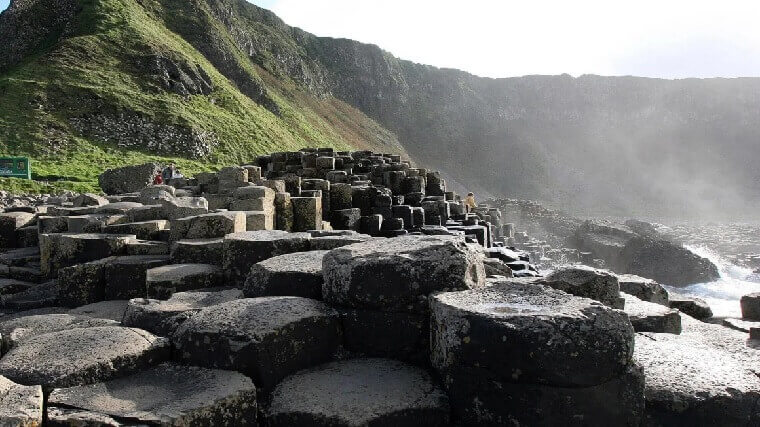
Located on Northern Ireland's wild North Atlantic coast, the Giant's Causeway is truly legendary.
The story goes that it was created by the giant Finn McCool to confront his Scottish rival Benandonner, and destroyed by Benandonner as he retreated home. While the reality is a little less fantastical, it is no less amazing. The columns are the result of lava cooling and shrinking over millions of years.
Similar rocks can be found at Fingal's Cave in Staffa, Scotland, all from the same lava flow.
Moeraki Rocks, New Zealand
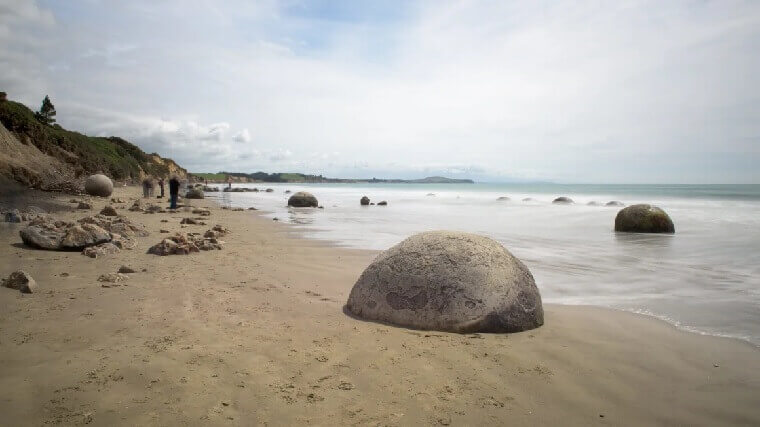
The large, spherical Moeraki rocks, easily mistaken for man-made structures, wash up on Koekohe Beach on the North Otago coast. Local Maori legend holds that they are the remains of fishing baskets and fruit washed ashore when their canoe, the Araiteuru, sank while carrying their ancestors to New Zealand's South Island.
In fact, these two-meter-high boulders were created by mudstone petrification over five million years, before emerging as the surrounding rocks eroded.
Great Blue Hole, Belize
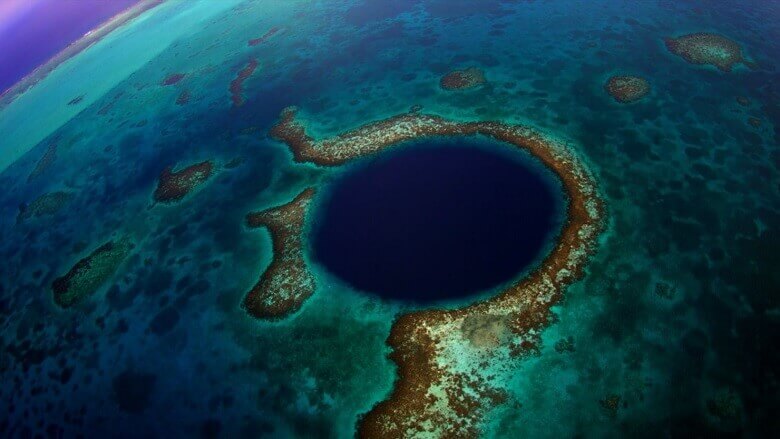
At 300 m (984 feet) wide and about 125 m (410 feet) deep, the Great Blue Hole is the largest sinkhole in the world.
Part of the Belize Barrier Reef System, this sinkhole was formed when sea levels rose thousands of years ago, flooding the deep caves inside.
Made famous by famed marine explorer Jacques Cousteau, recent submarine expeditions have produced new 3D sonar maps that reveal previously unseen mineral formations near the bottom of the hole.
Caño Cristales, Colombia
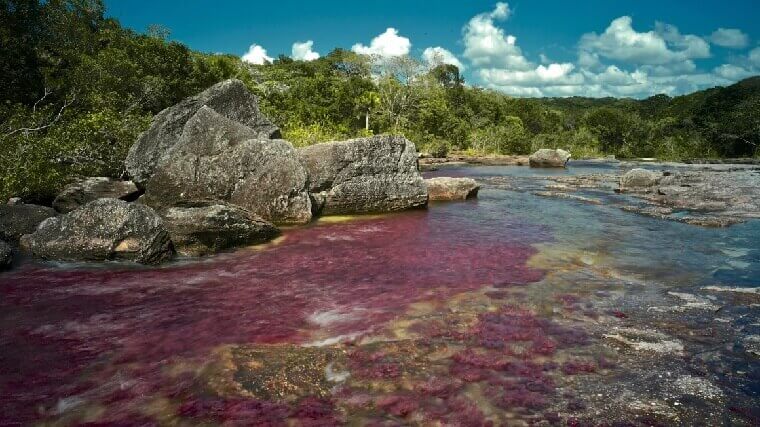
During the brief period between Colombia's rainy and dry seasons, the Caño Cristales river turns a brilliant red, yellow and green.
The brilliant phenomenon is caused by Macarenia clavigera, a plant found on the riverbed. It only turns red between September and November, after the torrential rains recede, but before the dry season evaporates so much water that it loses its brilliance.
Tourists are allowed to swim in certain areas, but are not allowed to wear sunscreen to protect this fragile ecosystem.
FAQ
What should you know about the world's strangest landscapes?
In practical terms, from monster-like trees to colorful sinkholes, towering rock formations and molten lava waterfalls, these are some of the most bizarre and fascinating landscapes in the world.
Why does the world's strangest landscapes matter?
The article highlights that from monster-like trees to colorful sinkholes, towering rock formations and waterfalls of molten lava, these are Some of the world's most bizarre and fascinating landscapes.
What is the main takeaway?
The main takeaway is that kingley Vale, Sussex, UK Over the centuries, the yew trees of Kingley Vale look like they've been plucked straight from a Gothic fairy tale.
Related Articles
 Anime World Simulator: Full Latest Giftcode and How to Redeem Code11 minutes read
 Ni No Kuni: Complete Guide5 minutes read
 Ni No Kuni: Cross Worlds - How to Turn Off Auto-Battle and Auto-Play4 minutes read
 Outer Worlds - Peril on Gorgon DLC: Complete Guide10 minutes read
 5 Strangest Books in Human History: Best Options Compared6 minutes read
 Top Strange Animals Become Their Own Natural Enemies: Key Facts3 minutes read
Reader Comments 0
Sign in with email or Google to join the discussion.