Table of Contents
Explore scientists witness the 'resurrection' of a monstrous black hole after 100.
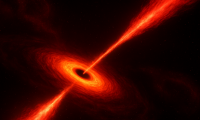
In the form of a glowing red beam of radio waves, the massive stream of energy ejected from this supermassive black hole tells the story of a reborn "monster."
The awakening of a galactic "engine"
This black hole, located at the center of a massive galaxy, is emitting extremely powerful radio waves. New analyses reveal that this black hole once spewed out enormous streams of plasma hundreds of thousands of light-years long into space before suddenly "shutting down" in the distant past. Now, these jets have become active again, interacting in a complex and chaotic way with the superheated gas surrounding them.
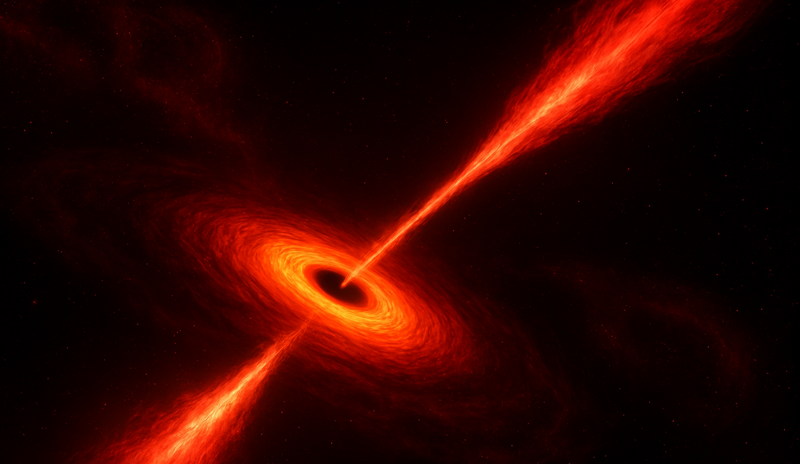
"It's like witnessing a cosmic volcano erupt again after many eras of peace — except this volcano is large enough to create structures stretching nearly a million light-years across space," said astronomer Shobha Kumari from Midnapore City University (India), co-author of the study.
When black holes malfunction and restart
Only about 10% to 20% of supermassive black holes have jet streams that emit radio signals. In these galaxies, an accretion disk of dust and plasma swirls around the black hole, regularly delivering large amounts of matter. This incoming matter creates a turbulent magnetic field , which can eject some matter from the black hole in the form of massive jet streams. Changes in the accretion disk can sometimes cause these radio jet streams to turn on or off in rare instances.
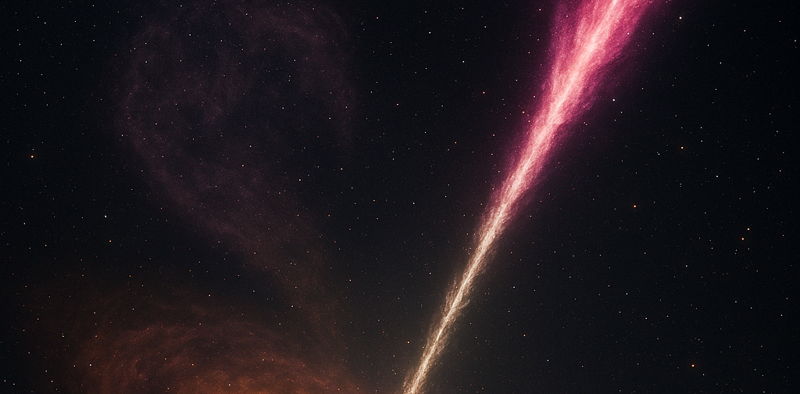
In a new study published in the journal Monthly Notices of the Royal Astronomical Society, the research team used the LOFAR (Low-Frequency Array) radio telescope system to focus on the galaxy J1007+3540 .
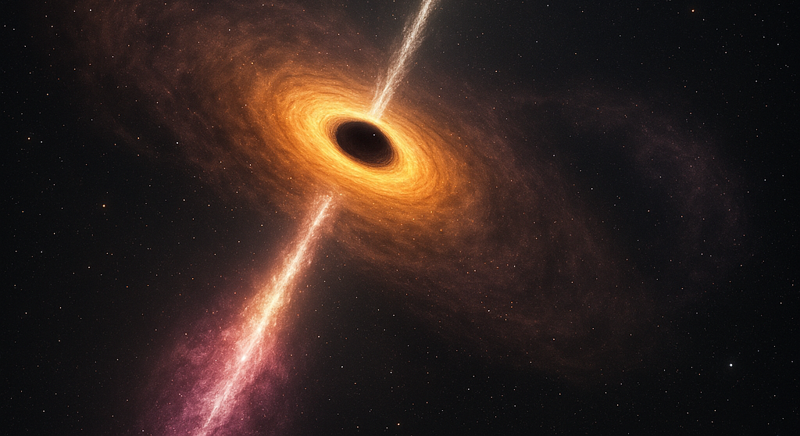
This giant galaxy possesses large, faint plasma lobes, remnants of jet activity from about 240 million years ago . However, within those lobes, the research team found smaller, brighter plasma jets that are only about 140 million years old . This suggests that the active galactic nucleus (AGN) — the central region containing the supermassive black hole — has restarted after a period of silence.
Interacting with the cluster environment
The intergalactic space within the cluster containing J1007+3540 is filled with superheated gas known as the intracluster medium . This gas interacts with radio jets, bending and shaping them as they extend from the galactic nucleus.
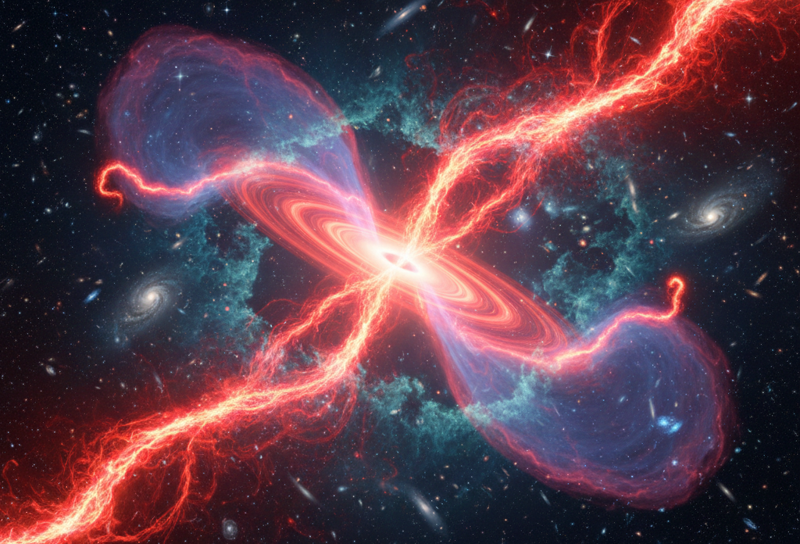
One of the two older lobes was compressed laterally and pushed back toward the source by the surrounding gas. The other lobe had a long, knotted tail, suggesting that the intra-cluster environment was interacting with the jet stream in a completely different way.
Observing J1007+3540 will help researchers determine how frequently galactic nuclei (AGNs) turn on and off and how ancient jet streams interact with their surroundings.
Final Thoughts
Understanding scientists witness the 'resurrection' of a monstrous black hole after 100 million years makes it easier to evaluate the information and apply the most relevant recommendations. Focus on the key points above and verify details that may change over time.
FAQ
What is scientists witness the 'resurrection' of a monstrous black hole after 100 million years?
Explore scientists witness the 'resurrection' of a monstrous black hole after 100.
What key points does this article cover?
The article focuses on The awakening of a galactic "engine", When black holes malfunction and restart, Interacting with the cluster environment, with practical explanations and examples.
How can you use this information in practice?
Use the explanations to compare options, verify important details, and make a more informed decision. Apply the recommendations that best match your goals and situation.
Related Articles
 Scientists Witness the 'Resurrection' of a Monstrous Black Hole After 100 Million Years4 minutes read
 Discover the Most Bizarre Black Holes in the Mysterious Space6 minutes read
 This Is a Photograph of the First Black Hole of Mankind, Located2 minutes read
 Scientist: Complete Guide6 minutes read
 Are We Living in a Black Hole: Explained10 minutes read
 Detecting Monstrous Black Holes, 20 Billion Times Larger4 minutes read
Reader Comments 0
Sign in with email or Google to join the discussion.