Table of Contents
Liquid cooling was once the top trend in PC gaming, but now it is gradually declining. Why are users turning away from AIO liquid coolers and switching to other solutions?
Once a casual experiment among modding enthusiasts in the early 2000s, liquid cooling has slowly become mainstream thanks to the advent of affordable AIO (All-in-One) coolers and the colorful PC gaming craze.
That said, today, the position of liquid cooling has declined, as many users return to traditional air cooling options. Let's take a look back at the journey to the throne, the reasons for its decline, and the situations where liquid cooling still makes sense.
From modder hobby to mainstream
Liquid cooling was originally for hardcore gamers. In the 2000s, modders cobbled together their own cooling systems using aquarium pumps, car heaters, plumbing pipes, and many trial and error. The cost was high, the installation was complicated, and the risk was high, but the rewards were lower CPU temperatures and admiration from the community.
Only true experts dared to build custom loops, as there were almost no PC-specific components at the time. Later, some companies started to produce tanks, pumps, pipes, fittings, blocks… but still mainly served the 'elite'.
It wasn't until the big companies released AIOs that installing water cooling became as easy as installing air cooling. From here, liquid cooling truly entered the mass market, appearing right at familiar component stores.
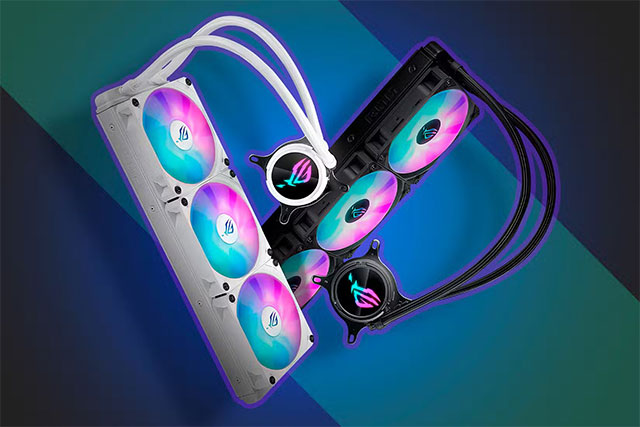
The appeal of liquid cooling lies in its superior cooling capabilities and low noise levels. For a long time, it was the only option for achieving higher thermal performance than air cooling could provide.
For example, heavily overclocked systems or high-end CPUs with huge power consumption require an AIO to keep temperatures under control, while cooling can be difficult to achieve both efficiency and compactness.
That said, the performance and noise advantages come with a series of disadvantages: sudden pump failures, evaporation of the solution, catastrophic liquid leaks. Custom loops require regular maintenance, which is both dirty and labor-intensive.
Cost is also a major barrier, although some low-cost AIOs today are approaching the level of high-end air coolers. However, these risks are inherent in the nature of technology and are difficult to completely eliminate.
The return of air cooling
While liquid cooling has flourished, air-cooling engineers have not stood still. Materials, design, manufacturing methods, and fan technology have all advanced by leaps and bounds. Today, many high-end air-coolers can go toe-to-toe with AIOs in both performance and noise – without the risk of leaks.
For example, the ID-COOLING FROZN A720 costs only $70 but has a cooling capacity of up to 300W TDP, with dual 140mm fans. Quiet, powerful, cheap, simple maintenance - this is the reason why more and more reviewers recommend air cooling instead of liquid cooling.
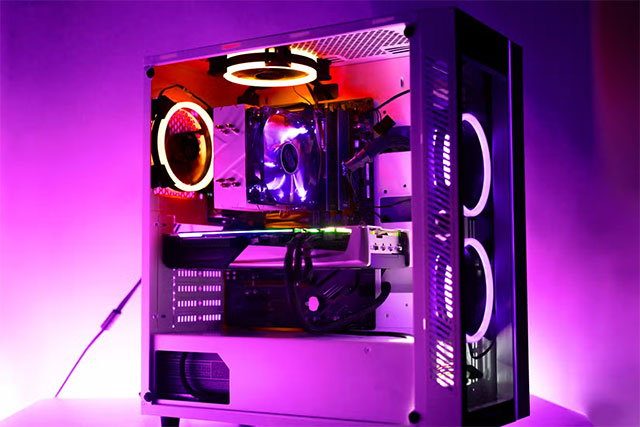
Of course, this doesn't mean liquid cooling is dead. On the contrary, it still has its place:
- Custom loop : caters to high-end PC gamers where aesthetics and 'showcase' matter.
- Compact Build : AIOs save space, especially in mini-ITX cases.
- Data Center : with extremely high hardware density, liquid cooling solutions are sometimes the optimal choice.
But for the majority of gamers and content creators, air cooling has now reclaimed the throne.
In short, liquid cooling used to be a symbol of performance and style, but advances in cooling technology have changed the balance. For the average user, choosing a cooling solution that is economical, safe, and powerful enough for all needs.
FAQ
What should you know about the rise and fall of liquid cooling?
In practical terms, liquid cooling was once the top trend in PC gaming, but now it is gradually declining. Why are users turning away from AIO liquid coolers and switching to other solutions.
Why does the rise and fall of liquid cooling matter?
The article highlights that however, today, the position of liquid cooling has declined, as many users return to traditional air cooling options.
What is the main takeaway?
The main takeaway is that let's take a look back at the journey to the throne, the reasons for its decline, and the situations where liquid cooling still makes sense.
Related Articles
 Liquid Heat Sink7 minutes read
 Air Cooling or Liquid Cooling, Which Is Better?5 minutes read
 5 Reasons to Use Cooling Fans Instead of Water Cooling6 minutes read
 How to Disable Liquid Glass in iOS 26 on iPhone6 minutes read
 Should GPUs Be Liquid-cooled for Better Performance: Main Insights7 minutes read
 How to Fix the Cooling Fan Phenomenon on the MacBook Is Loud6 minutes read
Reader Comments 0
Sign in with email or Google to join the discussion.