Table of Contents
Explore openai's first AI device will be in the form of a pen and could launch as.
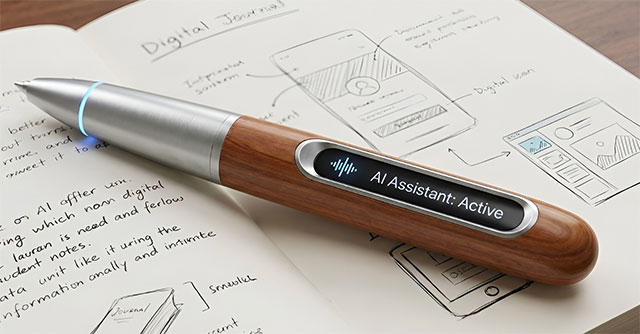
Recently, some noteworthy information has emerged about a pen-shaped device that OpenAI plans to launch sometime in 2026 or 2027.
According to sources from Taiwan's Economic Daily , this pen-like device is roughly the size of an iPod Shuffle, small enough to fit in a pocket or wear around the neck. Initially, OpenAI reportedly planned to outsource manufacturing to Luxshare (China). However, amid growing US caution regarding supply chains based in China, OpenAI has shifted its focus to Foxconn, which has the capability to manufacture in Vietnam or even in the US, in preparation for an official launch in the next few years.
In fact, Foxconn is already a key manufacturing and engineering partner of OpenAI, involved from co-designing AI data centers to deploying the actual infrastructure. Therefore, it is perfectly logical for OpenAI to continue entrusting Foxconn with its consumer AI device project.
Regarding the device itself, it's reportedly codenamed 'Gumdrop' internally and is most likely a smart pen. The device is compact, similar in size to an iPod Shuffle, but lacks a dedicated display. Instead, OpenAI focuses on contextual awareness through a sensor system, including a camera and microphone.
The device can run AI models refined by OpenAI directly on-device, while also leveraging cloud computing power for more demanding tasks. Another notable feature is the ability to convert handwritten notes into text, then upload them directly to ChatGPT for further processing or storage.
Additionally, the device can communicate with other devices in the ecosystem, similar to how current smartphones connect and exchange data. Although it doesn't take the form of a true smart wearable, it's still flexible enough for users to put it in their pocket or wear it around their neck, aiming for convenience and constant availability.
Final Thoughts
Understanding openai's first ai device will be in the form of a pen and could launch as early as 2026 makes it easier to evaluate the information and apply the most relevant recommendations. Focus on the key points above and verify details that may change over time.
FAQ
What is openai's first ai device will be in the form of a pen and could launch as early as 2026?
Explore openai's first AI device will be in the form of a pen and could launch as.
What key points does this article cover?
The article explains the core concept, important considerations, and practical details readers should understand.
How can you use this information in practice?
Use the explanations to compare options, verify important details, and make a more informed decision. Apply the recommendations that best match your goals and situation.
Related Articles
 These 15 Tips Will Help You Get up Early in the Morning Very6 minutes read
 iPad 2024 Launch Date Was Suddenly Postponed, Why Is That: Key Facts4 minutes read
 Form - Form in CSS: A Practical Guide7 minutes read
 OpenAI Reveals Plans to Launch a Series of AI Devices Running ChatGPT4 minutes read
 HTML Form: Tips and Examples6 minutes read
 How to Create a Google Form Form on Google Drive7 minutes read
Reader Comments 0
Sign in with email or Google to join the discussion.