Table of Contents
A dispute between Anthropic and the U.S. Department of Defense escalated in early 2026 over restrictions on how Claude could be used for military work. The Pentagon designated Anthropic a supply-chain risk, but a federal judge later temporarily blocked that designation and a wider directive to stop federal use of Claude.
The episode is often summarized as “the government replaced Anthropic with OpenAI,” but that wording is too broad. Federal agencies procure AI through multiple contracts and platforms, and a temporary court order changed the legal position after the Pentagon's action.
Why the dispute began
Anthropic had worked with national-security customers but sought to retain restrictions involving mass domestic surveillance and autonomous weapons without meaningful human control. The Defense Department wanted wider latitude under its lawful-use requirements.
After negotiations failed, the Pentagon classified Anthropic as a supply-chain risk in March 2026. The designation was unusually consequential because it could prevent defense contractors from using Claude in Pentagon-related work, even when Anthropic was not the direct contractor.
The court intervened
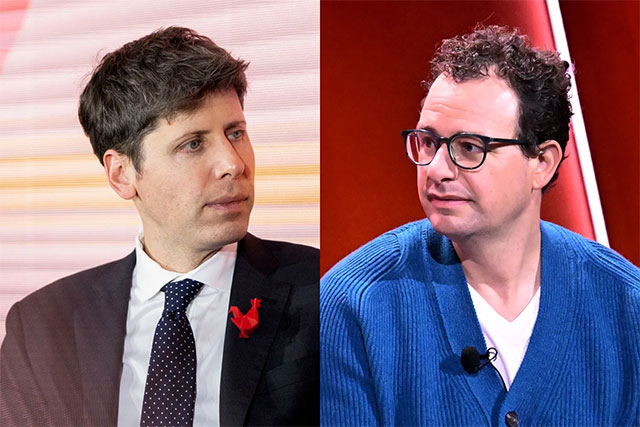
Anthropic challenged the government's actions. A federal judge temporarily blocked the supply-chain-risk designation and enforcement of a directive telling federal agencies to stop using Anthropic products. The order did not require the Pentagon to continue buying Claude; it paused the challenged restrictions while the legal dispute continued.
This distinction matters. A preliminary order is not a final ruling on the merits, and the procurement status can change as the case proceeds.
Was OpenAI made the government's sole AI provider?
No public evidence supports describing OpenAI as the single provider for the entire U.S. government. OpenAI and other vendors have government and defense relationships, and individual agencies can adopt different systems for different workloads.
During the dispute, organizations with defense exposure had reason to prepare alternatives to Claude. That does not establish that every federal agency permanently replaced Anthropic, or that one model became the exclusive government platform.
Claims about named departments, internal chatbots, model versions, or contract migrations should be tied to dated procurement records or agency statements. Without that evidence, they should not be presented as confirmed.
What the companies disagree about
The disagreement is not simply “safety versus no safety.” It concerns who sets limits for military AI, what level of human control is required, how domestic surveillance is defined, and whether a supplier can restrict uses that the government considers lawful.
Anthropic argues that current systems are not reliable enough for certain autonomous or surveillance uses and that its restrictions are necessary. The government has argued that a defense supplier cannot unilaterally limit lawful operational uses in a way that creates mission risk.
Where OpenAI fits
OpenAI has separately expanded work with U.S. government and defense customers. The company has described boundaries involving domestic mass surveillance, autonomous weapons, and high-stakes automated decisions. The exact terms of classified or agency-specific deployments are not fully public.
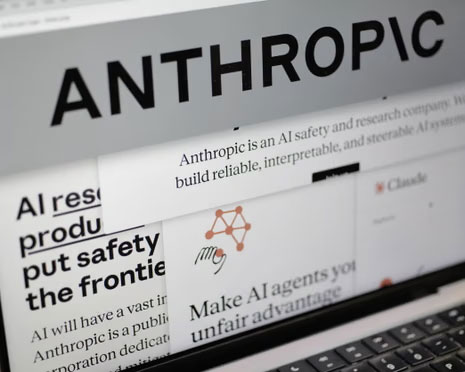
Comparing the two companies requires more than reading their public principles. The enforceable contract language, technical controls, audit rights, deployment environment, and human authorization process determine how a system can actually be used.
Why “supply-chain risk” was significant
The label is normally associated with concerns that a supplier could compromise security, reliability, or continuity. Applying it to a domestic AI company because of a policy dispute raised questions about procurement power and due process.
Supporters of the government's position emphasized dependable access for national-security missions. Critics warned that a broad designation could punish a company for maintaining safety restrictions and force contractors to redesign systems unrelated to the original dispute.
What is verified—and what is not
| Claim | Status |
|---|---|
| The Pentagon designated Anthropic a supply-chain risk in March 2026. | Reported by major news organizations. |
| The dispute involved restrictions on autonomous weapons and mass domestic surveillance. | Confirmed in reporting and company statements. |
| Anthropic challenged the action in court. | Confirmed. |
| A federal judge temporarily blocked the designation and wider stop-use directive. | Confirmed; the order was temporary, not a final judgment. |
| OpenAI became the exclusive AI provider for all federal agencies. | Not supported by the public evidence reviewed. |
| Every named agency permanently migrated from Claude to a particular OpenAI model. | Requires agency-specific evidence; should not be generalized. |
What to watch next
- Whether the temporary court order is extended, narrowed, or reversed
- The final outcome of Anthropic's legal challenge
- New Defense Department procurement rules for model providers
- Contract language defining human control and prohibited surveillance
- Whether contractors must maintain multiple AI suppliers
- Public audits or incident reporting for military AI deployments
Sources and date context
This article reflects reporting available through September 2026. The Pentagon designation was reported by Reuters, and the temporary court order was reported by The Associated Press. Because the litigation and procurement decisions can change, check newer court filings and official agency statements before relying on the status.
The central issue remains unresolved: how much control an AI developer may retain over military use after the government has selected its technology, and how the government should respond when a vendor's safety limits conflict with operational demands.
Related Articles
 DeepSeek Develops AI Agent to Compete with OpenAI, Launching Late 20254 minutes read
 Concept of E-Government18 minutes read
 Everything You Need to Know About Openai7 minutes read
 The Chinese Government Will Replace the Entire Current Windows4 minutes read
 Anthropic Launches Claude 2: New Competitor for Chatgpt and Bard5 minutes read
 What Is OpenAI? Company, Products, Models, and Mission13 minutes read
Reader Comments 0
Sign in with email or Google to join the discussion.