Table of Contents
Explore scientists have for the first time published the most detailed 4d map.
In an effort to better understand the connection between the physical shape of DNA and human biology, scientists at Northwestern University, in collaboration with the 4D Nucleome Project, have created the most comprehensive maps to date of how the genome is organized in three dimensions and changes over time. This work has just been published in the prestigious scientific journal Nature.
The research, based on experiments conducted on human embryonic stem cells and fibroblasts, provides a broad insight into how genes interact, fold into complex structures, and constantly change positions as cells perform normal functions and divide. The work was co-led by Professor Feng Yue, a specialist in Molecular Medicine in the Department of Biochemistry and Molecular Genetics at Northwestern University.
According to Professor Yue, understanding how genomes fold and reorganize in three-dimensional space is key to deciphering how cells function. These maps provide unprecedented insight into how the structure of the genome contributes to regulating gene activity both spatially and temporally.
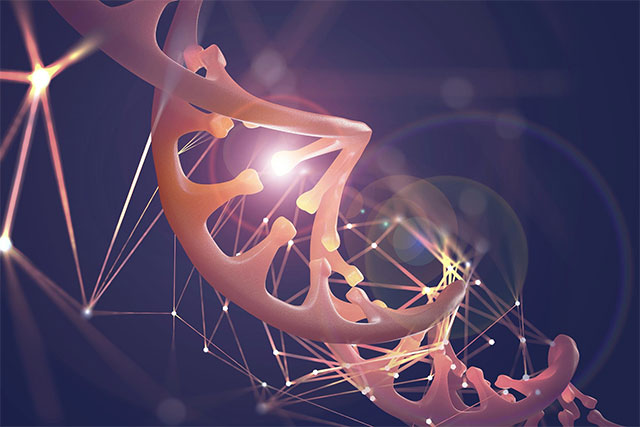
Inside the cell nucleus, DNA doesn't exist as a simple straight strand. Instead, it coils into loops and distinct structural regions, allowing gene segments that are far apart on the DNA strand to come into close contact. This physical arrangement controls which genes are switched on or off, thereby influencing cell development, identification, and disease formation.
Building a unified 4D gene dataset
To study this level of complexity, Professor Yue's team and international collaborators used a range of different gene analysis technologies on human embryonic stem cells and fibroblasts to create a unified dataset of 4D gene structures.
The results revealed that each cell type contains over 140,000 chromatin loops, and clearly identified the anchoring factors of these loops and their roles in gene regulation. The research team also meticulously classified chromosomal domains and their locations within the cell nucleus, and constructed high-resolution 3D models of the entire genome at the individual cell level. These models show the location of each gene relative to neighboring genes and regulatory factors.
These maps reveal that genome architecture can differ between cells, and that these differences are closely related to essential biological processes such as transcription and DNA replication.
Evaluating the technology and predicting how genes will fold
Because no single technology can fully capture the 4D structure of the genome, the study also evaluated the strengths and limitations of each method. Through extensive comparison and validation, the research team determined which tools were best suited for detecting loops, chromosomal domain boundaries, or subtle changes in gene location within the cell nucleus. This creates a 'guide map' for other scientists pursuing similar questions in the future.
More notably, the research team also developed computational tools capable of predicting how genomes will fold based solely on DNA sequences. This will allow future scientists to estimate how genetic variations, including those associated with disease, will alter 3D gene architecture without conducting complex experiments.
According to Professor Yue, this breakthrough could accelerate the detection of disease-causing mutations and shed light on previously hidden genetic mechanisms behind genetic disorders.
He emphasized that the majority of disease-related variants in humans reside in the non-coding region of the genome, so understanding how these variants affect gene expression and contribute to disease is crucial. Organizing genes in three dimensions provides a powerful frame of reference for predicting which genes are likely to be affected by disease-causing variants.
Towards a more comprehensive understanding of the genome
This research shows that it is impossible to fully understand the function of the genome simply by reading the DNA sequence. The shape and how DNA folds are equally important. By clarifying the relationship between 3D gene structure, chromatin loops, gene activity, and cellular behavior, this work brings the field of genetics closer to a comprehensive understanding of how genetic instructions operate within living cells.
Professor Yue said the research team hopes these tools will help decipher how 'misfolding' of genes contributes to cancer, developmental disorders, and many other diseases. This could open the door to new diagnostic and treatment methods based on gene structure.
He added that, after observing changes in 3D gene structures in various types of cancer, including leukemia and brain tumors, the team's next goal is to understand how these structures can be precisely targeted and modulated by drugs, such as epigenetic inhibitors.
Final Thoughts
Understanding scientists have for the first time published the most detailed 4d map of the human genome makes it easier to evaluate the information and apply the most relevant recommendations. Focus on the key points above and verify details that may change over time.
FAQ
What is scientists have for the first time published the most detailed 4d map of the human genome?
Explore scientists have for the first time published the most detailed 4d map.
What key points does this article cover?
The article focuses on Building a unified 4D gene dataset, Evaluating the technology and predicting how genes will fold, Towards a more comprehensive understanding of the genome, with practical explanations and examples.
How can you use this information in practice?
Use the explanations to compare options, verify important details, and make a more informed decision. Apply the recommendations that best match your goals and situation.
Related Articles
 The Human Genome Is Evolving Much Faster Than We Thought.7 minutes read
 For the First Time in History, Scientists Successfully Connected the Human Brain to the Internet4 minutes read
 Human Intestine Map: Complete Guide2 minutes read
 Scientists Successfully Cultivate the Perfect Human Vascular System4 minutes read
 Scientists Are Predicting the Next Pandemic, It May Have Already Begun but We Don't Know5 minutes read
 Scientists Identified 17 New Genetic Markers Related to Longevity3 minutes read
Reader Comments 0
Sign in with email or Google to join the discussion.