Table of Contents
A large U.S. survey analysis found an association between e-cigarette use and self-reported prediabetes. People who both smoked and vaped had a stronger association. The study does not show that vaping caused diabetes, or that every user faces the same increase in personal risk.
How the study was conducted
Sulakshan Neupane and colleagues analyzed 1,285,783 observations from the 2020–2022 Behavioral Risk Factor Surveillance System. The paper in AJPM Focus compared reported tobacco-use patterns with reported diagnoses of prediabetes and diabetes.
The researchers used matching and statistical adjustment to make the groups more comparable. However, the data were observational and cross-sectional: they did not follow a group of initially healthy people to establish which exposure preceded a new diagnosis.
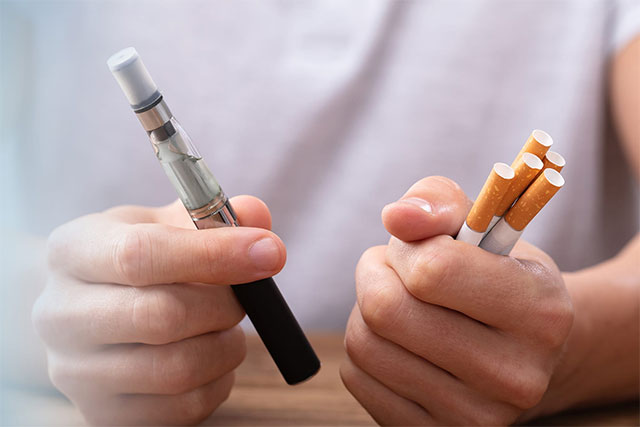
The percentages refer to odds, not guaranteed new cases
Compared with never users, the adjusted odds ratio for reported prediabetes was 1.07 for sole e-cigarette users and 1.28 for dual users. These correspond to approximately 7% and 28% higher odds, respectively.
A 28% increase in odds does not mean that 28% of dual users will develop prediabetes, nor does it mean a 28-percentage-point increase. Translating these associations into a number of new cases each year would require additional assumptions that this study cannot establish.
The authors found no statistically significant association between sole e-cigarette use and reported diabetes in this analysis. That distinction is lost if the findings are summarized as “vaping causes diabetes.”
Important limitations
- Self-report: diagnoses and tobacco use may be recalled or reported inaccurately.
- Timing: the analysis cannot determine whether tobacco use came before metabolic changes.
- Other influences: prior combustible-tobacco exposure and factors not fully captured in the survey may contribute to the association.
- Group differences: subgroup patterns do not predict an individual's outcome or establish a biological explanation for demographic differences.
The researchers call for longitudinal studies with objective health measurements. The findings are a reason to investigate metabolic effects carefully, rather than proof of a specific mechanism such as vaping-induced weight gain.
What readers can act on
The connection between cigarette smoking and type 2 diabetes is better established. The CDC explains why stopping smoking supports diabetes prevention and management.
If you smoke or vape, discuss a cessation plan with a healthcare professional. Adding vaping while continuing to smoke should not be interpreted as protection from tobacco-related harm. Exercise and other healthy lifestyle habits can support overall health, but do not cancel the effects of smoking.
Smoking also matters for lung health. If you already have diabetes, ask your clinical team whether quitting requires closer blood-glucose monitoring or adjustments to your existing care plan.
Related Articles
 Is electronic cigarette smoking toxic?
 Study: Consuming too much salt increases the risk of stomach cancer
 Photos on cigarette packs can prevent death
 Exposure to tobacco smoke during pregnancy is related to the risk of asthma in infants
 Psychosis in children increases the risk of addiction later
 Abusing painkillers can do more harm than good.
Reader Comments 0
Sign in with email or Google to join the discussion.