Table of Contents
This guide provides a clear, practical overview of "PCIe 5.0 SSDs Will Dominate the Market for Another 5 Years, PCIe 6.0". It organizes the most useful details, explains important considerations, and highlights the steps or choices that matter most.
It's no surprise that PCIe 5.0 SSDs will have a long life on the market, not only because they're newer and faster, but also because we haven't seen a need for faster drives yet. PCIe 5.0 nearly doubles the transfer speeds of PCIe 4.0, and the consumer market hasn't fully transitioned to the new standard yet.
It will take a few more years for the new standard to become widespread, as the differences between the two standards currently offer little benefit to users, according to Silicon Motion CEO Wallace Kou, as reported by Tom's Hardware. According to Kou, PC OEMs are not interested in PCIe 6.0 right now, and neither AMD nor Intel want to even talk about it.
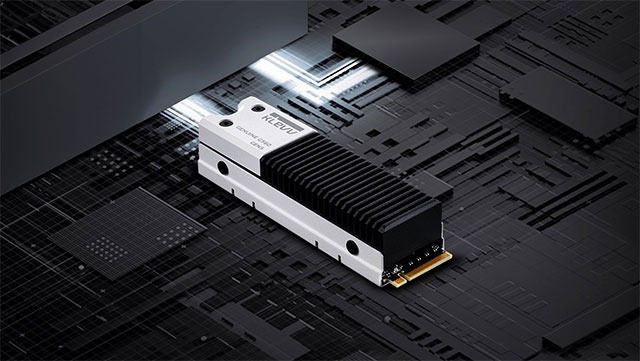
Since PCIe 5.0 is doing so well and SMI (Silicon Motion) is already the industry leader, they don't feel the need to prepare a PCIe 6.0 SSD controller just yet. The current competition for PCIe 5.0 is already weak because the manufacturing costs are much higher than PCIe 4.0 controllers. The cost of a single tape-out can be double that of a PCIe 4.0 SSD, if you include the IP and mask costs for PCIe 5.0 SSDs.
The upgrade from PCIe 5.0 to Gen 6.0 will result in even higher manufacturing costs, as Gen 6.0 SSD controllers will be 25% to 30% more expensive than Gen 5.0. PCIe 6.0 controllers will feature 16 NAND channels and will be manufactured on a 4nm process. This is why the cost of a single production run can be as high as $30-40 million, compared to just $16-20 million for PCIe 5.0.
The earliest we can expect PCIe 6.0 SSDs is late 2027 or 2028, but that will be limited to the enterprise market, especially given NVIDIA's planned launch of the Rubin architecture in late 2026. For the mass consumer market, PCIe 6.0 doesn't make much sense right now. Most PC owners don't have the latest PCIe Gen 5.0-compatible platform, and even those who do are unlikely to see much of a difference when moving from a Gen 4.0 SSD.
Moving to the newer PCIe 6.0 standard only increases system costs, while we already have more expensive motherboards that integrate the PCIe Gen 5.0 interface. So expect PCIe 5.0 SSDs to continue to dominate the market for at least the next five years without any problems.
FAQ
What does this guide cover?
This guide explains pcie 5.0 ssds will dominate the market for another 5 years, pcie 6.0, including the main steps, important details, and practical considerations.
Who is this guide for?
It is designed for readers who want a clear, practical overview and a reliable process they can follow without unnecessary complexity.
What should you check before getting started?
Review the requirements, confirm that your software or device is up to date, and save any important data before changing settings.
Related Articles
 What Is the Difference Between Pcie 3.0, Pcie 4.0 and Pcie7 minutes read
 Should I Choose SATA or PCIe SSD?7 minutes read
 What Is Pcie?12 minutes read
 What Is Pcie 4.0? Should I Upgrade?9 minutes read
 SSD and HDD, Which Is the More Popular Hard Drive on the4 minutes read
 Things You Need to Know About NVMe SSDs: Main Insights8 minutes read
Reader Comments 0
Sign in with email or Google to join the discussion.