Table of Contents
When you can stand up straight, move smoothly and control your body in difficult positions, you are aging backwards.
If you can stand up straight, move smoothly and control your body in difficult positions, you are "aging backwards" and look much younger than your age. Here are some balance tests to help you determine your level of aging.
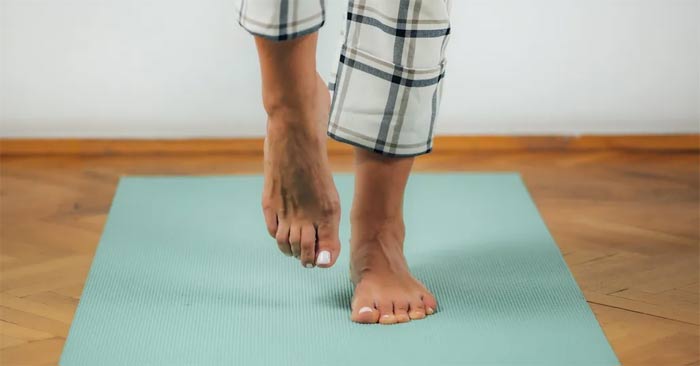
After age 55, balance becomes an important sign of health. It protects you from falls, maintains mobility, and helps your nervous system function properly. Good balance shows that your muscles, joints, and brain are working together at a high level. It is a fitness measure that predicts longevity better than many traditional tests.
Stretching - Balance and leg stretches
A study of more than 1,700 adults between the ages of 51 and 75 found that those who couldn't stand on one leg for 10 seconds had an 84 percent higher risk of death over the next seven years than those who passed the test. That risk remained even after accounting for age, weight, and other health conditions.
The following balance tests are easy to perform but produce remarkable results. Passing them signals that your body is retaining the functions that decline with age. Each test challenges coordination, lower body strength, and the ability to sense movement that are important for daily living.
Take the tests below in a safe environment where you can seek support if needed. If you pass them with ease, congratulations, you are aging backwards. If not, you now have a clear goal to work towards.
Test 1: Standing on one leg
Standing on one leg activates the stabilizing muscles in your feet, ankles, hips, and core. It also challenges your brain's ability to process balance signals from your inner ear and vision. The results reflect joint stability and coordination. These skills protect you in everyday activities like climbing stairs, stepping off a curb, or catching yourself when you fall.
How to do:
- Stand up straight with your feet hip-width apart and your arms at your sides.
- Put your weight on one leg without leaning or swaying.
- Lift the opposite leg a few inches off the ground.
- Maintain a steady posture and look forward.
- Repeat with the other leg for a complete assessment.
Score Ranking:
- Excellent: 30 seconds or more on each leg without touching the ground.
- Good: 15 to 29 seconds per leg.
- Needs improvement: Under 15 seconds
Test 2: Heel-to-toe walking
This test assesses dynamic balance, or the ability to maintain stability while moving. Heel-to-toe walking improves upper and lower body coordination. It trains the nervous system to control movement on narrow or uneven surfaces. A good result shows that you maintain agility and confidence in movement as you age.
How to do:
- Stand with your feet together on a flat surface.
- Step forward, placing the heel directly in front of the toes of the opposite foot.
- Continue taking 10 slow steps in a straight line.
- Keep your arms relaxed at your sides and look forward.
- Repeat in reverse if possible.
Score Ranking:
- Excellent: All 10 steps are in a straight line without tripping.
- Good: 7 to 9 steps with minimal shaking.
- Needs improvement: Less than 7 steps or frequent side steps to maintain balance.
Test 3: Sit up without hands
Standing from a chair without using your arms measures your leg strength, balance and coordination. This movement has direct application to everyday life, where the ability to stand independently demonstrates both functional strength and balance under load. Passing this test confirms that your lower body is strong and your nervous system is working properly.
How to do:
- Sit in a sturdy chair with your legs straight and your arms crossed over your chest.
- Tighten your abs and lean forward slightly.
- Push through your heels to stand up without swinging your arms.
- Lower yourself down in a controlled manner.
- Perform five consecutive repetitions to complete the test.
Score Ranking:
- Excellent: 5 smooth repetitions without losing balance or needing assistance.
- Good: 3 to 4 repetitions with steady control.
- Needs Improvement: Less than 3 reps or need hand assistance.
Test 4: Parallel pose with eyes closed
Closing your eyes eliminates visual cues, forcing your inner ear and body awareness to take over. This test shows whether you can maintain your balance when one of your main stabilizing muscles is lost. Success indicates that you have built up a deeper balance reserve, which can protect you in unexpected situations.
How to do:
- Stand straight, one foot in front of the other, heel touching toe.
- Arms crossed in front of chest.
- Close your eyes slowly but keep your posture straight.
- Hold the pose without stepping out.
- Switch front legs and repeat.
Rating:
- Excellent: 20 seconds or more on each side without stepping out.
- Good: 10 to 19 seconds before losing balance.
- Needs improvement: Less than 10 seconds or repeat steps.
FAQ
What should you know about passing these balance tests proves you're aging backwards?
In practical terms, if you can stand up straight, move smoothly and control your body in difficult positions, you are aging backwards.
Why does passing these balance tests proves you're aging backwards matter?
The article highlights that here are some balance tests to help you determine your level of aging.
What is the main takeaway?
The main takeaway is that the following balance tests are easy to perform but produce remarkable results.
Related Articles
 How to Pass a Smog Test: Step-by-Step Guide7 minutes read
 Questions That Can Reveal the Truth About Your Aging Process5 minutes read
 How to Check the ACB Account Balance on Phones and Computers7 minutes read
 How to Check the Account Balance of BIDV Fastest6 minutes read
 Maintaining These 9 Habits, You Don't Want to Get Old5 minutes read
 How to Adjust Audio Balance in Windows 11: Step-by-Step Guide3 minutes read
Reader Comments 0
Sign in with email or Google to join the discussion.