Table of Contents
This guide provides a clear, practical overview of "New Invention Could Make Your Computer and Phone '1000 Times Faster'". It organizes the most useful details, explains important considerations, and highlights the steps or choices that matter most.
The material studied is 1T-TaS₂, a crystal belonging to the transition metal dichalcogenide group. Normally, this type of material only exhibits its special metallic state at extremely low temperatures, making it difficult to use in everyday devices. However, scientists have discovered a way to keep this state stable at much higher temperatures, close to room temperature, and maintain it for months. This is a major advance, as previous attempts have only been able to maintain it for fractions of a second.
"Currently, processors operate at the gigahertz level. The speed of change that this technology allows will take us up to terahertz," explains Professor Alberto de la Torre, assistant professor of physics and lead author of the study.
To achieve this, the researchers used light to trigger changes in the material. They found that by combining different types of charge density waves (CDWs) – arrangements of electrons – they could stabilize a hidden metallic CDW state. This state had previously only appeared at extremely low (cryogenic) temperatures and was poorly understood. Now, the scientists have shown that it can exist at temperatures up to 210 K (−63°C), a much more realistic temperature.
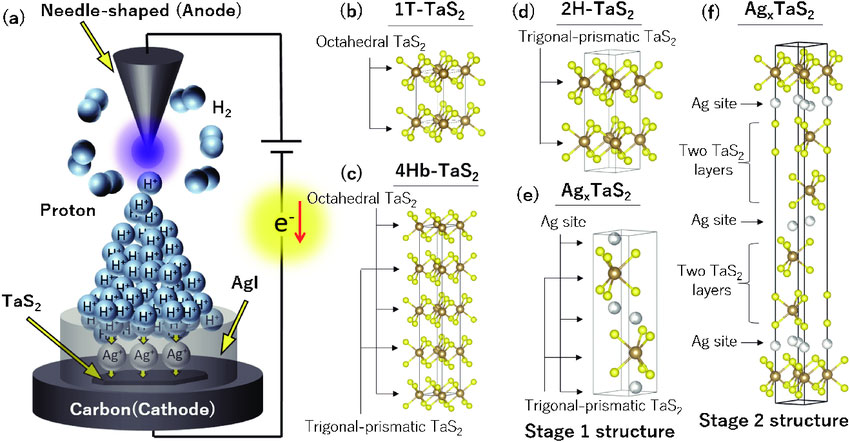
They used advanced tools such as X-ray diffraction and scanning tunneling microscopy (STM) spectroscopy to study the material. These tools revealed that the metallic and insulating regions within the material had different mirror symmetry patterns, and even caused the unit cell—the basic building block of a crystal—to triple in size in one direction. Despite the metallic regions and a measurable density of states, the material overall behaved as an insulator due to the way the CDW layers stacked on top of each other.
"Anyone who has ever used a computer has at some point wished something loaded faster," said Professor Gregory Fiete, Department of Physics at Northeastern University. "Nothing is faster than light, and we are using light to manipulate material properties at essentially the fastest speeds that physics allows."
This type of control is similar to how transistors work, but instead of requiring many separate materials and complex interfaces, researchers can now use just one material and control it with light. This could make future devices simpler and more efficient.
'We eliminate one of the technical challenges by putting it all into one material,' added Professor Fiete. 'And we replace the interface with light over a wider temperature range.'
The discovery also opens up new possibilities for electronics design beyond what silicon can offer. As chips become denser and engineers begin to stack them in 3D, the need for new materials that can do more in less space is growing.
'One of the big puzzles is: how do you control the properties of materials at will? What we're aiming for is the highest level of control over material properties. We want it to do something very fast, with very deterministic results, because that's exactly what can be exploited in a device,' Professor Fiete asks.
Humanity is at a point where, to achieve incredible improvements in information storage or speed of operation, we need a new paradigm. Quantum computing is one way to solve this problem, and another is innovation in materials.
FAQ
What does this guide cover?
This guide explains new invention could make your computer and phone '1000 times faster', including the main steps, important details, and practical considerations.
Who is this guide for?
It is designed for readers who want a clear, practical overview and a reliable process they can follow without unnecessary complexity.
What should you check before getting started?
Review the requirements, confirm that your software or device is up to date, and save any important data before changing settings.
Related Articles
 10 Ways to Make Your Laptop Run Faster: Expert Selection Guide11 minutes read
 8 Settings to Make Your Samsung Phone Run Faster9 minutes read
 Your Phone's Battery Is Still Not Fully Charged All Day, Why Don't You Try5 minutes read
 New Invention: Light-printed Paper, Renewed by Temperature and Reuse 80 Times4 minutes read
 Iphone: How to Make Phone Calls with Yosemite2 minutes read
 Quantum Computer3 minutes read
Reader Comments 0
Sign in with email or Google to join the discussion.