Table of Contents
Scientists at the Nagoya Institute of Technology (Japan) have developed a new material from plastic waste that can filter, desalinate and remove heavy metals in water using sunlight.
Scientists are increasingly interested in the idea of harnessing solar energy as a powerful ally in cleaning up polluted water sources.
Photocatalyst technology allows sunlight to decompose toxic substances in water, while photothermal evaporation uses this energy to heat and evaporate dirty water, then condenses it into pure, drinkable water.
That said, both methods often require expensive or difficult-to-manufacture materials, limiting their large-scale deployment. So researchers around the world are looking to create a single, cheap, efficient material that can perform a variety of water-purification tasks — and ideally, one made from readily available waste.
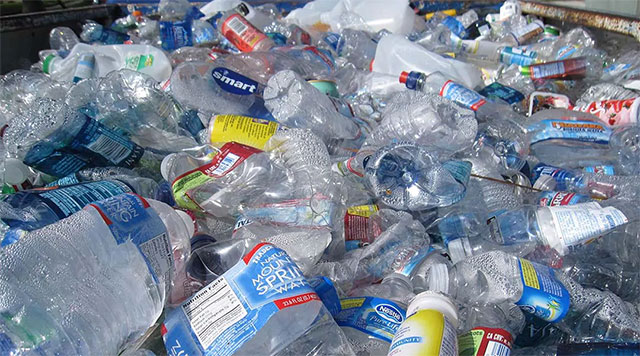
Turning plastic waste into a versatile catalyst
In a breakthrough, a research team at the Nagoya Institute of Technology (NITech), Japan, led by Associate Professor Takashi Shirai, along with colleagues Kunihiko Kato, Yunzi Xin and Yuping Xu, has found a way to turn common plastic waste into a new material that can filter and desalinate water using sunlight.
To create the material, the team used a planetary ball mill and carefully refined the grinding process. They started with a mixture of molybdenum trioxide (MoO₃) and polypropylene (PP), a plastic commonly found in packaging and household items.
Using precise mechanical mechanisms, this waste mixture is transformed into composite particles containing hydrogen molybdenum bronze (HxMoO₃–y), molybdenum dioxide (MoO₂) and activated carbon – three components that work together to absorb sunlight and promote various water purification reactions.
' The mechanochemical process we propose outperforms existing methods in both energy efficiency and cost, ' Dr. Shirai emphasized.
One material – many amazing possibilities
Through a series of tests, the research team discovered that this composite material absorbs a wide spectrum of light – from near infrared (NIR), visible light to ultraviolet (UV), helping to effectively decompose toxic organic substances in water.
Remarkably, even in the absence of light, the particles act as Brønsted acid catalysts, continuing to remove pollutants from the water.
Also, the material also exhibits a plasmonic effect that helps absorb and convert sunlight into heat extremely quickly, creating a photothermal effect that helps evaporate dirty water with outstanding high efficiency.
The oxygen-containing carbon particles left over from the grinding process can also adsorb and remove heavy metal ions from wastewater – adding a natural cleaning mechanism.
The team is now continuing to refine the ball milling process to create similar 'all-in-one' catalysts for water treatment and other environmental applications.
' Our technology can be applied to a wide range of oxides and plastics. We believe it will help upgrade existing materials, recycle plastic waste and ensure safe drinking water for communities, ' Dr Shirai said.
FAQ
What should you know about japan turns plastic waste into super water-filtering materials using?
In practical terms, scientists at the Nagoya Institute of Technology (Japan) have developed a new material from plastic waste that can filter, desalinate and remove heavy metals in water using sunlight.
Why does japan turns plastic waste into super water-filtering materials using matter?
The article highlights that turning plastic waste into a versatile catalyst In a breakthrough, a research team at the Nagoya Institute of Technology (NITech), Japan, led by Associate Professor Takashi Shirai, along with colleagues Kunihiko Kato.
What is the main takeaway?
The main takeaway is that we believe it will help upgrade existing materials, recycle plastic waste and ensure safe drinking water for communities, ' Dr Shirai said.
Related Articles
 Finding Two Breakthrough Solutions in Plastic Waste Treatment4 minutes read
 How Are People Using Plastic to Destroy Nature?4 minutes read
 Manufacturing Electric Cables from Plastic Waste -- the Great11 minutes read
 Chemical Recycling Can Be a Solution to the Problem of5 minutes read
 Examine the Process of Turning Garbage into Street Bricks3 minutes read
 Plastic Surface Self-cleaning, Even Antibiotic-resistant Bacteria2 minutes read
Reader Comments 0
Sign in with email or Google to join the discussion.