Table of Contents
Today's electric vehicle boom could turn into a mountain of e-waste. An MIT team has developed a self-assembling electrolyte that can break down in organic solvents, making it easier to disassemble and recycle battery components.
MIT researchers have Designed an electrolyte that can disintegrate at the end of a battery's life , making it easier to recycle the components.
Today's electric vehicle boom could become a mountain of e-waste tomorrow. And despite major efforts to improve battery recycling, many EV batteries still end up in landfills.
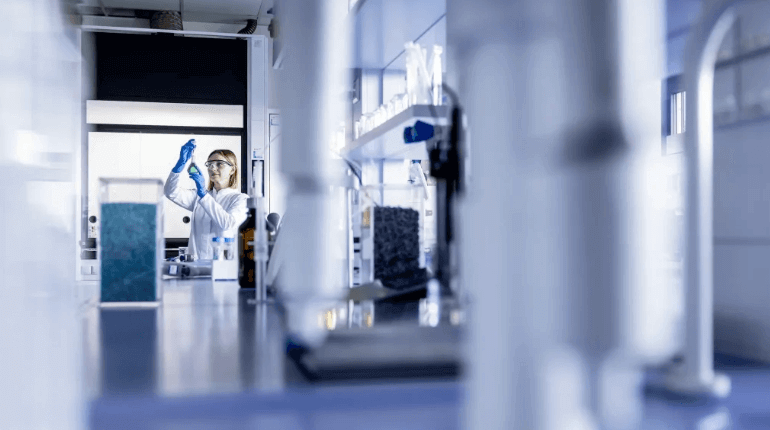
A team from MIT Wants to change that with a new self-assembling battery material that can rapidly decompose when submerged in a simple organic solvent. In a new paper published in Nature Chemistry , the researchers show that the material can act as an electrolyte in a working Solid-state Battery cell and then return to its original molecular components within minutes.
This approach offers an alternative to shredding the battery into a difficult-to-recycle mass. Instead, because the electrolyte acts as a connecting layer in the battery, the entire battery disassembles as the new material returns to its original molecular form, facilitating recycling.
' So far in the battery industry, we have focused on high-performance materials and designs, and only then tried to find ways to recycle batteries made from complex structures and hard-to-recycle materials,' said lead author Yukio Cho PhD '23 Of the paper. ' Our approach is to start with materials that are easy to recycle and find ways to make them compatible with batteries. Designing batteries for easy recycling from the start is a new approach .'
Joining Cho On the paper were graduate student Cole Fincher, Ty Christoff-Tempesta PhD '22, Kyocera Professor of Ceramics Yet-Ming Chiang, Visiting Associate Professor Julia Ortony, Xiaobing Zuo, and Guillaume Lamour.
Better battery
There's a scene in a ' Harry Potter ' movie where Professor Dumbledore cleans a run-down house with a wave of his hand and a spell. Cho Says the image haunted him as a child. (What better way to clean a room?) When he saw a talk by Ortony about designing molecules to self-assemble into complex structures and then return to their original form, he wondered if that could be used to make battery recycling work like magic.
That would be a game changer for the battery industry. Currently, battery recycling requires harsh chemicals, high temperatures, and complex processing. There are three main parts to a battery: the positive cathode, the negative electrode, and the electrolyte that transports lithium ions between them. The electrolytes in most Lithium-ion Batteries are highly flammable and decompose over time into toxic byproducts that require specialized disposal.
To simplify the recycling process, the researchers decided to create a more sustainable electrolyte. For that, they turned to a class of water-based self-assembling molecules called Aramid amphiphiles (AAs) , which mimic Kevlar in structure and chemical stability. The researchers also designed the AAs to contain Polyethylene glycol (PEG) , which can conduct lithium ions, at one end of each molecule. When the molecules come into contact with water, they spontaneously form nanoribbons with an ion-conductive PEG surface and a base that mimics the strength of Kevlar through tight hydrogen bonding. The result is a mechanically stable nanoribbon structure that can conduct ions on its surface.
' The material has two parts ,' Cho explains. ' The first part is the flexible chain that gives us a nest, or host, for the lithium ions to jump around. The second part is a strong organic component similar to Kevlar, a bulletproof material. Those parts make the whole structure stable .'
When added to water, the nanoribbons self-assemble into millions of nanoribbons that can be hot-pressed into a solid-state Material.
' Within five minutes of adding water, the solution became gel-like, indicating that so many nanofibers were created in the solution that they started to tangle with each other ,' Cho Said. ' What's exciting is that you can produce this material at large scale thanks to the self-assembling behavior .'
The team tested the material's strength and toughness, finding that it could withstand the stresses involved in making and operating a battery. They also built a Solid-state Battery cell using lithium iron phosphate for the cathode and lithium titanium oxide for the anode, both common materials in today's batteries. The nanoribbons successfully transferred lithium ions between electrodes, but a side effect called polarization limited the movement of lithium ions to the battery electrodes during rapid charging and discharging, reducing performance compared to today's gold-standard commercial batteries.
' Lithium ions move along the nanofiber, but getting lithium ions from the nanofiber to the metal oxide seems to be the slowest step of the process ,' Cho said.
When they immersed the battery cell in an organic solvent, the material immediately dissolved, separating each part of the battery for easier recycling. They compared the material's response to cotton candy being dipped in water.
' The electrolyte holds the two battery electrodes together and provides the lithium ion pathways ,' Cho says. ' So when you want to recycle the battery, the whole electrolyte layer can come apart and you can recycle each electrode separately .'
Validating a new approach
Cho says the material is a proof-of-concept that demonstrates a recycling-first approach.
' We don't want to say we've solved all the problems with this material, ' Cho said. ' Our battery performance isn't great because in the paper we just used this material as the entire electrolyte, but what we envision is using this material as a layer in the battery electrolyte. It doesn't have to be the entire electrolyte to initiate the recycling process .'
Cho also sees many opportunities to optimize material performance through further experiments.
Researchers are now looking to integrate these materials into existing battery designs as well as apply the ideas to new battery chemistries.
' It's very difficult to convince existing suppliers to do something very different, ' Cho said. ' But with new battery materials that may come out in the next five or 10 years, it will be easier to integrate this into new designs from the start. '
Cho also believes this approach could help bring lithium supplies back home by reusing materials from existing batteries in the United States.
' People are starting to realize how important this is ,' Cho said. ' If you can start recycling lithium-ion batteries from battery waste on a large scale, it would have the same effect as opening lithium mines in the United States. Also, each battery requires a certain amount of lithium, so extrapolating to the growth of electric vehicles, we need to reuse this material to avoid major shocks in lithium prices .'
The work was supported in part by The National Science Foundation And The US Department of Energy .
FAQ
What is new about new self-assembling material could be the key to recyclable EV?
In practical terms, today's electric vehicle boom could turn into a mountain of e-waste. An MIT team has developed a self-assembling electrolyte that can break down in organic solvents, making it easier to disassemble and recycle battery components.
Why does this update matter?
The article highlights that in a new paper published in Nature Chemistry , the researchers show that the material can act as an electrolyte in a working Solid-state battery cell and then return to its original molecular components within minutes.
Is the change available to everyone?
Availability may depend on the product version, region, account, or rollout stage described in the article.
Related Articles
 New Self-assembling Material Could Be Key to Recyclable Electric Car10 minutes read
 Surprising Truth About Non - recyclable Items6 minutes read
 Types of Non-Recyclable Waste You May Not Know: Complete Guide5 minutes read
 ESM Bio-concrete: the First Building Material Capable of Absorbing Carbon Emissions4 minutes read
 Recyclable Items That Not Everyone Knows About6 minutes read
 Material Technology: Complete Guide4 minutes read
Reader Comments 0
Sign in with email or Google to join the discussion.