Table of Contents
Explore new discovery could break 50-year-old laws of black hole physics.
Astronomers around the world have just discovered strong evidence that the material environment surrounding supermassive black holes has not remained constant throughout the history of the universe.
If confirmed, the results from the study, led by the Athens National Observatory and published in the Monthly Notices of the Royal Astronomical Society, could overturn a fundamental assumption that has shaped black hole research for nearly 50 years.
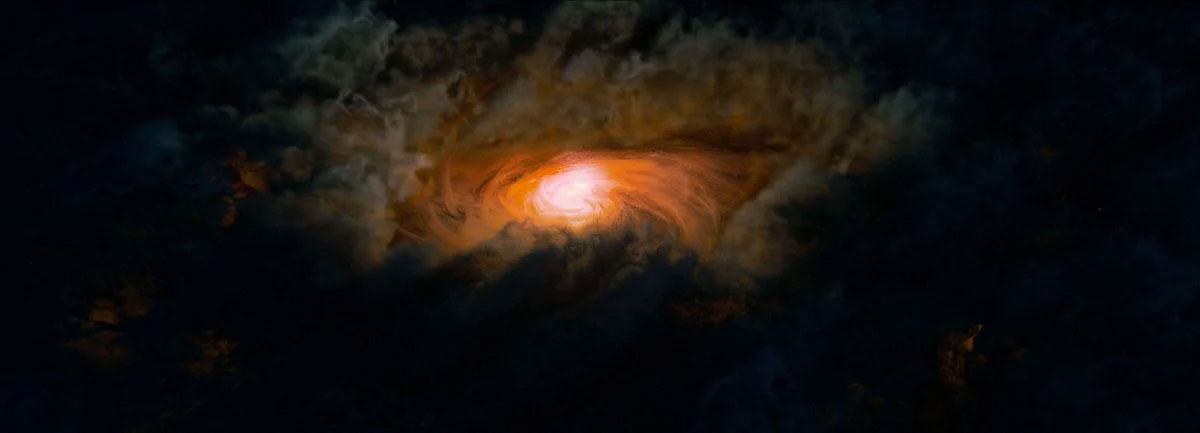
Quasars – first discovered in the 1960s – are among the brightest celestial objects ever observed. This tremendous brightness comes from supermassive black holes at their centers, where extremely strong gravity pulls surrounding matter inward. As matter falls into the black hole, it forms an accretion disk that rotates at very high speeds, gradually 'feeding' the black hole.
During rotation, particles collide and frictionally rub against each other, causing the accretion disk to heat up to extremely high temperatures. This phenomenon releases a huge amount of energy, creating light 100 to 1,000 times brighter than an entire galaxy containing about 100 billion stars. The ultraviolet radiation produced is so intense that telescopes can detect quasars at extremely long distances, even near the edge of the observable universe.
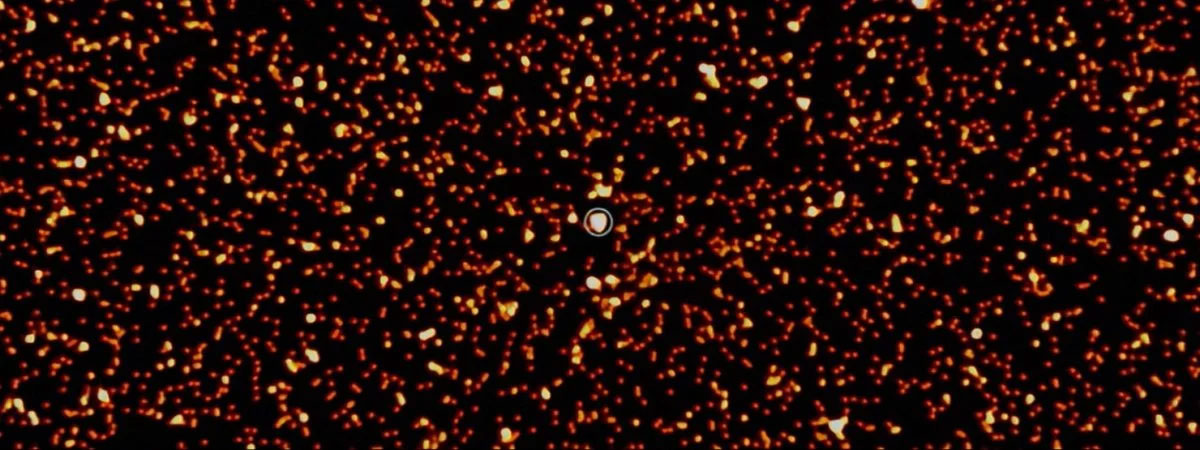
From ultraviolet to X-rays: A connection spanning half a century
Ultraviolet light from the accretion disk is thought to be the 'fuel source' for the much higher-energy X-ray radiation emitted by the quasar. As the ultraviolet rays travel through space, they collide with high-energy particle clusters located very close to the black hole, a structure known as the 'corona'.
During the collision, ultraviolet rays are 'amplified' in energy and converted into high-intensity X-rays – the type of radiation that observation devices on Earth can detect.
Because they share a common origin, the intensity of X-rays and ultraviolet light emitted by quasars is thought to be closely related: the stronger the ultraviolet light, the more intense the X-rays. This correlation, discovered nearly 50 years ago, has become the foundation for scientists to infer the geometry and physical conditions of matter near supermassive black holes, and has been the focus of decades of research.
However, the new research presents a major turning point by challenging the assumption that this correlation is universal and constant. In other words, the structure of matter around black holes may not be the same at every point in the universe's history.
The results show that when the universe was young – about half its current age – the relationship between the X-rays and ultraviolet light of quasars was significantly different from what is observed in the universe near us. This finding suggests that the physical processes linking the accretion disk and the halo around supermassive black holes may have changed over the approximately 6.5 billion years of cosmic history.
"The confirmation that the relationship between X-rays and ultraviolet light is not universal over cosmic time is truly surprising, and it challenges our current understanding of how supermassive black holes grow and radiate," said Dr. Antonis Georgakakis, one of the study's authors.
We have tested this result using various methods, but the trend continues to appear.
Unprecedented data and a novel methodological approach
The study combines new X-ray observations from the eROSITA telescope with archived data from the European Space Agency's XMM-Newton Observatory. This allowed the research team to investigate the relationship between X-ray intensity and ultraviolet light across an unprecedentedly large sample of quasars.
The key lies in eROSITA's broad and uniform coverage, enabling the study of quasar populations on a scale previously impossible.
The assumption of the universality of the ultraviolet-X-ray relationship underlies many methods that use quasars as 'standard candles' to measure the geometry of the universe, thereby understanding the nature of dark matter and dark energy. New results suggest that greater caution is needed, along with a serious reconsideration of the assumption that the structure of black holes does not change over cosmic time.
" The most important breakthrough here lies in the research methodology ," shared Dr. Maria Chira of the Athens National Observatory, the lead author of the paper.
' The eROSITA survey is very broad but relatively 'shallow,' meaning many quasars were detected with only a few X-ray photons. By incorporating this data within a tight Bayesian statistical framework, we were able to detect subtle trends that were previously missed .'
In the future, the entirety of eROSITA's sky-scanning data will allow astronomers to study fainter and more distant quasars. Future analyses, combined with new generations of X-ray telescopes and multi-wavelength surveys, will help determine whether observed changes reflect a true physical transformation or simply a sampling effect.
Such studies promise to provide deeper insights into how supermassive black holes create the universe's most powerful sources of light, as well as how their behavior has evolved over cosmic time.
Final Thoughts
Understanding new discovery could break 50-year-old laws of black hole physics makes it easier to evaluate the information and apply the most relevant recommendations. Focus on the key points above and verify details that may change over time.
FAQ
What is new discovery could break 50-year-old laws of black hole physics?
Explore new discovery could break 50-year-old laws of black hole physics.
What key points does this article cover?
The article focuses on From ultraviolet to X-rays: A connection spanning half a century, Unprecedented data and a novel methodological approach, with practical explanations and examples.
How can you use this information in practice?
Use the explanations to compare options, verify important details, and make a more informed decision. Apply the recommendations that best match your goals and situation.
Related Articles
 Discover the Most Bizarre Black Holes in the Mysterious Space6 minutes read
 Black Hole, White Hole, Deep Hole: Black Hole Is What Is White Hole14 minutes read
 10 Interesting Facts About Black Holes in the Universe (part 2)5 minutes read
 The 2017 Nobel Prize for Physics Was Awarded to Research on Gravitational Waves4 minutes read
 The Discovery of a Giant Black Hole, 70 Times the Mass of the Sun3 minutes read
 10 Interesting Facts About Black Holes in the Universe (part 1)7 minutes read
Reader Comments 0
Sign in with email or Google to join the discussion.