Table of Contents
One of the new Google Maps features that many of us don't know about is Immersive View, which turns out to be the best thing to happen to the platform in years.
Mountain bike enthusiasts demand a lot from their navigation software, and they have tried every major vendor in search of the perfect solution. Each has its own strengths.
One of the new Google Maps features that many of us don't know about is Immersive View, which turns out to be the best thing to happen to the platform in years.
What exactly is Immersive View?
The idea behind Google Maps' new feature
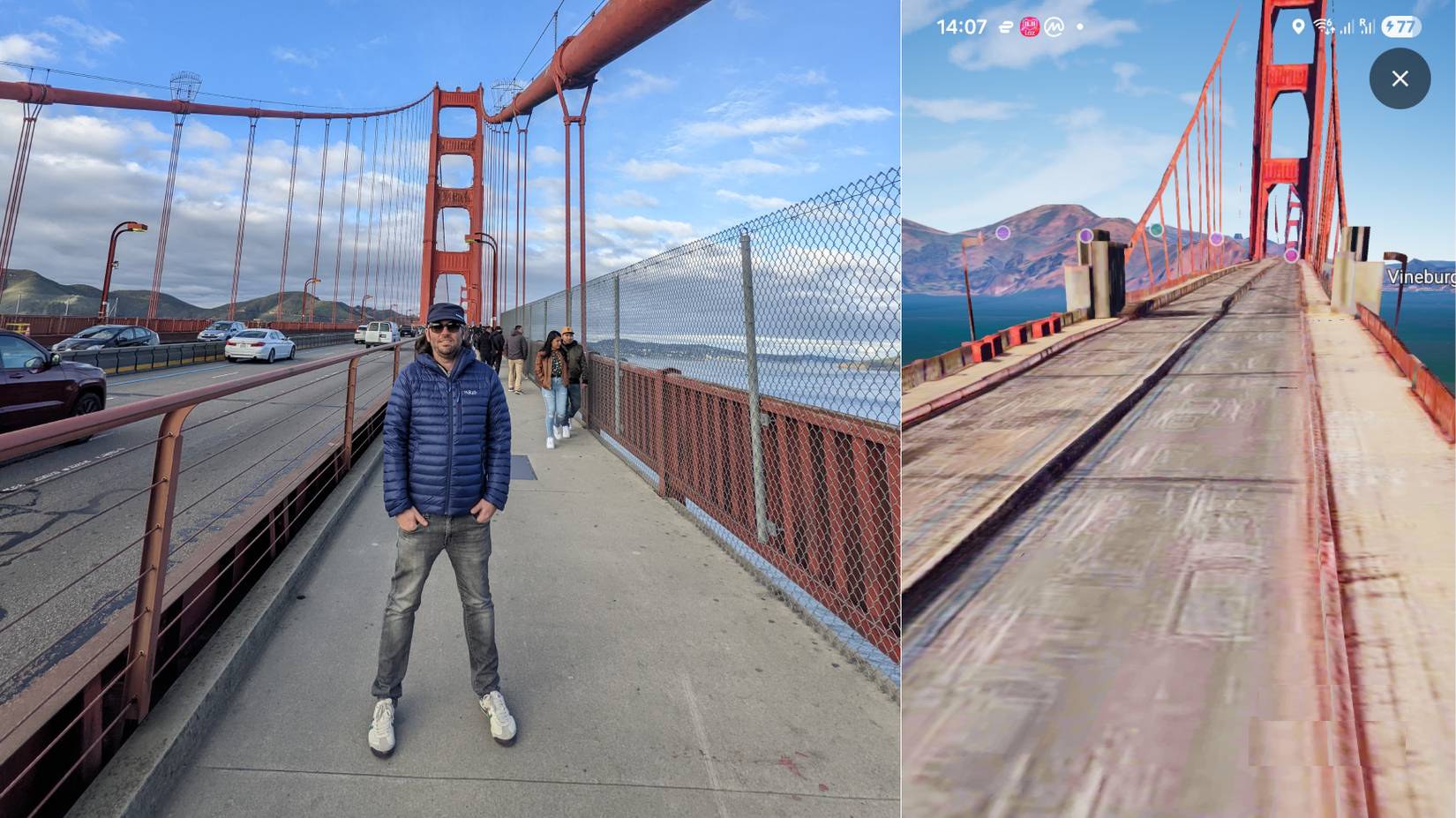
Immersive View, which will be rolled out gradually starting in 2023, combines AI, Street View imagery, and satellite data to create detailed 3D visualizations of cities and routes. It's like a multidimensional digital replica of the world, allowing you to scroll through neighborhoods, peek at landmarks, see your destination at different times of day, or even check weather conditions.
If your chosen destination supports Immersive View, you can travel through a realistic virtual reconstruction of cities like London, Chicago, or Tokyo, with dynamic lighting, moving traffic, and simulated weather.
Benefits of using Immersive View
Get to know more before you travel, understand accessibility better, etc.
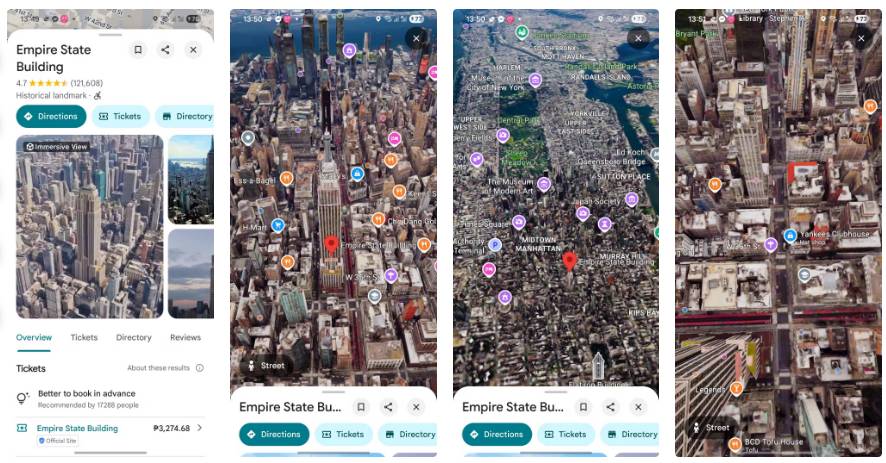
You can use Google Maps' Immersive View feature in conjunction with Street View to plan experiences, not just routes. You can take a virtual tour of landmarks, locations, restaurants, and even entire neighborhoods before you even set foot there. Even locally, you can plan exercise routes and check the best conditions for running errands.
Immersive View also offers peace of mind, whether it's familiarising yourself with routes and surroundings before setting off, helping to ensure safety and preventing you from turning down a dark alley that can't be seen on the map. It gives you more confidence whenever you arrive in a new place, as you can assess the lighting, terrain and traffic before setting off.
Limitations of Immersive View
Is it just another minus in Google Maps' long list of features?
Some argue that Immersive View is more form than substance. It's a technology that exceeds our expectations, but is less necessary. Is it just another device designed to collect data about our location and movements?
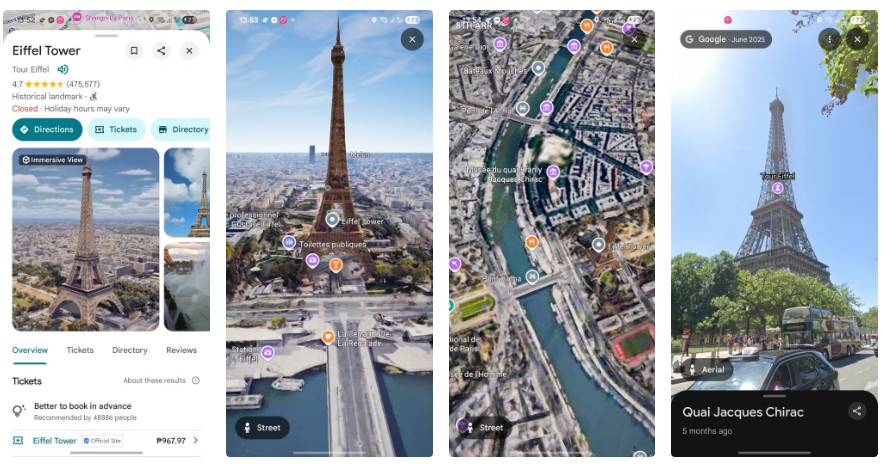
You can find also accessibility issues. Immersive View is only available in a few major cities and a few famous landmarks around the world. You have to look for the 'Immersive View' tag in specific location searches to activate the service. That's great if you want to take in the views as you walk from the Eiffel Tower to the Louvre, through the Latin Quarter, but if you want to explore downtown Phnom Penh at 3am, you're unfortunately out of luck. The app, by the way, uses many data in Immersive View mode, and the device gets hot after just a few minutes of use.
In most cases, the standard Google Maps interface is perfectly adequate. There's no need to fly around virtual London when you can get directions to the nearest tube station or just type in your destination and go. In this respect, Immersive View is unnecessary. However, it's important to remember that this is a free extra feature, just one part of the overall package.
More than just looks
Advanced 3D mapping may be just the tip of the iceberg
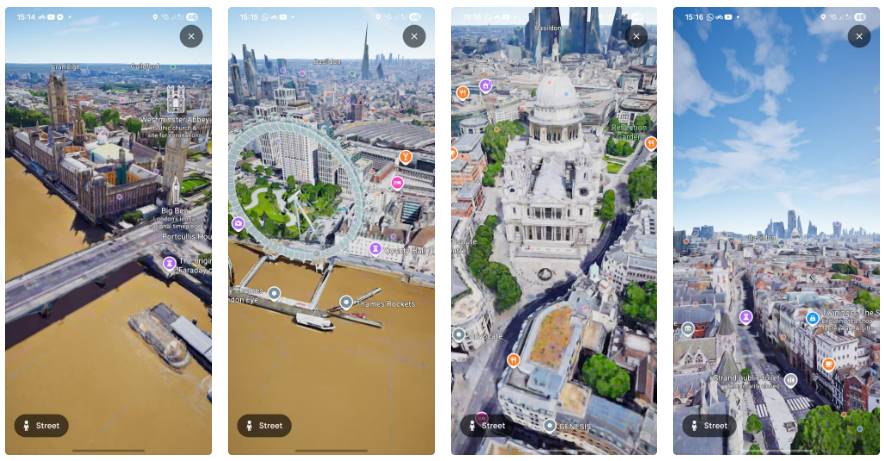
Immersive View isn't meant to replace the classic Maps experience; it's meant to extend it. Every major map enhancement, from satellite views to 3D maps, might be considered overkill. Yet they're now indispensable for many everyday users and industries. It's not just about displaying compelling imagery, it's about helping us better understand space and movement.
Immersive View also offers a glimpse into Google's broader vision for augmented reality (AR). It combines generative AI, predictive modeling, and advanced 3D data synthesis, laying the groundwork for maps of the future, where digital and physical navigation seamlessly blend.
The potential here is huge, as the technology behind Immersive View could extend beyond just city previews to not only help improve travel, but also create large-scale environmental simulations, aid city planning, and foster new types of digital tourism.
FAQ
What is new about immersive view is the best new Google Maps feature that many people are?
In practical terms, one of the new Google Maps features that many of us don't know about is Immersive View, which turns out to be the best thing to happen to the platform in years.
Why does this update matter?
The article highlights that the idea behind Google Maps' new feature Immersive View, which will be rolled out gradually starting in 2023, combines AI, Street View imagery, and satellite data to create detailed 3D visualizations of cities and.
Is the change available to everyone?
Availability may depend on the product version, region, account, or rollout stage described in the article.
Related Articles
 How to Use Google Maps Immersive View on Android and iOS5 minutes read
 How Does Google Maps Work?: Why Google Created Google Maps12 minutes read
 Google Maps' New Colors Bother You? Let's Switch to Satellite View Explained6 minutes read
 How to View the Elevation of a Location on Google Maps5 minutes read
 Google Recently Revived a 'Dead' Feature Since 20094 minutes read
 11 Lesser-known Google Maps Features That Are Perfect for Photographers9 minutes read
Reader Comments 0
Sign in with email or Google to join the discussion.