Table of Contents
Windows' built-in battery report provides estimated design capacity and current full-charge capacity for many laptops. Comparing these values can show approximate capacity loss, but it cannot predict exact runtime or establish a universal replacement threshold.

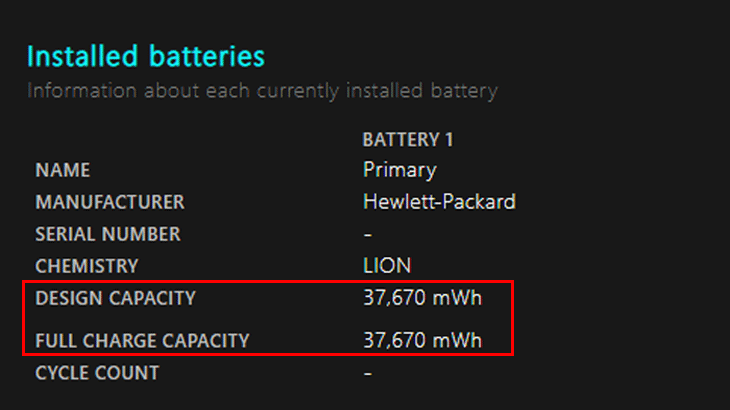
Generate a battery report
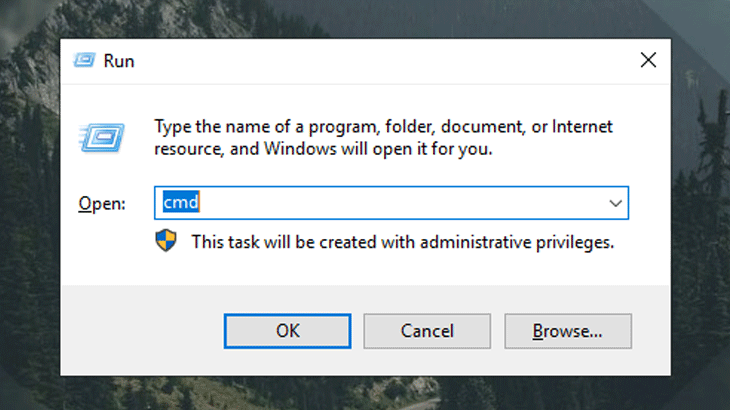
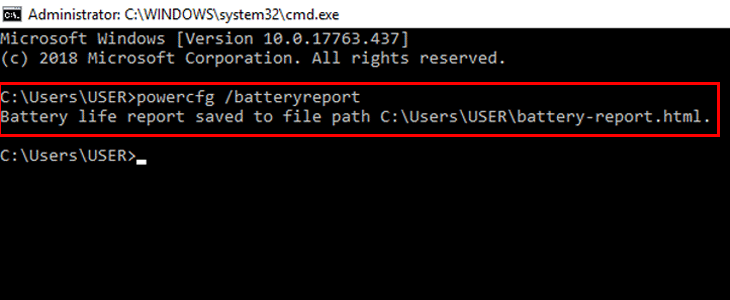
- Open Command Prompt or Terminal and run
powercfg /batteryreport. - Read the output for the location of the saved HTML report, then open that file in a browser.
- In Installed batteries, note Design Capacity and Full Charge Capacity.
Approximate capacity loss can be calculated as: (Design Capacity - Full Charge Capacity) / Design Capacity × 100%. Battery measurements are estimates and vary with age, temperature, usage, and firmware. Cycle count may be unavailable, and it does not simply count each time the charger is plugged in.
Use manufacturer diagnostics for a second check
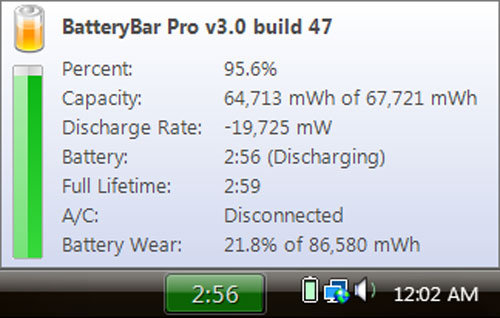
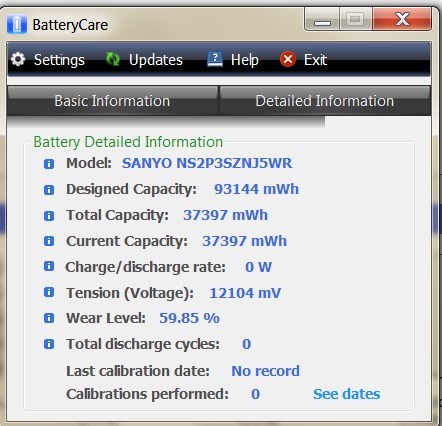
Your laptop maker may provide battery diagnostics in its support app or firmware. Third-party utilities such as HWMonitor may also display battery data on supported systems, but values depend on what the device reports. The original screenshots of HWMonitor, BatteryBar, and BatteryCare show older interfaces and are not a current endorsement.
When to seek service
Consider service if runtime has become impractical, the laptop shuts down unexpectedly, or diagnostics report a fault. If a battery is swollen, unusually hot, or damaged, stop using and charging the laptop and arrange qualified service. Do not open or rebuild a battery pack yourself; use the manufacturer's replacement and recycling guidance.
Related Articles
 How to check the bottle of Laptop Battery without software
 How long does it take to charge a laptop battery? Check laptop charger capacity
 How to monitor laptop battery life on Chrome
 How do I know if my laptop battery is bottled or broken?
 Summary of the most accurate laptop battery testing software
 How to check if the HP laptop battery is subject to revocation
Reader Comments 0
Sign in with email or Google to join the discussion.