Table of Contents
On June 5, a group of scientists at Xidian University, Xi'an, China successfully tested a system that can absorb sunlight, convert it into microwaves, and then transmit it wirelessly to a receiving station on the ground. This model is being studied to serve the research and exploitation of space solar power.
Space, cloudless, seasonless, and free of atmospheric interference, is the ideal place for solar power generation. There, solar panels can operate at maximum efficiency day and night, generating 6-8 times more energy than on the ground.
That said, the difficulty lies in transmitting electricity to Earth because the satellites are located at an altitude of about 36,000 km, nearly 3 times the diameter of the Earth. In addition, the cost of launching satellites is extremely expensive. Therefore, the efficient production of space solar power becomes a difficult problem.
Fortunately, the cost of launching satellites is falling, thanks to the advent of reusable rockets and alternative launch methods. As a result, many scientists are continuing to research space solar energy, specifically focusing on improving the efficiency of wireless power transmission.
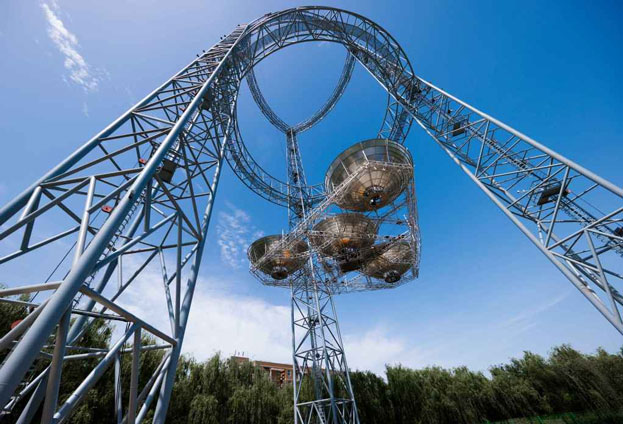
Since 2018, a 75m-high steel tower and five subsystems: omega concentrator, light-to-electricity converter, power transmission, power management and receiving antenna have been built on the Xidian University campus. On top of the tower hang dishes that act as surrogate satellites that concentrate sunlight, then convert it into energy and finally transmit it to the ground for a collecting antenna.
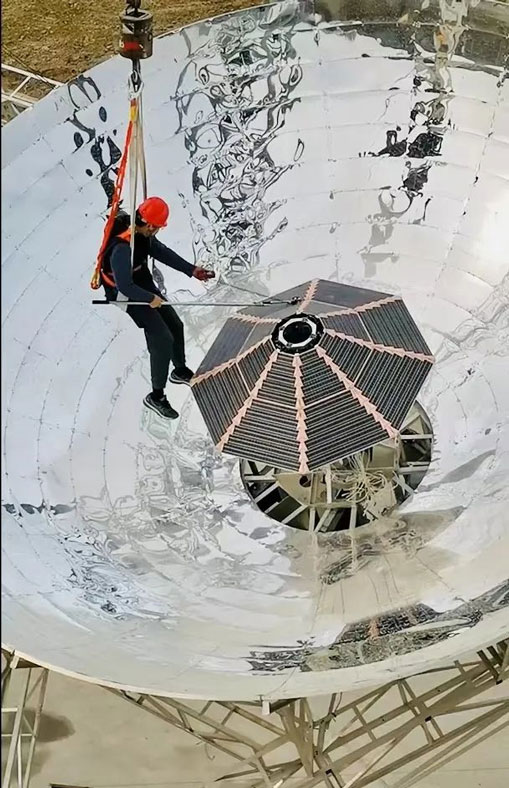
This Chinese model is the world's first system with all the functions of space solar energy, including tracking the Sun, concentrating light, converting light into electricity, transmitting electricity in the form of microwaves and then receiving it with a separate antenna. Although in this test the system only sent microwaves 55 meters in the air, according to experts, this system is developing 3 years ahead of schedule and is the premise of a new solar power grid that can wirelessly transmit energy from outer space to Earth.
Final Thoughts
Overall, China Successfully Tests Wireless Transmission of Solar Energy is best understood by considering the main facts, practical context, and limitations together. Use the details above as a clear starting point and confirm time-sensitive information when necessary.
FAQ
What does this article explain about China Successfully Tests Wireless Transmission of Solar Energy?
On June 5, a group of scientists at Xidian University, Xi'an, China successfully tested a system that can absorb sunlight, convert it into microwaves, and then transmit it wirelessly to a receiving station on the ground.
What should you know about the key details?
Space, cloudless, seasonless, and free of atmospheric interference, is the ideal place for solar power generation. There, solar panels can operate at maximum efficiency day and night, generating 6-8 times more energy than on the ground.
Should time-sensitive details be verified?
Yes. Software features, game codes, product specifications, prices, and research findings can change. Confirm important details with an official or primary source when accuracy affects your decision.
Related Articles
 Solar Wireless Headphones3 minutes read
 China Successfully Broadcast 4K Video via 5G Network3 minutes read
 How Does Sunlight Become Solar Energy?4 minutes read
 How Does a Solar Generator Work?7 minutes read
 Is Solar Water Heater Heating Water Good?6 minutes read
 8 Popular Wireless Technology Standards Today10 minutes read
Reader Comments 0
Sign in with email or Google to join the discussion.