Table of Contents
Use AI at points where a second perspective would help: when you need alternate ideas, when a draft has a problem you can’t name, or when you want to test how a creative choice comes across. Give it a specific brief and keep the decisions about voice, audience, and meaning with you.
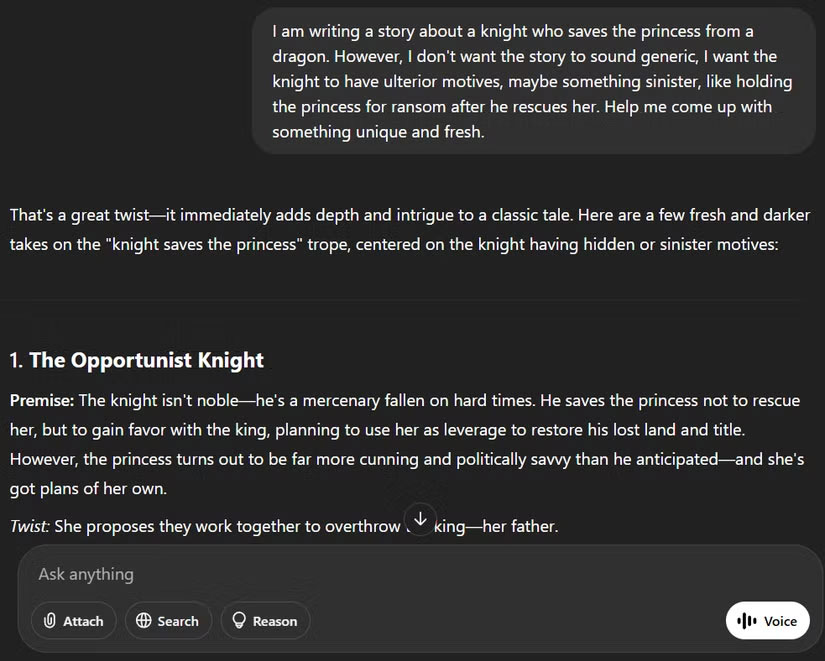
1. Ask for genuinely different starting points
Give the tool your premise and ask for three approaches with different trade-offs. For a story, ask for a change in a character’s motivation, a change in the setting, and a change in what the reader knows. That gives you three directions you can actually compare.
2. Plan around your own work habits
Keep a short log of when you drafted, revised, and got stuck. Ask AI to propose two possible schedules based on the log. Try them in real work sessions and keep the one that helps. The tool can organize your observations, but it can’t infer your ideal schedule from a few data points.
3. Borrow a technique from another format
Try asking how the branching choices of a game could influence the structure of an essay, or how a museum label might make an exhibition poster easier to read. Use the borrowed technique to solve a specific problem in your own work.
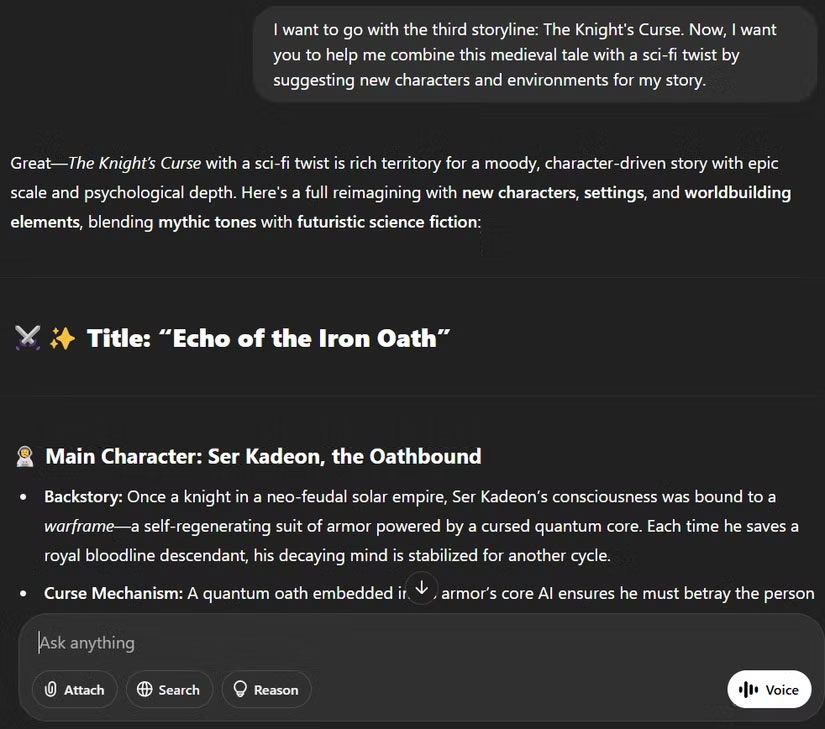
4. Give yourself a constraint
Ask for a constraint you can try in one short draft, such as a scene with no dialogue or an illustration using two values of one color. Compare the experiment with your ordinary version and keep what improved it.
5. Ask what an idea depends on
Describe a draft and ask, “What must the reader believe for this ending to work?” Ask for one example where that assumption might fail. The response can give you a precise place to revise.
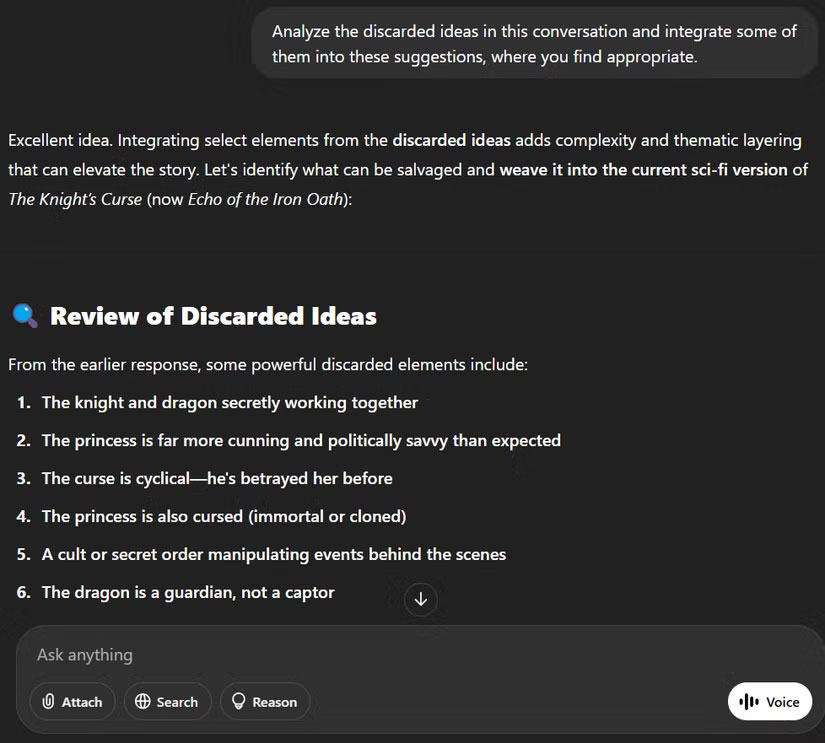
6. Revisit discarded material
Share a few unused notes you’re allowed to upload. Ask which fragments answer a specific brief and why. A discarded headline might become a subheading, or a cut scene might reveal what a character needs in a different chapter.
7. Get targeted feedback before asking real readers
Ask the tool to show where it got confused and point to the passage that caused the confusion. Use that feedback to prepare questions for readers who know the audience. AI feedback is a starting point for testing, especially when the work depends on cultural context or lived experience.
For a more useful brief, see how to give a prompt context and a clear goal and the guide to improving AI results.
Related Articles
 70 simple ways to help you be more creative at the office
 32 Instagram graphic designers you should follow to get creative inspiration
 10 tools to help you promote your creative ability effectively
 7 simple ways to train creative thinking skills
 What is Creative Fabrica? Is it worth it for graphic designers to use?
 Adobe raises prices and makes unfortunate changes to its Creative Cloud plans
Reader Comments 0
Sign in with email or Google to join the discussion.