Table of Contents
Many people build PCs without paying attention to power consumption, but energy efficiency directly affects costs, heat, noise, and component life.
When building a desktop PC, most users only care about whether the power supply can handle the components. But power consumption is more than just a number on a label, and there are many reasons to carefully consider hardware components and their energy efficiency.
When users no longer 'think about Watts'
For years, most PC users assumed that power consumption was only important for laptops or data centers. Perhaps that's why today, it's not uncommon to see gaming rigs with 1000W or more power supplies, with CPUs and GPUs that can 'eat' hundreds of watts just to get a few frames or seconds of render time.
If you're only chasing maximum performance, power consumption will inevitably increase over time. That's the way it is when you squeeze more performance out of each generation of chip. But PC users—whether gamers, graphic designers, or office workers—should be concerned about how much power their systems are consuming.
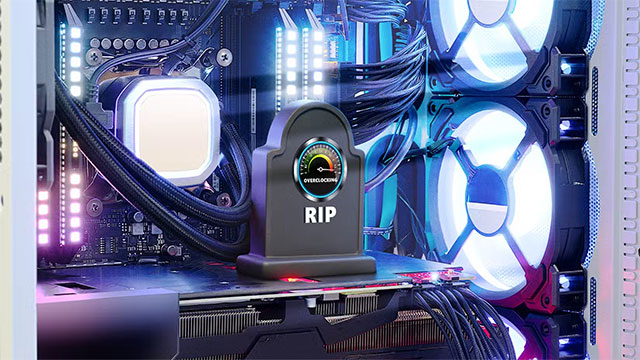
The electricity bill is not the biggest problem
The easiest way to convince someone to care about electricity is to point out the cost to them each month. A 1000W monster PC is sure to drive up the bill, especially as electricity prices continue to rise—partly due to the explosion of AI data centers.
But even if the PC owner doesn't care about cost, the amount of electricity the machine consumes still causes other problems: more heat, more noise, and reduced component life.
Energy efficiency means consistent performance
When you move from a 'more is better' mindset to 'performance per watt', many benefits emerge.
An efficient system is more likely to achieve peak performance and is less likely to experience thermal throttling. Modern CPUs and GPUs adjust their clock speeds dynamically based on electrical and thermal constraints; the more efficient the hardware, the more room it has to sustain high clock speeds for extended periods.
That's why many laptop users choose to undervolt. The default voltage level is often set quite high to ensure stability for all chips. But if you have a lucky chip, you can completely reduce the voltage without losing performance — the machine will even run cooler and more stable.
Experts generally discourage mainstream users from undervolting their desktop PCs, but the principle is absolutely correct: more efficient hardware results in more sustainable performance.
Infrastructure costs — the part users often don't see
Regardless of individual interests, every watt of electricity a PC consumes has to be generated, transmitted, and cooled—incurring significant infrastructure costs. When millions of people use high-end PCs without paying any attention to how much power they actually need, the cumulative impact is huge.
That's why companies like Intel, Sony, and Microsoft are trying to design smarter operating systems. Today's operating systems are also optimized for power allocation, but You can still easily 'force' their hardware to run at full capacity just to play a turn-based game at 200fps — which doesn't bring any real benefits.
If you keep your engine running at full throttle all the time, it will be hotter, noisier, and completely unnecessary. Just like your car can go 150 mph, but you can't always keep it at full throttle — and sometimes, a more 'chill' drive is more comfortable and sustainable.
FAQ
Why Does Desktop PC Power Consumption Really Matter: Explained?
In practical terms, many people build PCs without paying attention to power consumption, but energy efficiency directly affects costs, heat, noise, and component life.
What factors are most important?
The article highlights that but power consumption is more than just a number on a label, and there are many reasons to carefully consider hardware components and their energy efficiency.
What is the main takeaway?
The main takeaway is that when users no longer 'think about Watts' For years, most PC users assumed that power consumption was only important for laptops or data centers.
Related Articles
 Top 5 Software to Measure Computer Power Consumption6 minutes read
 Why Do You Need a More Desktop Laptop?4 minutes read
 Windows 8 Saves RAM and Reduces Power Consumption5 minutes read
 Do You Know That Appliances Still Consume Electricity Even If They6 minutes read
 Learn Energy Saving Technologies on OS X Mavericks9 minutes read
 How to Run Your Desktop Off DC Power: Step-by-Step Guide9 minutes read
Reader Comments 0
Sign in with email or Google to join the discussion.