Table of Contents
Microwaves are a common household appliance and can rust over time. Is it safe to use a microwave oven?
Microwaves are a common household appliance and can rust over time. Is it safe to use a microwave oven?
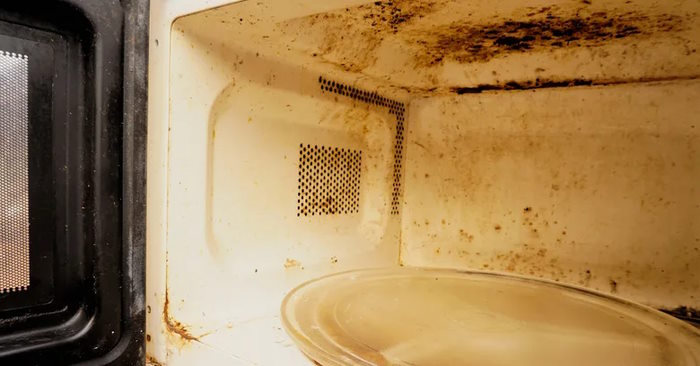
Rust in microwaves isn't unusual. In fact, it's more common than you might think. Over time, heat, humidity, and food splatters gradually wear away the protective coating on the metal inside. Once that protective coating is broken down, oxidation causes those familiar reddish-brown stains to appear.
But is it safe to continue using a rusted microwave? The answer is both yes and no. If the rust is only on the surface, you can generally continue using your microwave. However, if the rust flakes off or corrodes the metal underneath, that is a warning sign, a potential safety and health hazard.
Age, poor cleaning habits, and clogged vents are common causes.
The inside of your microwave is coated with a protective coating that helps keep the metal from rusting. Over time, that coating can crack, chip, or peel. This creates tiny gaps where moisture and oxygen can get in. Each heating cycle adds to the wear, and before long, rust will start to appear. But age isn't always the only culprit. Years of daily use can also gradually wear away that protective surface, especially near the corners or along the door.
Using harsh scrubbers or chemical cleaners only makes things worse—they strip away the protective coating on the metal underneath. When sauces or liquids spill out, they release acids that eat away at the coating. Plus, as they dry and harden, they make cleaning your microwave much more difficult. And finally, even clogged vents can trap moisture that causes corrosion even after the oven door is closed, leading to rust.
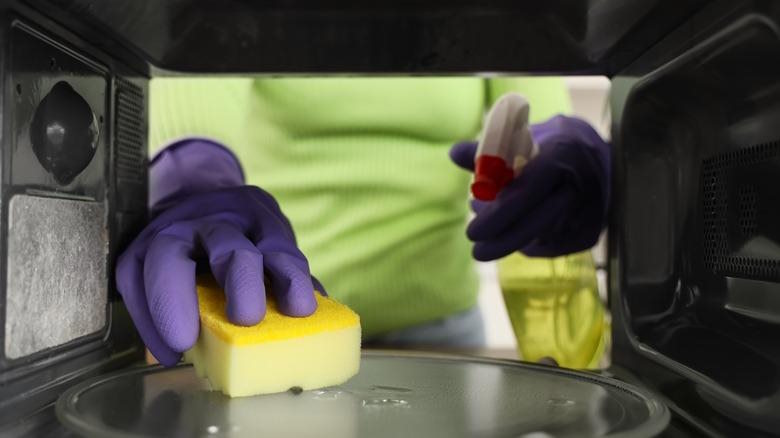
How to treat wear and tear before rust becomes dangerous
You may be wondering whether you should use your microwave after seeing rust. If it's just a small spot, it's not harmful as long as you deal with it immediately. But if the rust has built up over a long period of time, it can be very dangerous. The internal structure can be damaged, food may not be heated properly, and in severe cases, there is even a possibility of radiation leakage. Sometimes, rust can also corrode the metal, creating holes that allow rust particles or peeling paint to fall into your food. At this point, it is not safe to repair. The best option is to replace the microwave.
You can prevent rust by following a simple cleaning routine using vinegar, an all-purpose cleaner. Wipe the inside of your microwave with vinegar and a damp cloth after heating liquids like milk or soup, and your microwave will be sparkling clean in just a few minutes. Likewise, be sure to wipe up spills before they solidify, and keep the door closed when not in use to keep out moisture. If rust persists, you can gently scrub it with salt, which will remove the rust without leaving a smell.
FAQ
Why Microwaves Rust and Whether They Are Safe to Use?
In practical terms, microwaves are a common household appliance and can rust over time. Is it safe to use a microwave oven.
What factors are most important?
The article highlights that but is it safe to continue using a rusted microwave.
What is the main takeaway?
The main takeaway is that how to treat wear and tear before rust becomes dangerous You may be wondering whether you should use your microwave after seeing rust.
Related Articles
 What Is a Microwave? Structure and Utility of a Microwave in Life7 minutes read
 Things to Know About Fearless Concurrency in Rust8 minutes read
 Does the Microwave Lose Nutrients in Food?8 minutes read
 Can Glass, Plastic, Wood and Porcelain Cups Be Used for Microwave6 minutes read
 Microwave Tips9 minutes read
 How to Choose the Right Microwave Oven According to Your Needs6 minutes read
Reader Comments 0
Sign in with email or Google to join the discussion.