Table of Contents
What is a white pheasant that landed the farmer who raised and sold it in prison for six years? Here's what you need to know about white pheasants .
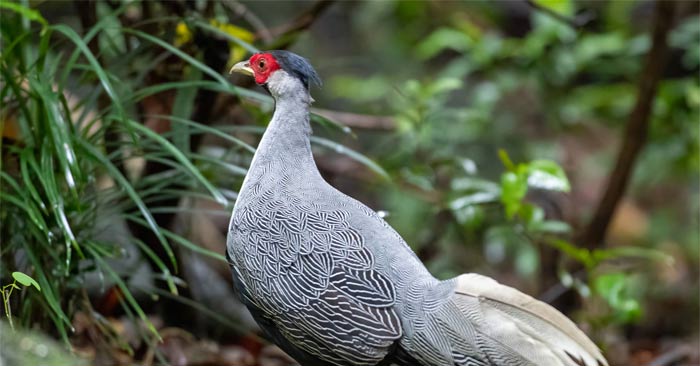
What is a white pheasant?
The white-headed pheasant (Lophura nycthemera) is a species of pheasant found in forests, mainly in mountainous areas, in mainland Southeast Asia and eastern and southern China, with an introduced population on Victoria Island in Lake Nahuel Huapi, Neuquén, Argentina. The males are black and white, while the females are mainly brown. Both males and females have a bare red face and red legs (the latter distinguishing them from the gray-legged kalij). The species is popular in aviculture. It is also common in the wild, but some of its subspecies (notably L. n. whiteheadi from Hainan, L. n. engelbachi from southern Laos and L. n. annamensis from southern Vietnam) are rare, now considered endangered.
The White Pheasant is a herbivore (seed and fruit eater). It feeds primarily on seeds and fruit, and may also eat invertebrates depending on the season.
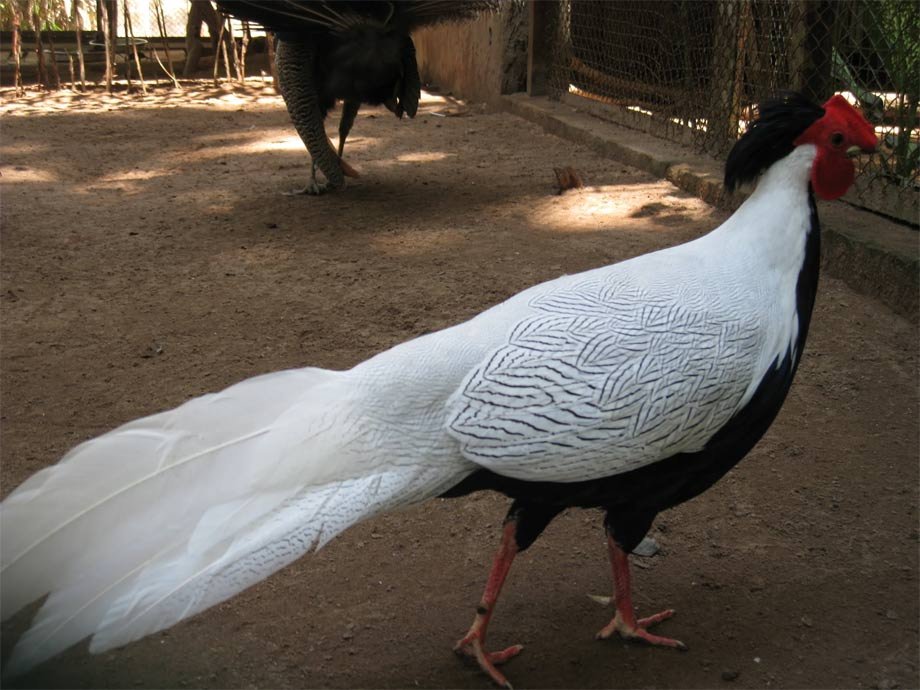
How many types of white pheasants are there?
When the famous scientist Carl Linnaeus first described the white pheasant in 1758, he placed it in the genus Phasianus. Over time, scientists learned more about the bird. Today, most experts agree that the silver pheasant, or white pheasant, belongs to the genus Lophura.
The white pheasant is very similar to the kalij pheasant. Sometimes, the two birds can even produce offspring together, which is called a hybrid. Scientists use special tools, such as looking at their mtDNA (a type of genetic material), to figure out how closely related different birds are. This helps them determine which birds belong to which species or subspecies.
White Pheasant Varieties
There are currently 15 different subspecies of the White Pheasant. Each subspecies may look slightly different or live in different areas. Here are some of them:
- L. n. occidentalis – This species is found in south-central China and northeastern Myanmar.
- L. n. rufipes – Known as the ruby-billed white pheasant, they live in northern Myanmar.
- L. n. ripponi – The Rippon White Pheasant is found in southern Myanmar.
- L. n. jonesi – Jones's pheasant lives from Myanmar to southwestern China and central Thailand.
- L. n. omeiensis – Sichuan White Pheasant is found in southern Sichuan, China.
- L. n. rongjiangensis – This species, the Guizhou white pheasant, lives in southeastern Guizhou, China.
- L. n. beaulieui – Laotian White Pheasant is found from southern China to northern Laos and northern Vietnam.
- L. n. nycthemera – This is the main species, found from southern China to northern Vietnam.
- L. n. whiteheadi – The Hainan white pheasant lives on Hainan Island in southern China.
- L. n. fokiensis – Fokien's White Pheasant is found in southeastern China.
- L. n. berliozi – Berlioz's White Pheasant lives on the western slopes of the Truong Son range in central Vietnam.
- L. n. beli – The Bel's White Pheasant is found on the eastern slopes of the Truong Son range in central Vietnam.
- L. n. engelbachi – The Bolovenian Pheasant lives on the Bolaven Plateau in southern Laos.
- L. n. lewisi – Lewis's White Pheasant is found in the mountains of southwestern Cambodia and eastern Thailand.
- L. n. annamensis – The Annamese White Pheasant lives in the mountainous forests of southern Vietnam.
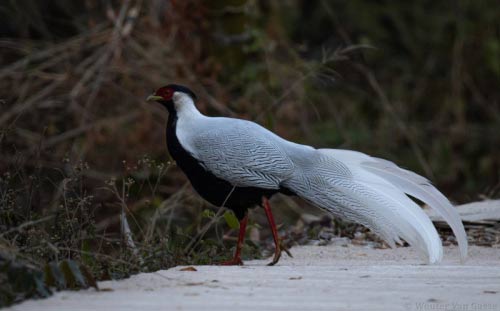
Interesting facts about white pheasants
- During courtship, the decorative feathers on the head of the white pheasant become bright, while normally they are dull and sparse.
- Pheasant chicks are covered with brown down, which helps camouflage them well when they leave the nest.
- This breed of chicken has excellent eyesight and hearing, which helps them quickly detect enemies.
- White pheasants can run at speeds of 8-10 miles per hour (13-16 km/h) and fly at speeds of 35-45 miles per hour (56-72 km/h). They can also swim.
- In summer, white pheasants breathe rapidly to maintain a stable body temperature.
Final Thoughts
Overall, White Pheasant is best understood by considering the main facts, practical context, and limitations together. Use the details above as a clear starting point and confirm time-sensitive information when necessary.
FAQ
What does this article explain about White Pheasant?
What is a white pheasant that landed the farmer who raised and sold it in prison for six years? Here's what you need to know about white pheasants.
What should you know about What is a white pheasant??
The white-headed pheasant (Lophura nycthemera) is a species of pheasant found in forests, mainly in mountainous areas, in mainland Southeast Asia and eastern and southern China, with an introduced population on Victoria Island in Lake Nahuel Huapi, Neuquén.
Should time-sensitive details be verified?
Yes. Software features, game codes, product specifications, prices, and research findings can change. Confirm important details with an official or primary source when accuracy affects your decision.
Related Articles
 Mac Pro: How Much Is Pro and Pro Display Really 'Pro'?6 minutes read
 The Popular Cat Breed in Vietnam12 minutes read
 Surface Book 3 Officially Launched, Becoming the Most4 minutes read
 Synthesis of the Best Book Wallpapers for Computers2 minutes read
 10 Indispensable Apps for Book Lovers7 minutes read
 How to Find a Book When You Don't Remember the Name and Author11 minutes read
Reader Comments 0
Sign in with email or Google to join the discussion.