Table of Contents
When it comes to eggs, everyone knows the yolk and the white, but few can name the white lump stuck to the yolk. Here's what the white spot in an egg yolk is, whether you should throw it away, and more.
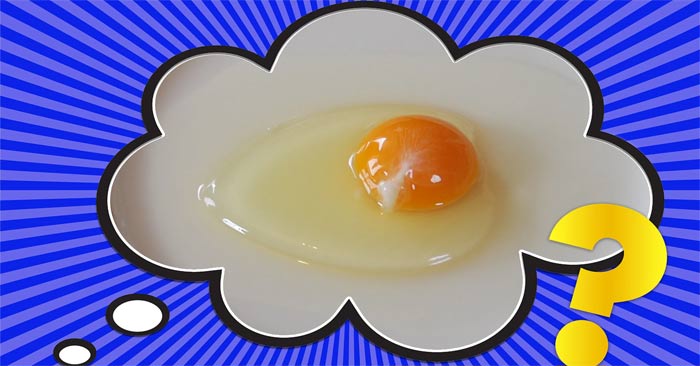
What is Chalaza?
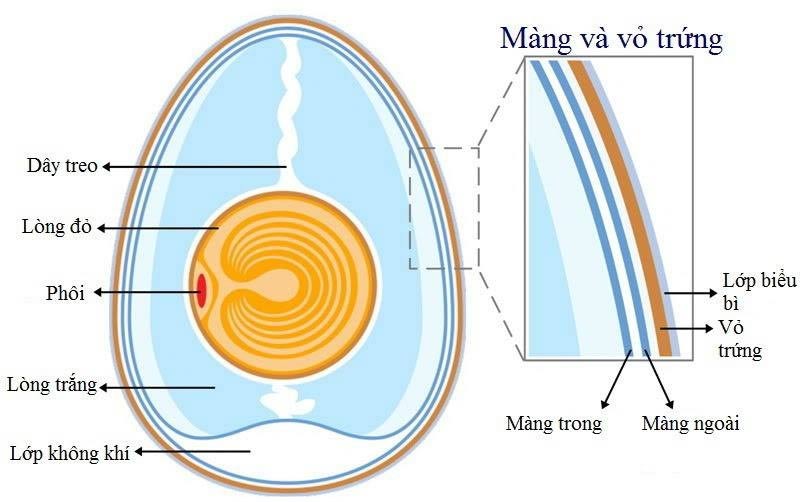
These mysterious white spots are chalazae; a single round spot is called a chalaza. Each egg has two chalazae — spiraling bands that attach the yolk to either end of the egg's inner membrane, preventing it from banging around inside the shell. As Bon Appétit explains, the coils of each chalaza 'twist in opposite directions,' so they can't untwist and let the yolk drift.
Is Chalaza edible?
A lumpy Chalaza egg may look rather unappealing, especially when compared to the smooth yolk next to it. But it's perfectly edible. In fact, a bright, crisp Chalaza egg is a sign of a good egg. According to the American Egg Board, both Grade AA and Grade A eggs have prominent Chalaza, while Grade B eggs have "little or no Chalaza."
This is also a factor in egg freshness. The longer an egg sits in storage, the thinner the white becomes and the more likely it is to spoil. But some eggs have those characteristics from the start. " Younger hens tend to lay more prominent, bouncier Chalaza ," Amy Barkley, a livestock specialist with Cornell Cooperative Extension, told Bon Appétit. " Older hens tend to have weaker, waterier egg whites, which make the Chalaza less prominent ."
When should Chalaza be removed?
While you don't need to remove the chalazae, some dishes may taste better without them - such as custards, curds, and anything else that requires beaten eggs.
You may want to beat the eggs through a fine mesh sieve to remove any chalazae, air bubbles, and bits of eggshell that may be left in the dish. Or you can simply use a fork to remove the chalazae before beating.

How to pronounce Chalaza?
Chalaza is pronounced "kuh-LAY-zuh". The plural form of chalazae is "kuh-LAY-zee".
Where does the word Chalaza come from?
Chalaza is a Latin loanword derived from the Greek word khalaza, which refers to a hailstone or any small, hail-like lump. Chalaza isn't the only English word derived from khalaza: There's also a chalazion, a type of eyelid cyst caused by a blocked oil gland. Unlike styes, chalazions don't get infected and don't cause constant pain. And unlike chalazions, you definitely can't pick them out with a fork.
Final Thoughts
The key takeaway is that What Is the Small White Streak Inside the Egg is easier to evaluate when its benefits, limitations, and real-world use are considered together. Review the details above before applying the information to a specific situation.
FAQ
What is the main point of What Is the Small White Streak Inside the Egg?
When it comes to eggs, everyone knows the yolk and the white, but few can name the white lump stuck to the yolk. Here's what the white spot in an egg yolk is, whether you should throw it away, and more.
What should you know about What is Chalaza??
These mysterious white spots are chalazae; a single round spot is called a chalaza. Each egg has two chalazae — spiraling bands that attach the yolk to either end of the egg's inner membrane, preventing it from banging around inside the shell.
What limitations should readers keep in mind?
The answer can depend on the product version, source, use case, and date of publication. Review the article's context and confirm time-sensitive details before applying the information.
Related Articles
 'Beat the Dell Streak 5-inch Screen Box4 minutes read
 White Pheasant: What You Need to Know About the Red Book Breed6 minutes read
 The Mystery Behind the Self-fuming Hills for Centuries3 minutes read
 Dell 'Wiped Out' Inspiron Mini Netbook3 minutes read
 White Background Image for Xiaomi2 minutes read
 Top Best Black and White Wallpaper for Phones3 minutes read
Reader Comments 0
Sign in with email or Google to join the discussion.