Table of Contents
Explore RGB Mini-LED TVs – a new technology that elevates LED TVs with superior brightness, a wide color gamut of 95% BT.2020, starting at $20,000.
After years of trying to compete with OLED with technologies like full-array local dimming, Mini-LED, or quantum dot, LED TV technology is about to enter a new phase: RGB Mini-LED TV.
The next big step for LED TVs
RGB Mini-LED TVs are essentially LED TVs that use a backlight system consisting of thousands of tiny red, green, and blue LEDs to create images. Unlike traditional LED or Mini-LED TVs that rely on white (or blue) LEDs combined with color filters or quantum dots, RGB Mini-LEDs create color directly from the light emitted by each LED.
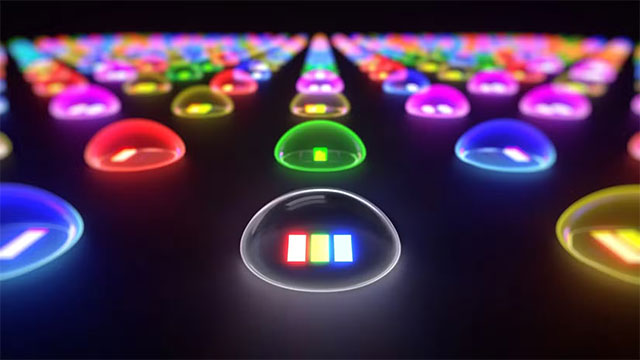
This change brings two distinct advantages: superior brightness and a wider color gamut. Without the need for color filters or quantum dots, there is no light loss, allowing RGB Mini-LED displays to reach significantly higher brightness levels. This is especially useful in brightly lit environments or when displaying HDR content.
Additionally, by using direct red, green, and blue LEDs, RGB Mini-LED TVs reproduce the original color spectrum, providing a wider color gamut. For example, the Hisense 116UX model can cover 95% of the BT.2020 color gamut — a standard for 4K/8K UHD content — while the company's Mini-LED U9N model only covers about 76%.
RGB Mini-LED, Micro RGB and RGB LED: What's the difference?
Manufacturers call this technology by different names, but the general principle is to use specialized red, green, and blue LEDs instead of color filters. Hisense calls it RGB Mini-LED. Samsung uses the name Micro RGB TV (not to be confused with MicroLED). And Sony chooses the name RGB LED TV.
While the underlying technology is the same, the implementation is different. For example, Samsung uses significantly smaller LEDs, allowing for increased LED density, better light control, and improved contrast.
Currently, this technology is still new and quite expensive. Some of the first models that have been sold on the market, such as Hisense 116UX and 100UX or Samsung: R95 Micro RGB TV, are quite 'expensive'. The prices for these models range from 20,000 USD to 30,000 USD.
At IFA 2025, Hisense also unveiled an 85-inch RGB Mini-LED TV that is expected to go on sale in 2026, while Sony is also aiming to launch its RGB LED TV line that year. TCL is developing and showing off prototypes, but has no official release plans yet.
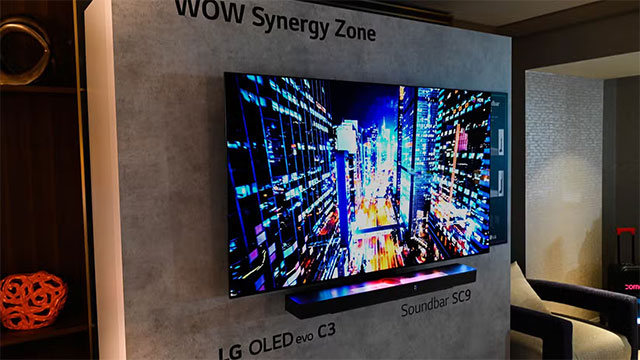
RGB Mini-LED vs. OLED: Which technology is better?
RGB Mini-LED is the latest attempt to challenge OLED's position. Both technologies have their own strengths and weaknesses:
- Color Range: RGB Mini-LED excels at 95% BT.2020, while OLED only reaches around 80%.
- Brightness: RGB Mini-LED also excels. OLED currently maxes out at around 2,500 nits, while the Hisense 116UX can exceed 5,500 nits.
- Size: OLED is pretty much limited to 97 inches, while RGB Mini-LED is easily scalable to 115–116 inches or more.
- Black & Contrast: OLED still leads the way thanks to its ability to light each pixel itself, creating absolute black and a near-infinite contrast ratio. RGB Mini-LED still relies on local dimming and so doesn't quite reach this level.
- Viewing angle: OLED is better, keeping colors accurate when viewed from many angles. Meanwhile, RGB Mini-LED often uses VA panels, narrower viewing angles.
RGB Mini-LED is a big step forward in LED TV technology, bringing extremely high brightness and wide color gamut, promising to become a formidable competitor in the high-end segment. Although it cannot replace OLED in terms of contrast and viewing angle, but with the speed of development and cost optimization, this technology will become more and more popular in the next few years.
FAQ
What Is RGB Mini-led TV? Comparing RGB Mini-led and OLED?
In practical terms, explore RGB Mini-LED TVs – a new technology that elevates LED TVs with superior brightness, a wide color gamut of 95% BT.2020, starting at $20,000.
Why does what is RGB mini-led TV matter?
The article highlights that at IFA 2025, Hisense also unveiled an 85-inch RGB Mini-LED TV that is expected to go on sale in 2026, while Sony is also aiming to launch its RGB LED TV line that year.
What is the main takeaway?
The main takeaway is that both technologies have their own strengths and weaknesses: Color Range: RGB Mini-LED excels at 95% BT.2020, while OLED only reaches around 80%.
Related Articles
 What Is Evo OLED Panel? What's Different from OLED?6 minutes read
 Instead of Oled or Micro-led, Why Did Apple Choose a Mini-led for6 minutes read
 QD-OLED Explained: How It Works and Key Features11 minutes read
 Scientists Have Found a Way to Make OLED Screens Brighter Without Consuming More Battery Power6 minutes read
 OLED Screen Burn-In Is Not a Myth: Complete Guide7 minutes read
 What Is MicroLED? What Is MicroLED Different from OLED?5 minutes read
Reader Comments 0
Sign in with email or Google to join the discussion.