Table of Contents
On August 12, 2022, a laboratory in Hefei, China, reported a steady magnetic field of 45.22 tesla inside its hybrid research magnet. The field was produced in a narrow opening for experiments. The number describes field strength at the sample, so it does not tell you what the magnet could lift.
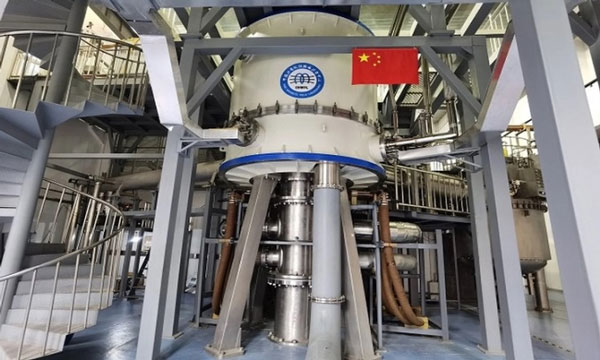
What produced the 45.22-tesla field?
The Hefei Institutes of Physical Science describes a resistive magnet nested inside a superconducting magnet. Both contribute to the field inside a bore about 32 millimeters wide. That is the opening for the experiment. The magnet that surrounds it is much larger.
Why the type of record matters
A steady-field magnet maintains a field long enough to collect measurements under stable conditions. Pulsed magnets can briefly reach higher fields, and laboratories also track separate records for resistive magnets. For example, Hefei reported a 42.02-tesla steady field from a resistive magnet in 2024. That was a different category from the hybrid magnet’s 2022 result.
What scientists use high fields for
Strong fields help researchers see how electrons behave in materials. A steady field lets them vary other conditions, such as temperature, and measure how a small sample responds. The useful comparison is the field the apparatus can maintain around the sample.
Related Articles
 A close-up view of a giant magnet coil capable of lifting an entire aircraft carrier out of the water
 The Earth's magnetic field is about to reverse the polarity?
 What is magnetic water? The 1-0-2 properties of water from
 Earth's Magnetic Field: Origin, Structure and Impact on Humanity
 If giving two neo-magnet magnets with a pulling capacity of 300 kg rushing at each other at 320 km / h, what would the result be?
 Can magnets really damage your phone or computer?
Reader Comments 0
Sign in with email or Google to join the discussion.