Table of Contents
Chinese scientists used the Oceanlite supercomputer and the NNQS AI model to simulate quantum chemistry at the real molecular level, marking a major step forward for AI and quantum physics.
Typically, simulations in scientific research require enormous amounts of computing power and are often performed on supercomputers. However, there are types of research – such as simulating the quantum behavior of molecules with an exponentially increasing number of interaction states – that even modern supercomputers cannot handle, forcing scientists to use quantum computers or simplify the models.
Recently, a group of Chinese scientists at the Sunway Supercomputing Center made a major breakthrough by combining AI models with the Oceanlite supercomputer to simulate quantum chemistry at the real molecular level, according to a report from VastData. This is considered a breakthrough in science and technology, opening up a new direction for quantum research.
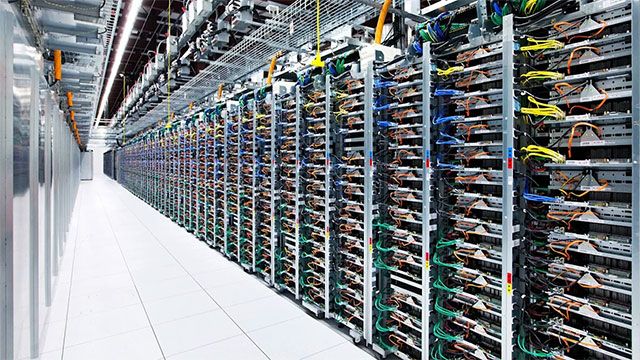
Quantum simulation – a challenge beyond the capabilities of traditional supercomputers
In quantum mechanics, a quantum state is described by a wave function Ψ, which represents all possible configurations of a quantum system – such as the position, spin, or energy levels of electrons in a molecule – along with their probabilities.
The problem is, the number of possible states increases exponentially with the number of particles, making simulations impossible with conventional supercomputers.
To solve this problem, scientists often use wave function approximations, which help describe molecular structures and reactions with high accuracy. However, current methods only work effectively with small molecules and cannot be scaled up to more complex systems.
Artificial intelligence becomes the new 'quantum key'
In recent years, physicists have proposed using artificial intelligence (AI) to simulate quantum systems with many strongly interacting electrons — such as molecules with dozens of electrons and more than 100 spin orbitals.
The solution is Neural-Network Quantum States (NNQS) – a type of deep learning model that can estimate the motion and configuration of all the electrons in a molecule. This method promises to combine the expansive power of AI with the precision of quantum modeling, creating a new research platform that far exceeds the capabilities of classical techniques.
To simulate a quantum system of 120 spin orbitals, the team developed a custom NNQS framework optimized for the Oceanlite supercomputer, which is equipped with a Sunway SW26010-Pro processor with 384 computing cores supporting multiple data formats (FP16, FP32, FP64).
The SW26010-Pro's unique feature is its highly parallel architecture, designed for high-performance computing (HPC) rather than traditional AI.
The team built a hierarchical communication model, in which management cores are responsible for coordinating data between processors and network nodes, while millions of small computational cores (CPEs) directly handle quantum calculations on-site.
Also, the team also developed a dynamic load-balancing algorithm, which helps distribute work evenly across cores and avoid idle cores.
Impressive performance and new milestone for Chinese supercomputer
When running tests on 37 million CPE cores, the system achieved 92% strong scaling and 98% weak scaling, which is near-perfect in the HPC world. This shows that the development team has optimized the software and hardware, an extremely remarkable achievement for the Chinese supercomputing community.
Notably, this is the largest quantum chemistry simulation ever performed by AI on a classical supercomputer, with 120 spin orbitals — far exceeding any previous similar research. This success marks an important step forward for China's AI and quantum industries.
Significance and limitations of this finding
The above achievements demonstrate that the NNQS model can be effectively applied to quantum physics research using modern supercomputers. However, it is still unclear how cost- and energy-effective it is when applied to exascale supercomputers like Oceanlite, due to the extremely large computational volume and power consumption.
FAQ
What is new about china makes breakthrough in simulating quantum chemistry on supercomputer?
In practical terms, chinese scientists used the Oceanlite supercomputer and the NNQS AI model to simulate quantum chemistry at the real molecular level, marking a major step forward for AI and quantum physics.
Why does this update matter?
The article highlights that recently, a group of Chinese scientists at the Sunway Supercomputing Center made a major breakthrough by combining AI models with the Oceanlite supercomputer to simulate quantum chemistry at the real molecular level.
Is the change available to everyone?
Availability may depend on the product version, region, account, or rollout stage described in the article.
Related Articles
 Quantum Computer3 minutes read
 Chinese Supercomputer Runs a Brain-Scale AI Model3 minutes read
 Google's Quantum Supercomputer Can Solve the 'Impossible'3 minutes read
 Sycamore, Google's Quantum Supercomputer Only Takes 2 Seconds to4 minutes read
 First Successful Simulation of 50 Qubit Quantum Computer, Setting a New World Record6 minutes read
 Benefits and Hazards from Artificial Intelligence9 minutes read
Reader Comments 0
Sign in with email or Google to join the discussion.