Too little exercise as a child - a factor that can cause children to live a lifetime with high blood pressure
Excessive sedentary time during development may increase systolic blood pressure, while three hours of light physical activity per day will help reduce this risk.
Table of Contents
Too little physical activity during development can increase systolic blood pressure, while three hours of light physical activity a day can help reduce the risk, according to a groundbreaking new study published recently, spanning childhood through adulthood.
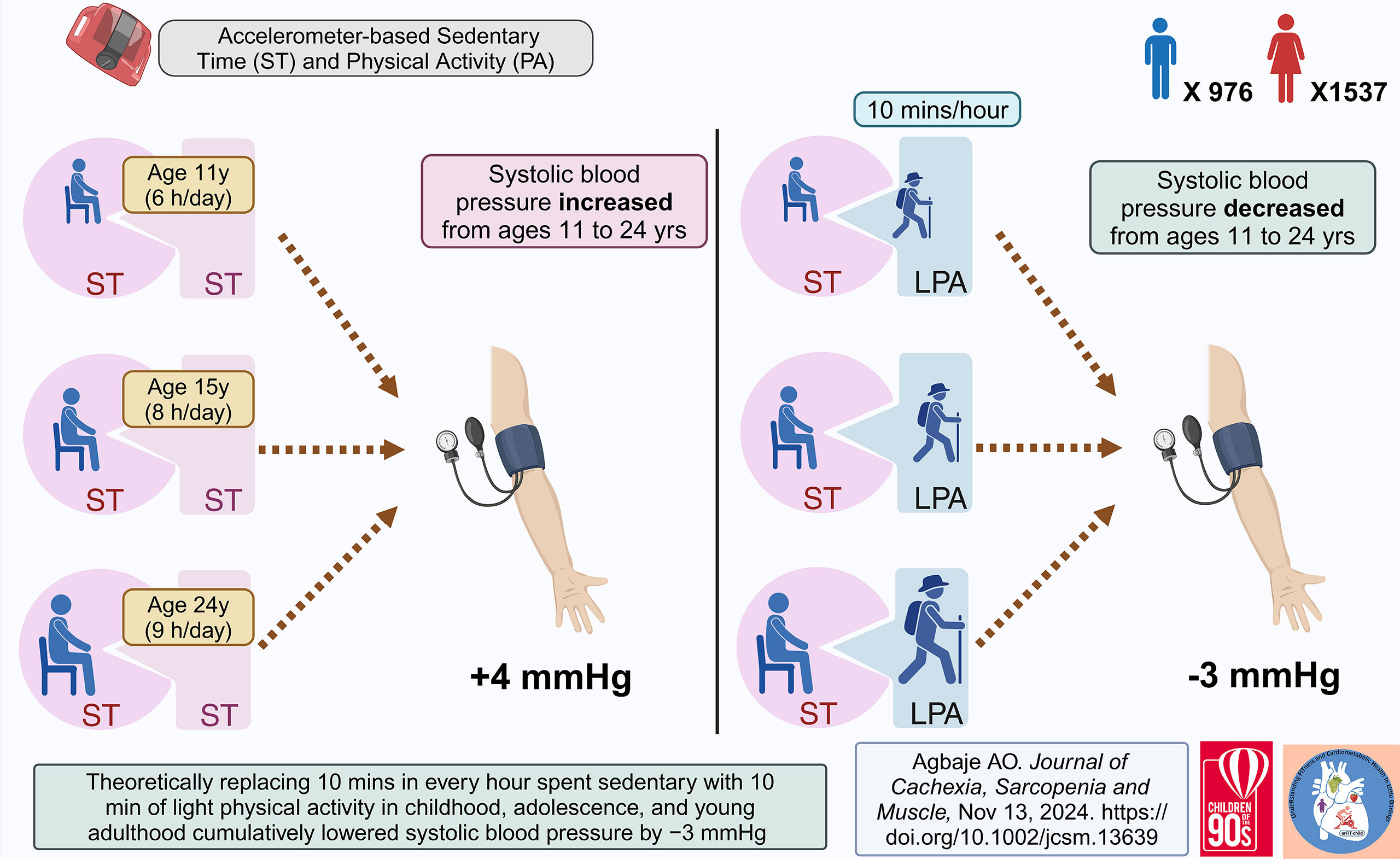
Specifically, new research from scientists from the University of Bristol (UK) and the University of Eastern Finland revealed that spending more than 6 hours a day being sedentary during the transition from childhood to adulthood can lead to an additional 4 mmHg increase in systolic blood pressure. However, regularly participating in light physical activity (LPA) has been shown to significantly reduce this increase in blood pressure.
In the study, 2,513 children from the University of Bristol's Children of the 90s volunteer cohort were followed for physical activity from age 11 to age 24. At baseline, they spent six hours a day doing sedentary activity, six hours doing light physical activity (LPA), and around 55 minutes doing moderate to vigorous physical activity (MVPA). By adulthood, sedentary time had increased to nine hours a day, while LPA had decreased to three hours and MVPA to around 50 minutes a day.
Results showed that the average blood pressure in childhood was 106/56 mmHg, increasing to 117/67 mmHg in adulthood, partly due to normal physiological development. Persistent sedentary time from age 11 to 24 was associated with an average increase of 4 mmHg in systolic blood pressure. Participation in LPA in childhood reduced final blood pressure by 3 mmHg, whereas MVPA had no effect on blood pressure.
Benefits of gentle physical activity
When the simulations replaced 10 minutes of every hour of sedentary time with an equivalent amount of time spent in light physical activity (LPA) from childhood to adulthood, the results showed a 3 mmHg reduction in systolic blood pressure and a 2 mmHg reduction in diastolic blood pressure. This is important because in adults, a 5 mmHg reduction in systolic blood pressure can reduce the risk of heart attack and stroke by 10%.
This is the largest and longest-running study to date to assess the association between physical activity (measured using accelerometers) and blood pressure progression in adolescents worldwide. Blood pressure, sedentary time, LPA and MVPA were measured at ages 11, 15 and 24.
Children's fasting blood samples were also measured repeatedly for low-density lipoprotein (LDL) cholesterol, high-density lipoprotein (HDL) cholesterol, triglycerides, glucose, insulin, and high-sensitivity C-reactive protein (hs-CRP). Heart rate, socioeconomic status, family history of cardiovascular disease, smoking status, as well as fat mass and lean mass measured by dual-energy X-ray absorptiometry (DXA) were all included in the analysis.
It has long been scientifically proven that high blood pressure and hypertension in adolescence increase the risk of early heart damage in adulthood. Therefore, identifying sedentary habits in childhood as a potential cause of high blood pressure and hypertension, along with finding LPA as an effective solution, has important clinical and public health implications.
The World Health Organization (WHO) estimates that 500 million cases of non-communicable diseases related to physical inactivity will occur by 2030, and half of these will be due to high blood pressure. At least three hours of LPA per day is essential to prevent and reverse high blood pressure and hypertension. Examples of LPA include long walks, housework, swimming, and cycling. All of us, including parents, pediatricians, and policymakers, should encourage children and adolescents to exercise or simply be physically active every day for long-term health goals.
Was this article helpful?
Your feedback helps us improve.
Related Articles
 How to prevent and control high blood pressure?9 minutes read
 Manufacturing artificial blood vessels to limit surgery 7 times for children with heart defects3 minutes read
 High blood pressure can affect thinking ability in some children2 minutes read
 High blood pressure, arthritis is more common in people living on high3 minutes read
 How to Get Your Child to Share What Happened During the Day4 minutes read
 Eat nuts, fish daily cut asthma, the risk of rhinitis in children3 minutes read
Reader Comments 0
Sign in with email or Google to join the discussion.