Table of Contents
Meteor showers are amazing astronomical phenomena. You can fully observe the meteor shower when you know the tips below.
Meteor showers are amazing astronomical phenomena. You can fully observe the meteor shower when you know the tips below.
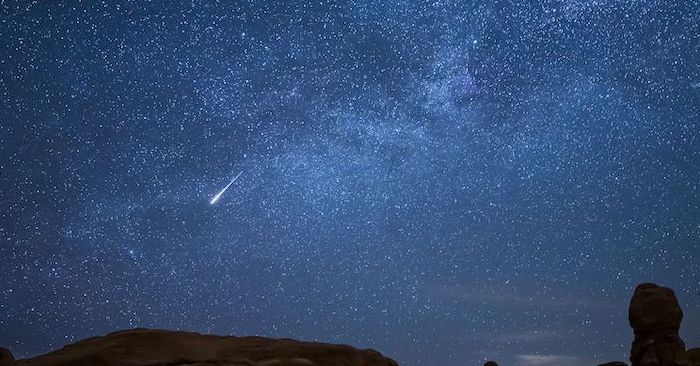
Know the peak moment
Typically, meteor showers last for days as Earth is exposed to a large stream of icy particles in space. These particles are debris left behind by comets. So, the peak is when Earth is expected to be exposed to the largest number of comet particles.
And here's the catch: meteor showers peak at the same time for everyone on Earth. Time zones, meanwhile, vary from country to country, so you'll often need to adjust UTC to local time where you live.
That said, predictions aren't always accurate. And remember, you can see stunning meteor displays hours—even days—before or after the predicted peak.
Remember that meteor showers are a part of nature. So they are often impossible to predict with absolute precision.
Meteor shower viewing locations
You need a wide, open, dark view of the night sky. A farmer's field? A country road? A campsite with clear views in one or more directions? All are suitable because a clear sky increases the chance of seeing meteors.
During a meteor shower, the bright moon is not your friend. In fact, nothing can dampen the effects of a meteor shower more effectively than a bright moon.
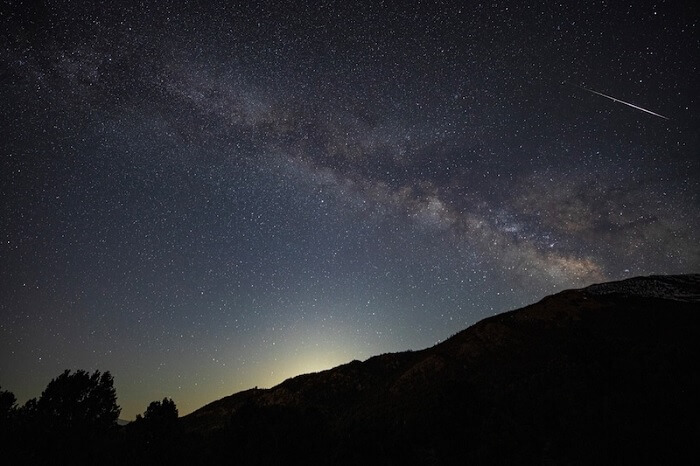
If there is the appearance of the moon
If the moon is out, look at the sky beyond it. Anything in the moon's vicinity—including shooting stars—will likely be overshadowed by its glare. Alternatively, to see meteors in the moonlight: put something between you and the moon. Watching from the shadow of a barn, a car, or even a tree can help you see more meteors. Basically, put yourself somewhere in the moon's shadow.
Know the expected speed
Meteor shower charts almost always list what is known as the zenith hourly rate (ZHR) for each meteor shower.
So, ZHR is the number of meteors you would see if you were observing from a very dark sky, with bright lights overhead, when the shower is at its peak. In other words, ZHR represents the number of meteors you could see per hour under the best viewing conditions during the shower's peak.
If peak occurs when it's still light out at your location, if most of the meteors are faint, if there's a bright moon, or if you're in an area with light pollution, the total number of meteors you'll see will be significantly reduced.
Don't worry too much about the bright spots.
You don't have to stare in one direction all night long—or even spot a bright spot—to enjoy the shower. Meteors will appear all over the sky.
But while you can see meteors flying above the horizon before their bright spots appear, you'll see more of them after the shower has begun. And you'll see the most when the bright spots are highest in the sky. So learn when the bright spots appear to determine the best time of night to watch the shower.
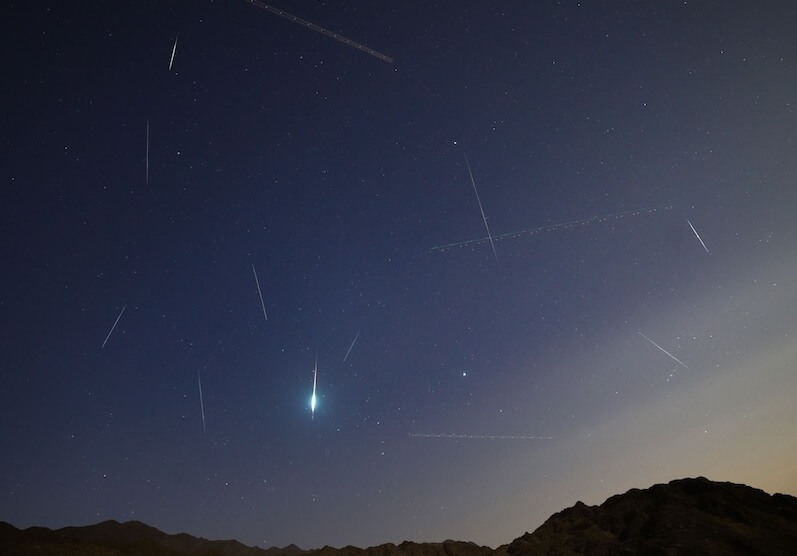
Watch the meteor shower for an hour or more
Meteor showers are best viewed after you let your eyes adjust to the darkness. This can take up to 20 minutes. Also, meteors tend to appear in bursts, followed by periods of calm. Be patient! You should see some impressive meteor showers.
FAQ
What should you know about the options in this guide?
In practical terms, meteor showers are amazing astronomical phenomena. You can fully observe the meteor shower when you know the tips below.
Which option is the best choice?
The best choice depends on your priorities, compatibility, budget, and the specific features discussed in the comparison.
What should you compare before deciding?
Compare core features, limitations, ease of use, compatibility, and long-term value before making a decision.
Related Articles
 Do Not Miss the Opportunity to Admire the Largest Meteor Shower3 minutes read
 Orionid Meteor Shower 2025: Everything You Need to Know4 minutes read
 Vietnam Can Observe the Orionid Meteor Shower Tonight and Tomorrow5 minutes read
 Tonight There Will Be Meteor Shower Leonids, and in Vietnam It Can3 minutes read
 Early in the Morning, Venus and Jupiter Will Meet in the Sky, Don't4 minutes read
 The Most Beautiful Meteor Shower of the Year and Amazing3 minutes read
Reader Comments 0
Sign in with email or Google to join the discussion.