Table of Contents
What Exactly Is a Meteor Shower is easier to approach with a clear overview and reliable steps. This guide organizes the essential information, highlights practical details, and explains what to check along the way.
Key Takeaways
- Review meteor shower is an astronomical phenomenon.
- Explore the life cycle of a meteor: from space to earth.
- Understand meteor showers also occur outside earth.
Meteor Shower Is an Astronomical Phenomenon
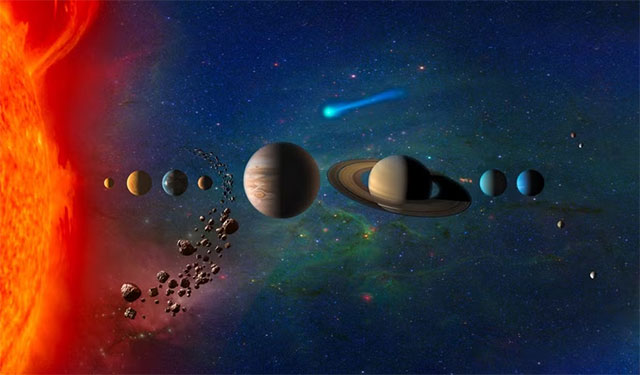
In our solar system, there is a huge collection of small particles—called meteoroids—floating in space, ranging from microscopic dust grains to asteroid-sized fragments. These fragments are cosmic remnants, broken off from comets, asteroids, other planets, and even moons as they orbit the sun.
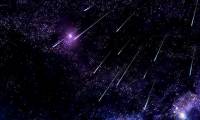
As the Earth orbits the Sun, our planet regularly passes through these streams of meteors, creating what we call meteor showers. They create bright streaks of light as they evaporate in the upper atmosphere when these tiny particles hit the Earth's atmosphere. Most never reach the ground because they burn up completely. A few survive and become 'meteors'. But those that are completely evaporated are called 'shooting stars'.
Because the Earth passes through these meteor streams at the same time each year, meteor showers occur on a predictable schedule, allowing astronomers to predict when they will appear.
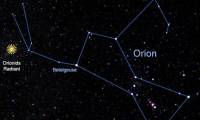
Another interesting aspect is the concept of the Radiant—the point in the sky where meteors appear to originate. This is actually an optical illusion. The meteors don't actually originate from a single point; they travel in parallel paths. But from Earth's perspective, they appear to originate from one location.
This is why meteor showers are often named after the constellation they appear in. For instance, the Perseid meteor shower appears to emanate from the constellation Perseus.
The Life Cycle of a Meteor: from Space to Earth
Meteors streak by at breakneck speeds, sometimes reaching 160,000 miles per hour. Meanwhile, Earth moves through space at 67,000 miles per hour. The result is a violent but beautiful dance with our atmosphere when these two paths intersect.
The meteorite collides with air molecules, creating a pressure wave that compresses the air ahead of it. This compression creates extremely high temperatures that not only vaporize the space rock but also ionize the surrounding air, creating the characteristic streak visible from the ground.
Faster meteors burn brighter faster, releasing their energy in a brief but brilliant display. Metal fragments are the most durable performers. Slower meteors can last longer, giving us more time to admire their journey. They are more likely to survive the descent and sometimes even reach the ground as meteorites. Meanwhile, cometary meteorites, which are more fragile, rarely make it through the upper atmosphere.
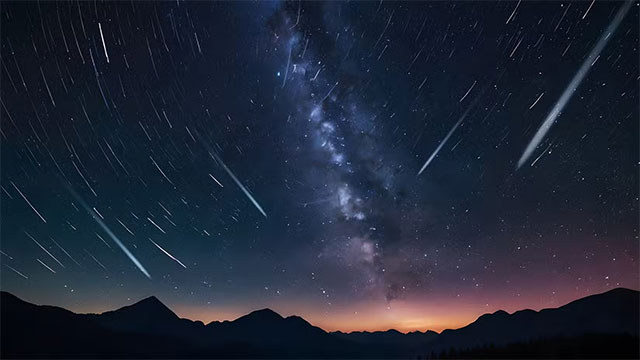
The colors we see aren't random—they're a sign of the meteor's composition and how it interacts with the atmosphere. Green streaks are often associated with magnesium, violets with potassium, and brilliant white streaks with iron and nickel. Atmospheric conditions can change the effect, making each meteor a unique sight in the night sky while the composition of the meteor plays a major role in this light show.
Meteor Showers Also Occur Outside Earth
Meteor showers are not limited to Earth's atmosphere, but occur uniquely on other bodies in the solar system. Each planetary environment provides a unique stage for these cosmic spectacles, shaped by local atmospheric conditions and gravitational fields.
- Mars experiences meteor showers with their own interesting quirks. Its thin atmosphere makes meteors visible, although they behave differently than they do on Earth. It gave astronomers the chance to observe the effects of meteor showers on another planet's atmosphere, suggesting that Mars may offer the most Earth-like meteor shower experience in the solar system when comet Siding Spring passed by Mars in 2014.
- Jupiter has a unique relationship with meteor showers. Its powerful gravitational field acts like a cosmic vacuum cleaner, attracting countless meteors and producing far more meteor showers than any other planet. However, unlike the displays visible on Earth, Jupiter's meteor showers disappear beneath the gas giant's thick cloud layers.
- The Moon offers the starkest contrast to the Earth experience. There is no atmosphere, no streaks of light—just silent impacts and flashes of light as meteors slam into the lunar surface at incredible speeds. These impacts continue to reshape the lunar surface, creating new craters.
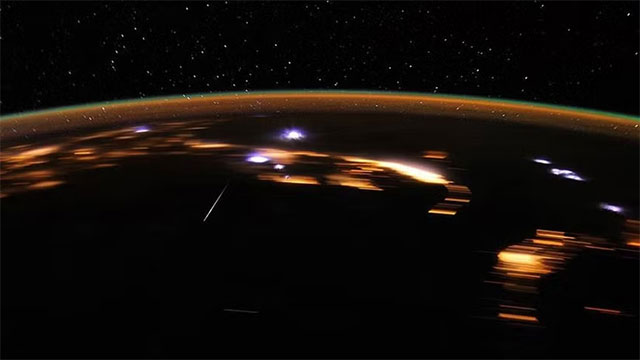
Back on Earth, meteor shower viewing faces modern challenges. The proliferation of satellites and light pollution threaten to dim our windows to this cosmic spectacle. Fortunately, meteor shower viewing requires only a little preparation and the right weather conditions to experience their full beauty.
Meteor showers remain one of the most accessible astronomical events around. You don't need a telescope, just clear skies and a little patience. And who knows, you might even make a wish when you see a shooting star!
Final Thoughts
The most reliable way to handle what exactly is a meteor shower is to follow the process in order, verify each important setting, and test the result before moving on. Use the guidance above as a practical reference, then adjust the details for your device, software version, or specific goal.
FAQ
What should I know first about What Exactly Is a Meteor Shower?
Several times a year, the deep night sky above us puts on a spectacular show of streaks of light that streak through the darkness.
How do I get the best results with What Exactly Is a Meteor Shower?
Use current software or equipment, follow the steps in order, review the recommended settings, and test one change at a time so you can identify what improves the result.
What should I do if What Exactly Is a Meteor Shower doesn't work as expected?
Check compatibility, permissions, connectivity, and version-specific settings. Restart the relevant device or app, then repeat the process carefully before trying a more advanced fix.
Related Articles
 Do Not Miss the Opportunity to Admire the Largest Meteor Shower3 minutes read
 Orionid Meteor Shower 2025: Everything You Need to Know4 minutes read
 Vietnam Can Observe the Orionid Meteor Shower Tonight and Tomorrow5 minutes read
 Tonight There Will Be Meteor Shower Leonids, and in Vietnam It Can3 minutes read
 Meteor Shower Viewing Tips for Everyone: Practical Guide5 minutes read
 Early in the Morning, Venus and Jupiter Will Meet in the Sky, Don't4 minutes read
Reader Comments 0
Sign in with email or Google to join the discussion.