Table of Contents
Exposure to air pollutants may increase your risk of cancer. Here's what you need to know.
Cancer - The dreaded word no one wants to hear from a doctor, yet it seems to be more prevalent than ever. In 2020, there were an estimated 19.3 million new cancer cases, and an alarming 10 million cancer-related deaths worldwide. The disease is the first or second leading cause of premature death in 134 of 183 countries.
Over the past few decades, researchers have learned more and more about this devastating disease. But it seems the more we learn, the more questions we have. What causes different types of cancer? How can we prevent them? Are there ways to better diagnose and treat cancer patients?
It will take decades to find the answers to these questions. However, what we do know is that exposure to certain substances and agents can lead to uncontrolled cell growth in the body.
Cigarette chemicals are a good example. Another example is ultraviolet rays from the sun. If we avoid smoking and protect ourselves from the sun, we reduce our risk of cancer.
The point is that by being aware of the dangers of specific products and environmental factors, you can take effective preventative measures.
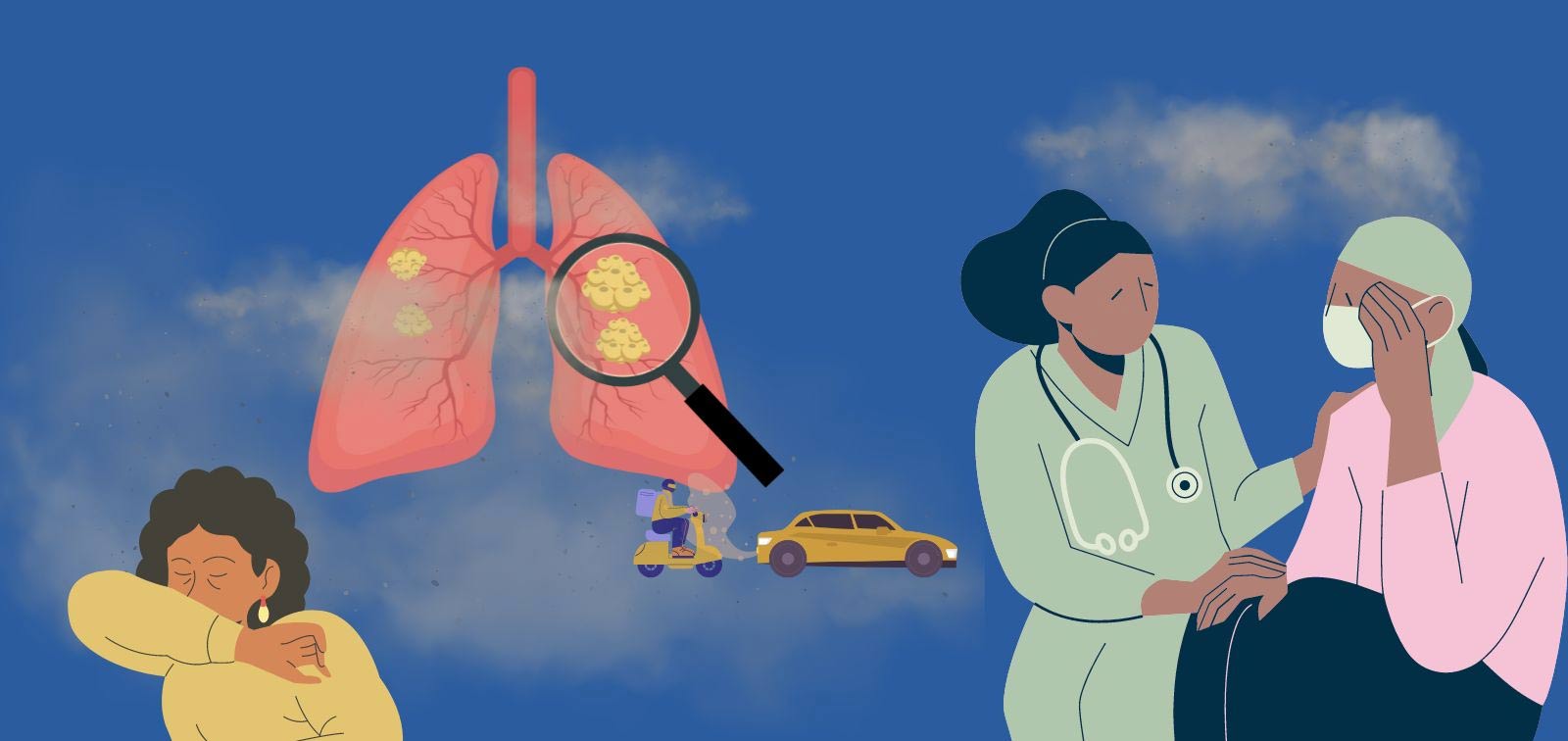
Surprisingly, one aspect that has not received much attention is the air we breathe. Exposure to air pollutants can increase the risk of cancer.
What's in your air?
The average person spends about 90% of their time indoors and takes about 20,000 breaths a day. But have you ever really sat down and thought about what's inside?
Chances are, it contains all sorts of things, from dust, pet dander, dust mite debris, pesticides, mold spores, bacteria, VOCs, PFAS, mycotoxins, chemicals, radon, etc. How does all of that affect your health?
Let's look at VOCs specifically. According to the EPA1, average indoor VOC concentrations can be 2 to 5 times higher than outdoors. Short-term exposure to these compounds can cause eye, nose, and throat irritation, as well as headaches and dizziness. Long-term exposure to VOCs can cause damage to the central nervous system and organs. Some may even cause cancer.
As one study pointed out, " .human tissues, including the kidney, liver, leukemia, nasal cavity, paranasal sinuses, liver, and bile ducts, may be more involved in the development of cancer or tumors when humans are exposed to these volatile organic compounds (VOCs) through inhalation in buildings for long periods of time. "
VOCs are just one piece of the puzzle. What about the myriad other invisible threats circulating in indoor air? More research is needed to better understand how indoor air affects our health and its relationship to cancer development.
But here's what we know so far—and why focusing on improving the quality of the air you breathe is critically important for your health.
Think about the places you spend the most time. Here's what might be in the air:
- In your home: Volatile organic compounds (VOCs) from cleaning products, furniture and paints; NO₂ from gas stoves; PM2.5 from candles, cooking and dust build-up.
- In the car: Exposure to NO₂ and PM2.5 from traffic pollution, especially when idling or driving in tunnels and crowded areas. Cars are still considered indoor environments!
- In the workplace: Office buildings with poor ventilation can have high levels of VOCs from carpets, office furniture, printers and cleaning products, as well as PM2.5 from HVAC systems and countless other sources.
- Public spaces: Gyms have high VOCs from cleaning products or PM2.5 from bacterial sources due to increased humidity; retail stores have off-gassing from new products and materials.
- Schools and daycares: Older buildings may have poor ventilation, leading to higher concentrations of NO₂ and VOCs from materials, cleaning products, and school supplies like markers and glues. Not to mention PM2.5 from the constant flow of traffic, which promotes bacterial growth.
How to improve air quality
- Invest in an air filtration system: Air purifiers are a great way to reduce indoor pollutants. These devices remove particles and gases from the air, preventing them from circulating in your home and entering your body. However, not all air purifiers are created equal. You should choose one that can remove as many pollutants as possible.
- Clean regularly: Use plant-based cleaners, microfiber cloths, and vacuums for daily, weekly, monthly, and seasonal cleaning to remove pollutants like dust mites. The fewer dust mites on indoor surfaces, the less dust mites in the air.
- Upgrade your HVAC system filters: Switching to the highest possible MERV filter for your specific HVAC system is a great way to improve indoor air quality and reduce particulate matter. Choose HVAC filters with advanced technology designed to remove these pollutants from the air. Otherwise, they will be recirculated back into your home, creating a dirtier, unhealthy environment. Also, change your filters on time. Dirty filters will not clean the air as well as they should.
- Choose healthier products: Avoid products that are high in VOCs and PFAs, and instead look for VOC- and PFAS-free or low-emitting alternatives. You can check the product label to determine if it contains certain toxic chemicals.
- Address moisture immediately: Address leaks and moisture intrusion as soon as possible to avoid problems like mold and bacteria growth. These problems can wreak havoc on indoor air quality and cause potential harm.
- Avoid porous materials: Porous surfaces such as curtains and carpets are particularly difficult to clean because microscopic particles can settle in the surface fibers. Over time, this can lead to a buildup of fine particles and pollutants. This negatively impacts air quality because whenever the surface is disturbed, these pollutants are released into the air. Use easier-to-clean surfaces in your home as much as possible to help prevent the buildup of pollutants.
FAQ
What should you know about this invisible problem is driving up cancer rates worldwide?
In practical terms, exposure to air pollutants may increase your risk of cancer. Here's what you need to know.
Why does this invisible problem is driving up cancer rates worldwide matter?
The article highlights that in 2020, there were an estimated 19.3 million new cancer cases, and an alarming 10 million cancer-related deaths worldwide.
What is the main takeaway?
The main takeaway is that are there ways to better diagnose and treat cancer patients.
Related Articles
 Recognize Early Signs of Throat Cancer for Prompt Treatment4 minutes read
 Find New Ways to Treat Breast Cancer5 minutes read
 How to Clean Your Driving Record: Step-by-Step Guide12 minutes read
 Genetically Modified Bacteria in Shellfish Help Kill Cancer Tumors4 minutes read
 It Turns Out That We Have Been Indifferent to Using Cancer-causing6 minutes read
 The Miraculous Mechanism of Action of the World's First Cancer Cure6 minutes read
Reader Comments 0
Sign in with email or Google to join the discussion.