Table of Contents
This guide provides a clear, practical overview of "The Difference Between USB-C and Lightning". It organizes the most useful details, explains important considerations, and highlights the steps or choices that matter most.
The main difference is that Lightning is a proprietary connector for iPhones and other Apple devices. There are other additional factors that make USB-C and Lightning different.
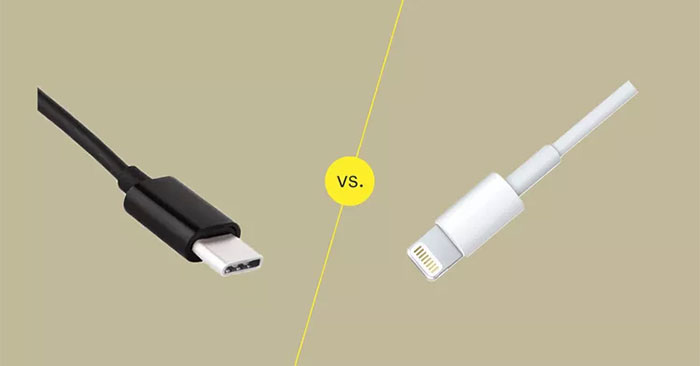
General differences
USB-C
- Introduced in 2014.
- Combines USB-A and USB-B into a universal connector.
- Used for connection, communication and power supply.
Lightning
- Introduced in 2012.
- Replaces Apple 30-pin dock connector.
- Used for connection, communication and power supply.
USB-C and Lightning (not to be confused with Thunderbolt) are connectors for connection, communication, and power delivery. In addition to charging smartphones and tablets, they also support digital data transfer, such as uploading or downloading movies, music, and photos.
USB-C is widely considered the current standard for charging and data transfer. Every iPhone and iPad since September 2012 has included a Lightning cable, with the exception of the iPad Pro, which adopted USB-C with its 3rd generation models in 2018. Lightning has been exclusive to the iPhone since 2012, while other manufacturers have largely moved to USB-C.
Apple's exclusivity aside, USB-C is far superior to Lightning due to its late introduction, years after Lightning.
Data transfer speed: USB-C is significantly faster
USB-C
- Transmission speed up to 40Gbps.
- Support USB4.
Lightning
- Transmission speed up to 480Mbps.
- Transfer speed equivalent to USB 2.0.
USB-C can support USB4, the newest and fastest USB standard, allowing for data transfer speeds of up to 40Gbps. Meanwhile, Lightning cables are slower, transferring data at USB 2.0 speeds of 480Mbps.
The situation is further complicated by the fact that Apple does not fully disclose the specifications for its proprietary technology, leaving Lightning's maximum transfer speeds unclear. Apple has not updated the protocol since Lightning's release, leaving its functionality unchanged since 2012. Additionally, the 2012 cable is still compatible with new iPhones.
As the numbers show, USB-C has a big speed advantage over Lightning. However, this advantage is not as significant as it might seem, since most people now transfer data wirelessly from their phones and other devices instead of using cables.
Compatibility: Lightning only works with Apple devices
USB-C
- Supported by most modern devices, including Android phones, Windows PCs, PS5, Xbox Series X, etc.
- Used by iPad (not iPad 9th generation).
- Can be used in Thunderbolt 3 and 4 ports.
Lightning
- Only on Apple.
- Use for iPhone, AirPods and many other Apple accessories.
- Supports USB-C via USB-C to Lightning cable.
Lightning replaces Apple's 30-pin connector, first introduced with the iPod in 2001. The connector is smaller, reversible, and offers faster data and power transfer speeds than the 30-pin connector. It was originally intended to be the standard for 10 years, but has since passed that mark.
Apple has used the Lightning connector in a variety of products, including keyboards, trackpads, mice, AirPods, and more.
Apple has started switching from Lightning to USB-C in some products because it has more capabilities than Lightning (pressure from the EU also played a role). Most iPads now use USB-C (only the 9th-gen iPad still uses Lightning), and all Mac laptops use (or can use) USB-C for charging and data transfer.
Power Delivery: USB-C supports higher power and current
USB-C
- Native power support for 100W/3A and up to 240W/5A.
- Supports USB Power Delivery for fast charging.
Lightning
- Native power support for 12W/2.4A.
- Fast charging requires a USB-C to Lightning cable and a 20W or higher charger.
USB-C offers higher current speeds than Lightning, allowing for faster charging at the same voltage. Lightning supports a maximum current of 2.4A, while USB-C carries 3A and supports up to 5A, making USB-C superior in fast charging with the USB Power Delivery standard.
The standard Lightning cable doesn't support fast charging, forcing Apple to include a USB-C to Lightning cable with most products. When paired with a 20W charger or higher, you can fast charge your iPhone to 50% in about 30 minutes.
Durability: USB-C cables are more durable, but Lightning offers a more stable physical connection
USB-C
- The connector is reversible.
- May be more durable than Lightning.
Lightning
- The connector is reversible.
- Physical connection is tighter than USB-C.
USB-C and Lightning are similar in ease of use and durability. Both feature reversible connectors for easy device connection and include chips for compatibility, power stability, and data transfer.
Anecdotal evidence suggests there is an ongoing debate about the durability of the cable. Some people claim that Lightning cables are more prone to breaking, while others believe that the connector fits more snugly, reducing loose connections compared to USB-C; it's largely subjective.
The best thing you can do to increase the lifespan of both types of cables is to buy from a reputable manufacturer that takes good care of both the cable and the equipment.
Conclusion: USB-C is the better connector
Durability debates aside, USB-C is superior to Lightning in almost every way. It offers wider compatibility, faster data transfer speeds, and more power for faster charging.
With growing pressure from European regulators for the mobile industry to adopt a common standard, Apple seems to have little say in the matter.
Have a nice day!
See also:
- These are the types of printer cables needed to connect to your computer.
- 8 Best USB Wi-Fi Adapters 2017
- Tricks to prevent 100% virus infection from USB, memory card, phone to computer
FAQ
What should you know about general differences?
Combines USB-A and USB-B into a universal connector.
What should you know about data transfer speed: USB-C is significantly faster?
USB-C can support USB4, the newest and fastest USB standard, allowing for data transfer speeds of up to 40Gbps. Meanwhile, Lightning cables are slower, transferring data at USB 2.0 speeds of 480Mbps.
What should you know about compatibility: Lightning only works with Apple devices?
Supported by most modern devices, including Android phones, Windows PCs, PS5, Xbox Series X, etc.
What should you know about power Delivery: USB-C supports higher power and current?
Native power support for 100W/3A and up to 240W/5A.
Related Articles
 We Can Still Survive After Being Struck by Lightning, Why6 minutes read
 Shocked the Series of Lightning Strikes Causing Mass Death4 minutes read
 What Is Lightning? Why Is There Lightning?4 minutes read
 How to Make a Minecraft Lightning Rod: Step-by-Step Guide7 minutes read
 Please Download More Than 50 Lightning Wallpapers, Lightning2 minutes read
 How to Use Photoshop CS5 - Part 26: Create a Lightning Effect9 minutes read
Reader Comments 0
Sign in with email or Google to join the discussion.