Table of Contents
This guide provides a clear, practical overview of "New Technology Can Charge Electronic Devices Underwater and Even". It organizes the most useful details, explains important considerations, and highlights the steps or choices that matter most.
To address these issues, researchers from the Korea Institute of Science and Technology (KIST) and Korea University are turning to ultrasound technology. Unlike RF waves, ultrasound waves are less absorbed by human tissue and cause less interference, making them more suitable for charging medical implants and wearable devices.
The team, led by Dr. Sunghoon Hur and Professor Hyun-Cheol Song, built a flexible ultrasound receiver using advanced piezoelectric materials. The receiver remains functional even when bent and can adhere to curved surfaces such as skin. Initial testing showed that it can deliver 20 milliwatts of wireless charging power through 3cm of water and 7 milliwatts through 3cm of skin – enough to power small devices such as underwater sensors or implants in the human body.
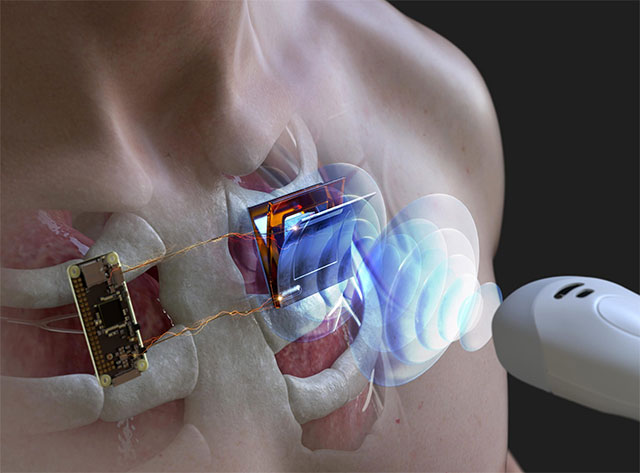
The team also showed that the receiver could be used to charge batteries, opening the door to implantable devices with longer lifespans that do not require frequent surgical battery replacements. ' Through this study, we have demonstrated that ultrasonic wireless power transfer technology can be applied in a practical way. We plan to conduct further research on miniaturization and commercialization to accelerate the practical application of the technology ,' said Dr Hur.
In parallel, scientists are also working on ultrasound-powered triboelectric nanogenerators (US-TENGs). These devices can deliver energy through the skin without surgery, but they are limited by low power output and stiffness. To improve this, a new version called US-TENGDF-B (Dielectric-Ferroelectric Enhanced Ultrasonic Triboelectric Nanogenerator) has been developed. It uses a special design to generate more energy with softer ultrasound waves and from a greater distance.
The upgraded device outputs about 26 volts and delivers 6.7 milliwatts of power when charging a battery from a distance of 35mm. It remains stable even when bent — useful for curved body parts or implanted devices like artificial hearts. The researchers say US-TENGDF-B is effective for short-term wireless charging deep inside the body, especially in flexible systems.
These new technologies show real potential for safely powering low-power electronics, both underwater and inside the human body. They could help future devices such as pacemakers, neurostimulators, underwater sensors and drones operate longer and more reliably – without needing to be recharged or replaced as often.
FAQ
What does this guide cover?
This guide explains new technology can charge electronic devices underwater and even, including the main steps, important details, and practical considerations.
Who is this guide for?
It is designed for readers who want a clear, practical overview and a reliable process they can follow without unnecessary complexity.
What should you check before getting started?
Review the requirements, confirm that your software or device is up to date, and save any important data before changing settings.
Related Articles
 New Parylene Coating Technology Helps Computers Work Underwater Explained3 minutes read
 Successfully Developed Electronic Skin Better Than Real Human Skin3 minutes read
 Device to Charge the Phone with Water and Wind for Phượt People2 minutes read
 New Technology Underwater Gliders Predict High-precision Storms2 minutes read
 Ly, Mutants Eat 10 Days Completely Under Water3 minutes read
 What Is Mod Skin?4 minutes read
Reader Comments 0
Sign in with email or Google to join the discussion.