Table of Contents
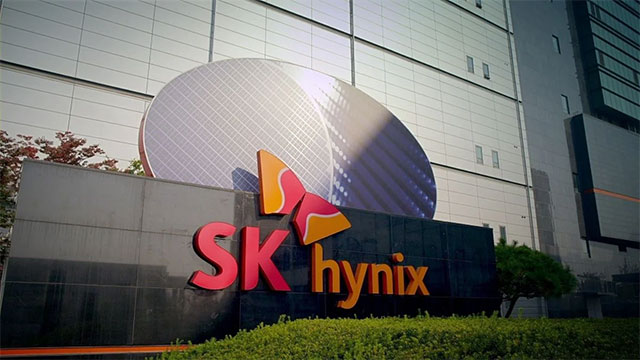
Industry reports say Microsoft selected SK Hynix as the sole supplier of HBM3E memory for its Maia 200 AI accelerator. The supplier detail came from unnamed industry sources rather than a joint announcement, so it should be described as reported, not as a publicly confirmed exclusive contract.
Microsoft has independently confirmed the Maia 200 design and memory specifications. Its official Maia 200 announcement does not name the HBM manufacturer.
What Microsoft confirmed about Maia 200
| Specification | Maia 200 |
|---|---|
| Primary workload | Large-scale AI inference |
| Process | TSMC 3 nm |
| Low-precision compute | Native FP8 and FP4 tensor cores |
| High-bandwidth memory | 216 GB HBM3E |
| HBM bandwidth | 7 TB/s |
| On-chip SRAM | 272 MB |
| Power envelope | 750 W SoC TDP |
Microsoft introduced Maia 200 on January 26, 2026 as its second-generation in-house AI accelerator. The company designed it for inference—the stage in which a deployed model generates results—rather than presenting it as a general consumer GPU.
What the SK Hynix reports say
Korean business reports, citing industry sources, said Maia 200 uses six 12-layer SK Hynix HBM3E stacks and that SK Hynix is the sole HBM supplier for the accelerator. Six 36 GB stacks would total 216 GB, matching Microsoft’s published capacity.
That numerical fit makes the report plausible, but it is not the same as supplier confirmation. Contract duration, order volume, pricing, and whether exclusivity applies to every Maia 200 deployment were not disclosed publicly in Microsoft’s launch material.
Why Maia 200 needs HBM3E
AI accelerators must move model weights and intermediate data quickly enough to keep their compute units busy. HBM places multiple DRAM dies in a stacked package close to the processor and connects them through a very wide interface. The result is much higher bandwidth than conventional DIMMs, although it also requires specialized packaging and costs more.
Maia 200 combines 216 GB of HBM3E with 272 MB of on-chip SRAM and dedicated data-movement hardware. Microsoft says this redesigned memory subsystem helps increase inference throughput, where moving data can be as important as raw arithmetic performance. For more context, see why memory is becoming an AI bottleneck.
Does the reported deal raise consumer RAM prices?
It contributes to a broader trend, but the direct effect should not be overstated. Strong demand for HBM encourages memory manufacturers to direct investment, wafer capacity, and advanced packaging toward higher-margin AI products. That can tighten other parts of the memory supply chain.
However, retail DDR4 and DDR5 prices also depend on consumer demand, inventories, production cuts or expansions, yields, contracts, and regional distribution. A single Maia 200 supply arrangement cannot by itself determine the price of a desktop RAM kit.
It is also inaccurate to say that SK Hynix has entirely stopped making consumer-grade memory. The company participates across memory markets even as HBM and data-center products receive greater investment. Readers tracking this technology can compare the stack design with Samsung’s 36 GB 12-layer HBM3E.
Why the supplier report matters
If the sole-supplier report is correct, it shows how cloud companies are securing specialized memory alongside the accelerators they design themselves. It also gives SK Hynix another hyperscale customer for its HBM3E products and illustrates the strategic value of advanced packaging capacity.
The confirmed takeaway is that Maia 200 uses a large 216 GB HBM3E subsystem with 7 TB/s of bandwidth. SK Hynix’s exclusive role remains a report attributed to industry sources unless either company publishes the relevant agreement details.
Related Articles
 Samsung Introduced the 36GB HBM3E 12H DRAM with a Series of Impressive Upgrades5 minutes read
 Licensee: How to Draft a Software Licensing Agreement17 minutes read
 Microsoft Requires Samsung to Pay Additional Patents4 minutes read
 Samsung Launches New Generation Memory Chip HBM4, Takes on SK Hynix and Micron4 minutes read
 Microsoft Will Bring 4 Xbox Exclusive Products to PlayStation and Nintendo10 minutes read
 Microsoft Confirms Launch of Exclusive Office Apps for Windows 113 minutes read
Reader Comments 0
Sign in with email or Google to join the discussion.