Table of Contents
The Bermuda Triangle is a loosely defined part of the western North Atlantic associated with stories of missing ships and aircraft. Real losses occurred there, but there is no established evidence that a supernatural force caused them or that unexplained disappearances occur unusually often compared with other busy ocean regions.
The most useful way to understand the legend is to separate documented incidents from later embellishments.
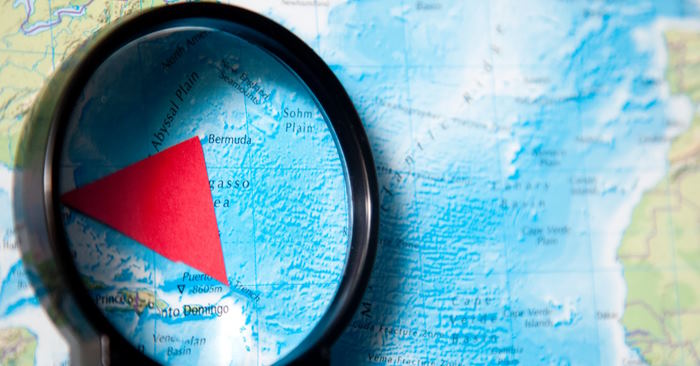
There are no official boundaries
Popular descriptions usually connect Florida, Bermuda and Puerto Rico. Different writers draw different triangles, so a precise area quoted without explaining its boundaries can be misleading.
NOAA explains that the Bermuda Triangle is not an officially recognized geographic name and that there are no official maps defining its limits. It is a popular label rather than a designated navigation zone.
Flight 19 was a real loss
On December 5, 1945, five US Navy TBM Avenger aircraft departed Fort Lauderdale for an overwater training mission. The aircraft and their 14 aircrew were lost, and no confirmed wreckage has been identified.
The Naval History and Heritage Command's account describes radio communications indicating navigation difficulties and disorientation. Running out of fuel and ditching as bad weather moved in is a plausible explanation, but the exact circumstances remain undetermined.
A PBM Mariner sent to search also disappeared, with 13 people aboard. It was a flying boat—an aircraft—not a rescue ship. Observations described in the Navy's account support a probable in-flight fire in that separate loss, although its precise cause was not established.
It is inaccurate to merge both incidents into one unexplained disappearance or to claim that nothing at all was known about them.
Other famous cases need their own context
The USS Cyclops, which disappeared in 1918, is another real naval loss often included in Triangle stories. Calling it a proven instantaneous sinking goes beyond the evidence: the ship's final location and the circumstances of its loss were not established.
The schooner Carroll A. Deering was found grounded off North Carolina in 1921 without its crew. Its location illustrates a problem with Triangle lists: some accounts stretch the region to include incidents outside commonly drawn boundaries.
A DC-3 flying from San Juan toward Miami disappeared in 1948, and the airliner Star Ariel disappeared in 1949. These incidents merit investigation individually. A list assembled across decades does not demonstrate that they shared one cause.
The modern name came later
The phrase became prominent through Vincent Gaddis's 1964 Argosy article, The Deadly Bermuda Triangle. Later popular books, including Charles Berlitz's The Bermuda Triangle, expanded the audience for the legend.
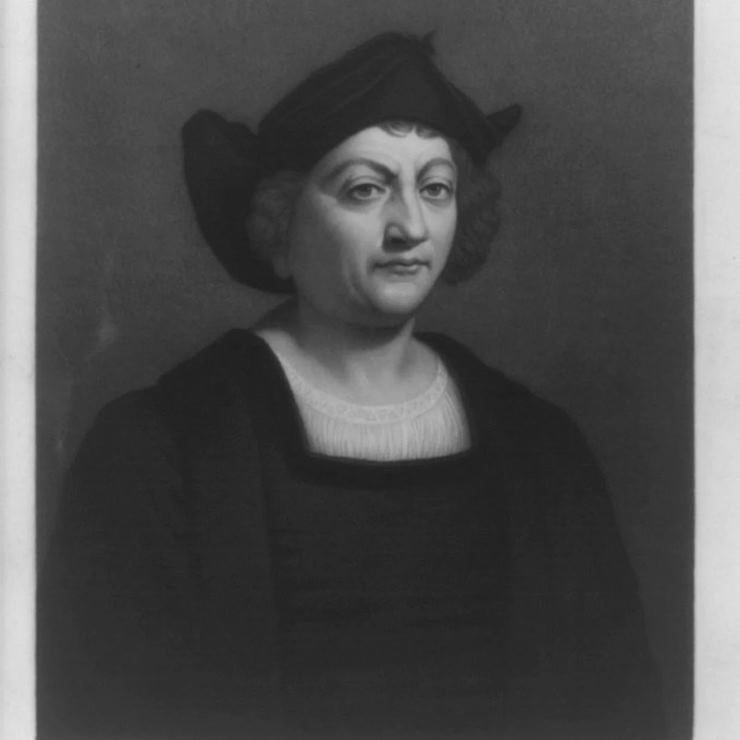
Stories about Columbus's observations or the 1609 Sea Venture shipwreck predate the label. They should not be treated as evidence that people recognized the same mysterious zone centuries earlier. Reports of unusual lights are also different from proof of a navigation anomaly.
Ordinary hazards can be serious
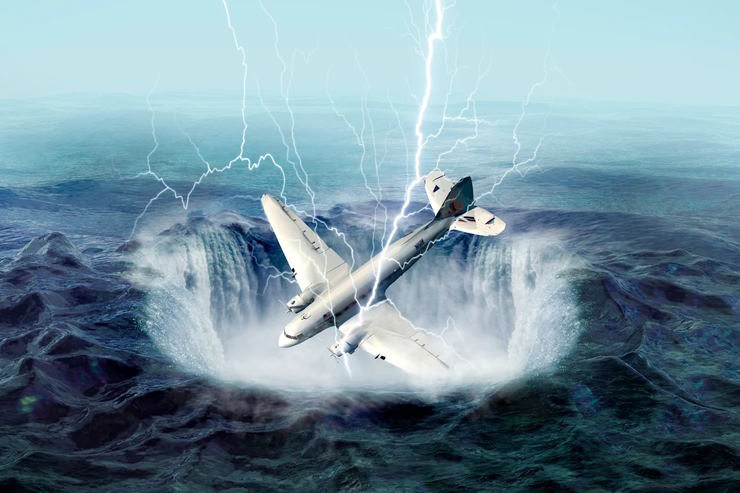
This part of the Atlantic has tropical storms, hurricanes, strong currents and shallow island waters. Weather, navigation mistakes and equipment problems are real hazards. Finding debris after an ocean loss can also be difficult, particularly when the search area is uncertain.
Those factors can explain many accidents without establishing the cause of every unsolved case. A lack of recovered wreckage leaves questions unanswered; it does not supply evidence for Atlantis, a wormhole or an alien intervention.
How to judge a Bermuda Triangle claim
- Check the original date, route and location instead of relying on a retelling.
- Distinguish an investigation's findings from a proposed explanation.
- Ask whether the account omits weather, equipment trouble or evidence recovered elsewhere.
- Compare incident rates with traffic and other ocean regions before calling an area unusually dangerous.
This approach also helps when evaluating the John Titor time-travel legend and other unusual reports: an unresolved question and a spectacular explanation are separate things.
Related Articles
 The unexplained mystery series in the terrestrial Bermuda triangle of demons
 Discover 2 glass pyramids under the Bermuda Triangle Sea?
 The mysterious island of a strange shape suddenly appears in Bermuda's 'Devil Triangle'
 The deadly danger in the 2nd Bermuda triangle triangle
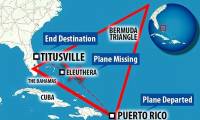 A mysterious new plane crash takes place in the Bermuda triangle
 Not the Bermuda triangle, this is the most horrible 'black cemetery' in the world
Reader Comments 0
Sign in with email or Google to join the discussion.