Table of Contents
This guide provides a clear overview of triangle strategy, including Strategies to Know When Playing Triangle Strategy, Practice in Mock Battles. Use it to understand the topic, compare the available options, and make a more informed decision.

But with a similar graphical presentation, Triangle Strategy actually has a lot in common with older titles like Final Fantasy Tactics. Therefore, anyone familiar with that style of game will not have any problem choosing Triangle Strategy, although it offers its own improvements and better quality to the classic game formula.
But for those who have never played a strategy RPG before, immediately apply the Triangle Strategy tips and strategies below to get up to speed with seasoned gamers.
Strategies to Know When Playing Triangle Strategy
Practice in Mock Battles
The combat system in Triangle Strategy can be quite simple for anyone who has played the strategy game genre. However, it can still be considered difficult for newbies. Knowing what all those colored squares and floating numbers mean can only come after taking the time to get used to and practice with those elements.

Players have the opportunity to do that without approaching the heat of an actual battle. Upon reaching Chapter 3, everyone will unlock the option to participate in mock battles in the tavern at the team campsite.
There, everyone can practice with different team members as they work to refine their strategies through different combat situations. This is also a good place to collect XP because it still gives experience points like in normal battles.
Leverage the Strengths of Team Members
In Triangle Strategy, players can join a team of up to 12 characters from a pool of more than 20 potential members. This opens up all possibilities as each character has different unique skills and stats.
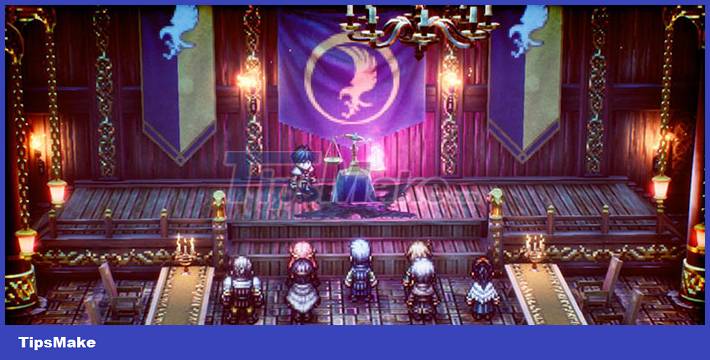
In the team will definitely need a magic user like Narve as he can use multiple elements to exploit different environmental effects. In addition, support characters like Benedict are also important, providing party members with useful powers to create more devastating effects and combos.
It's important to note here that each character has specific strengths. Sometimes, knowing which character to use in a given situation can help control encounters with the toughest enemies.
Know Your Enemy
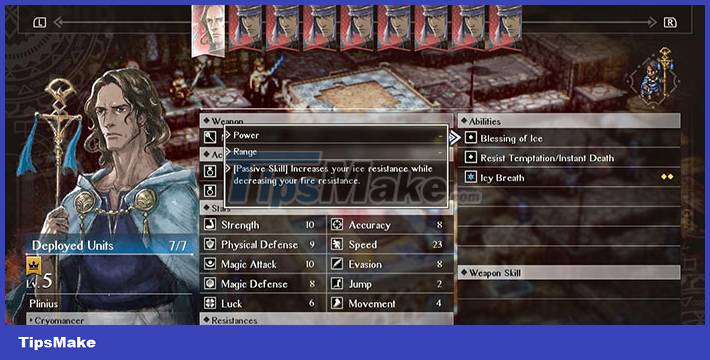
Similar to characters, all enemies encountered in Triangle Strategy also have their own skills and stats. Therefore, players should take some time before starting any confrontation with an opponent to check the details of who they will be up against.
Fortunately, it is quite easy to gather information about their abilities, just by looking at the statistics. Players can hover over them and press Y to display chi information about their strengths, weaknesses, and resistances, which will help decide which attacks to use against them.
Conclusion
Understanding Triangle Strategy makes it easier to compare options, avoid common mistakes, and apply the information in this guide more effectively. Review the relevant requirements before making changes or choosing a solution.
FAQ
What is Triangle Strategy?
This is also a good place to collect XP because it still gives experience points like in normal battles.
Why is Triangle Strategy important?
Understanding Triangle Strategy helps you evaluate features, compatibility, performance, and potential limitations before you choose a product or follow a procedure.
What should you consider when using or choosing Triangle Strategy?
Consider your specific goal, compatibility requirements, available features, cost, security, and the practical recommendations described in this guide.
Related Articles
 Formula to Calculate the Area of a Triangle: Square, Regular6 minutes read
 Strategies to Play Onmyoji Gamers Need to Know5 minutes read
 The Deadly Danger in the 2nd Bermuda Triangle Triangle7 minutes read
 Interesting Facts About the Bermuda Triangle That Not Everyone Knows12 minutes read
 Growth Hacking Growth Strategy - Part 22 minutes read
 What Does the Triangle Mean in Physiognomy?6 minutes read
Reader Comments 0
Sign in with email or Google to join the discussion.