Table of Contents
This updated guide examines How to Turn on the 120hz Screen on Samsung Galaxy S20 and organizes the essential facts, background, and practical takeaways in clear American English.
How to activate 120Hz screen on Galaxy S20
Step 1:
We swipe the screen from top to bottom and then click the gear icon to access the settings interface on the device.

Next in the user settings group interface, click the Display group . This Display setting group manages the display interface such as Dark mode, turns on the blue light filter, changes the font size, etc.

Step 2:
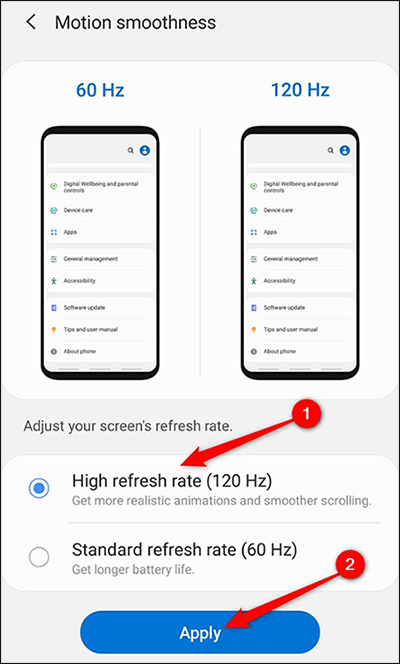
We scroll down and then click on Motion smoothness to adjust the screen.

Step 3:
In this new interface you will see the difference between 120Hz screen and 60Hz screen. However, users should pay attention to using the 120Hz screen on this Samsung S20 will also consume 20-30% battery power compared to the 60Hz screen. The screen resolution is also automatically lowered to 1080p (FHD +) instead of 1440p (WQHD +) when using a 60Hz screen. If you want to use it, just tick High Refresh Rate (120Hz) and click Apply to use it.
FAQ
What is How to Turn on the 120hz Screen on Samsung Galaxy S20 about?
It provides a structured overview of how to turn on Galaxy S20 120Hz, explains the main context, and highlights practical takeaways for readers.
Why does this topic matter?
Understanding the main concepts helps readers evaluate the issue, avoid common mistakes, and make better-informed decisions.
How should readers use this information?
Use the guidance as a practical starting point, confirm details that may have changed, and follow current product, safety, or security recommendations.
Related Articles
 Once You Try the 120hz Screen of the Galaxy S20, You Will No5 minutes read
 This Is Why Galaxy Fold 2 Will Have to Have Two 120Hz5 minutes read
 How to Turn Off the Now Bar on Samsung Galaxy3 minutes read
 10 Interesting Tips on Samsung Galaxy S8 Not Everyone Knows7 minutes read
 How to Turn Off Screen Reading on Samsung Galaxy3 minutes read
 Instructions to Turn Off Galaxy AI on Samsung Phones3 minutes read
Reader Comments 0
Sign in with email or Google to join the discussion.