Table of Contents
This updated guide examines App: How to Open Msg Files on Mac and organizes the essential facts, background, and practical takeaways in clear American English.
Method 1of 2:
Using SeaMonkey
 Download SeaMonkey fromhttp://www.seamonkey-project.org. Open the SeaMonkey Project website in your internet browser, and click the download link on the right-hand side of the page.
- This will download the setup file to your computer.
- SeaMonkey is an open-source internet application suite with an integrated web browser, email client, newsfeed client, IRC Chat client, and HTML editor.
- You can download and use SeaMonkey for free.
 Install the Seamonkey "setup.pkg" file on your computer. Double-click the setup file you just downloaded, and drag the Seamonkey icon to your Applications folder in the setup window.
- If you're having trouble installing the app, check out this article for detailed instructions on how to install software on a Mac.
 Open the SeaMonkey app on your computer. The SeaMonkey icon looks like a blue bird in a blue circle. You can find it in your Applications folder.
- If you see a message saying the app can't be opened because it's from an unidentified developer, make sure to allow it in your System Preferences.
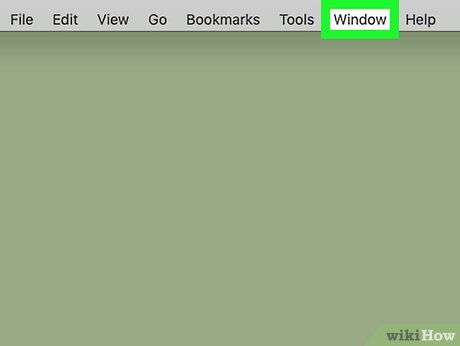 Click theWindowtab on the menu bar. This will open a drop-down menu.
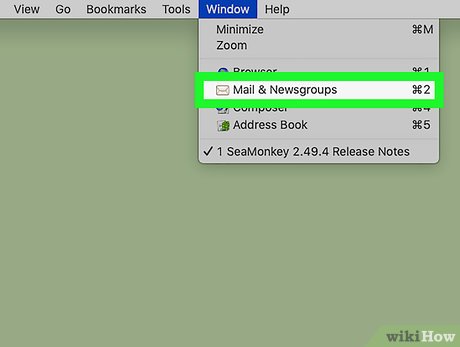 ClickMail & Newsgroupson the "Window" menu. This option is listed next to an envelope icon. It will open SeaMonkey's mail client in a new window.
 ClickCancelin the "New Account Setup" window. When you're prompted to set up your mail account, you can click this button, and exit the account setup window.
- Click Exit in the confirmation pop-up.
- This will open the mail client without an account. You can use the mail client to open MSG files without setting up an email account here.
 Click theFilemenu on the top-left. This button is on your menu bar in the upper-left corner of your screen. It will open a drop-down menu.
 ClickOpen Fileon the "File" menu. This will open your file navigator in a new pop-up window, and allow you to select the files you want to open.
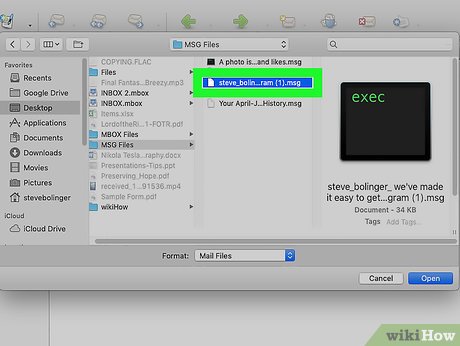 Select the MSG file you want to open. Find and click the MSG file you want to open in the file navigator pop-up.
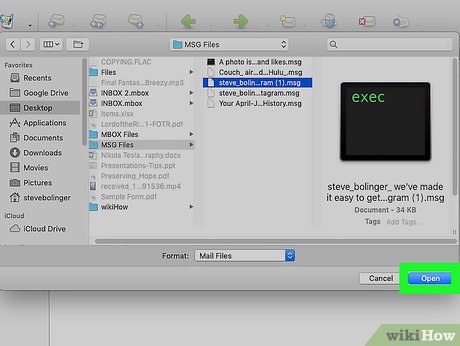 ClickOpenin the pop-up. This will import the selected MSG file to SeaMonkey, and open it in the mail client. You can view all the message contents in SeaMonkey.
Method 2of 2:
Using Winmail.dat Opener
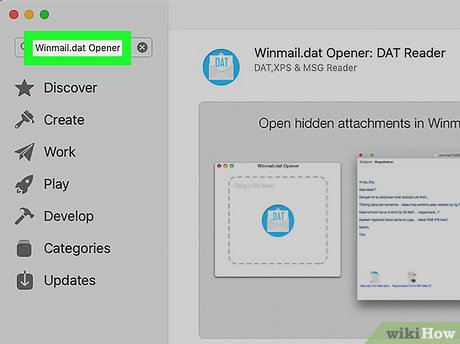 Open the "Winmail.dat Opener" app on the App Store. You can search the app name in the App Store window, or find it at https://apps.apple.com/us/app/winmail-dat-opener-dat-reader/id990497462.
- This is a third-party app that allows viewing MSG files, among other file types.
- You can find similar free or paid alternatives on the App Store like MailRaider (https://apps.apple.com/us/app/mailraider/id558268579) or MSG Viewer for Outlook (https://apps.apple.com/us/app/msg-viewer-for-outlook/id973213640).
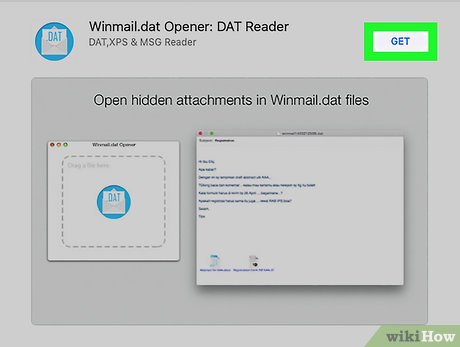 Install Winmail.dat Opener from the App Store. Click the gray GET button next to the app, and then click the green INSTALL APP button. This will download and install the app on your computer.
- If you're having trouble downloading the app, make sure to check out this article for detailed guidelines on downloading an app from the App Store.
 Open WinMail.dat Opener on your Mac. The Winmail.dat Opener icon looks like a white letter in an envelope with ". DAT" written on it. You can find it in your Applications folder.
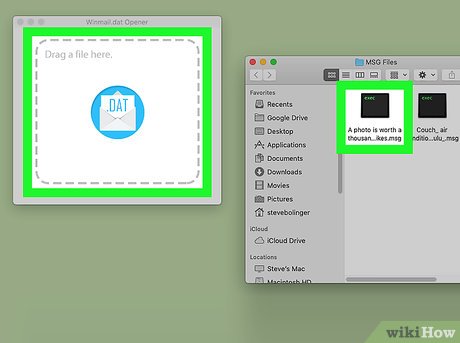 Drag and drop your MSG file to the Winmail.dat Opener window. You'll see a dashed area saying "Drag a file here" in the app window. Drag your MSG files here to open and view them in the app.
- View your MSG file in the Winmail.dat Opener app. You can view all your MSG file's message contents in the app window here.

FAQ
What is App: How to Open Msg Files on Mac about?
It provides a structured overview of app, explains the main context, and highlights practical takeaways for readers.
Why does this topic matter?
Understanding the main concepts helps readers evaluate the issue, avoid common mistakes, and make better-informed decisions.
How should readers use this information?
Use the guidance as a practical starting point, confirm details that may have changed, and follow current product, safety, or security recommendations.
Related Articles
 How to Open SWF Files: Clear Instructions6 minutes read
 How to Open RAR Files on Android Phones: Practical Guide5 minutes read
 How to Open Rar Files10 minutes read
 What Is a DAT File? How to Open DAT Files, How to Read DAT12 minutes read
 How to Open DAT Files: Practical Guide10 minutes read
 How to Fix Photoshop Error Can't Open RAW Files3 minutes read
Reader Comments 0
Sign in with email or Google to join the discussion.