Table of Contents
Artificial intelligence can improve education only when it is treated as a systemwide capability rather than a shortcut for producing lessons or homework. Shanghai’s approach is useful because it connects classroom tools with curriculum, teacher development, evaluation, infrastructure, and governance. It also shows why ambitious deployment needs firm safeguards for students and educators.
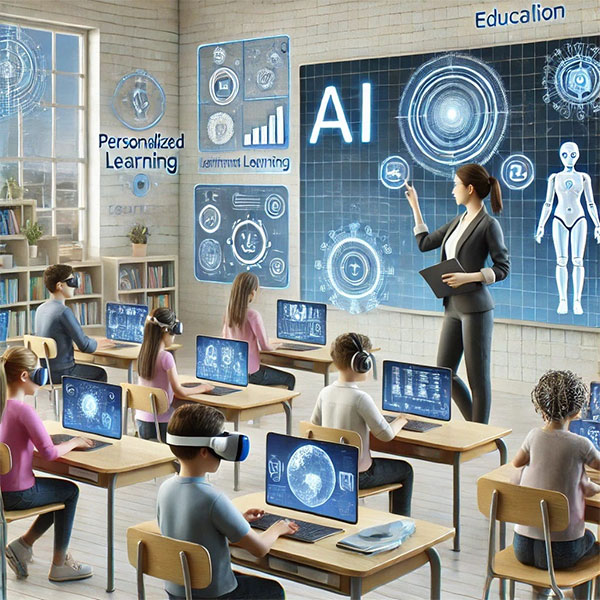
What Shanghai’s plan actually includes
Shanghai’s official 2024–2026 action plan for AI in basic education is broader than simply placing a chatbot in every classroom. It sets out local AI courses for grades four and seven, stronger AI content in high school technology subjects, shared teaching resources, teacher training, experimental schools, and evaluation of classroom uses.
The plan also encourages adaptive learning platforms, teaching assistants, knowledge bases, and pilot “dual-teacher” classrooms in which an educator remains responsible while an AI system supports selected tasks. Its 2026 goals include a curriculum and assessment framework, demonstration sites, and practices that can be evaluated before being adopted more widely.
Five practical lessons for education systems
1. Begin with learning goals, not a product
A school should define the problem first: Is it trying to give students more practice, help teachers prepare differentiated materials, improve feedback, or reduce administrative work? The answer determines whether AI is appropriate and how success should be measured. Buying a general-purpose chatbot without a defined instructional need usually creates inconsistent use and weak accountability.
2. Train teachers and protect their authority
Teachers need time to test tools, understand their limitations, and learn how to verify generated material. Training should cover prompt design, source checking, bias, copyright, privacy, and age-appropriate use. AI can draft examples or suggest activities, but the teacher should decide what enters the classroom and how student work is assessed.
3. Evaluate tools with real classroom evidence
A convincing demonstration is not proof of better learning. Pilots should compare outcomes against a clear baseline and examine more than test scores. Schools also need to measure accessibility, student engagement, teacher workload, error rates, and whether the system disadvantages particular groups. Tools that do not produce a measurable benefit should be changed or retired.
4. Build data governance before personalization
Personalized learning can require sensitive information about performance, behavior, or wellbeing. Schools should collect only the data needed for a defined purpose, limit access, set retention periods, and explain the practice to families in plain language. Contracts should address data ownership, model training, security incidents, deletion, and the ability to export records when a vendor changes.
5. Keep high-stakes decisions human
AI output should not be the sole basis for grades, discipline, admissions, special-education placement, or mental-health intervention. These systems can be wrong, incomplete, or biased. A qualified person must review recommendations, students need a way to challenge decisions, and urgent wellbeing concerns should follow established safeguarding procedures rather than an automated conversation.
What a national strategy should contain
A coordinated strategy can prevent every school from repeating the same procurement, security, and evaluation work. At minimum, it should establish:
- clear curriculum goals for AI literacy and responsible use;
- professional development and practical support for teachers;
- technical, privacy, accessibility, and child-safety standards;
- approved ways to test tools before wide deployment;
- funding that does not widen gaps between well-resourced and underserved schools;
- transparent rules for vendors, data use, audits, and incident reporting;
- independent evaluation and a process for withdrawing ineffective tools.
Shanghai’s program is still an evolving implementation, not a universal template. Its strongest lesson is organizational: AI in education works best when curriculum, teachers, infrastructure, governance, and evaluation are designed together. The technology is only one part of the system, and it should remain subordinate to educational goals and student welfare.
Related Articles
 Covid-19 Is Opening the Future for Digital Education5 minutes read
 15 Life Lessons Should Be Known Before Turning 306 minutes read
 3 Key Lessons for Successfully Leading AI Transformation in Businesses7 minutes read
 Top 15 Most Attractive Android Strategy Games7 minutes read
 39 Examples of AI Applications in Education18 minutes read
 How to Learn Online on Aic Education Application3 minutes read
Reader Comments 0
Sign in with email or Google to join the discussion.