Table of Contents
Use ChatGPT as a practice partner: ask for a task at your level, attempt it yourself, then request specific feedback. It can generate exercises and explain mistakes, but its corrections need checking. A useful session ends with you producing better English, rather than simply reading an AI answer.
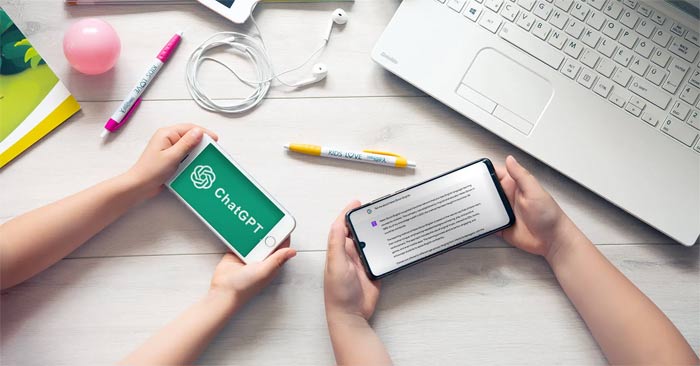
Set your level and a learning goal
Start with a prompt such as: “I am an A2 English learner. Help me practice ordering food. Use short sentences, ask one question at a time, and explain corrections after I answer.” If you do not know your level, describe what you can already do. Treat the chatbot's level estimate as informal feedback, not a qualification.
Learn vocabulary in context
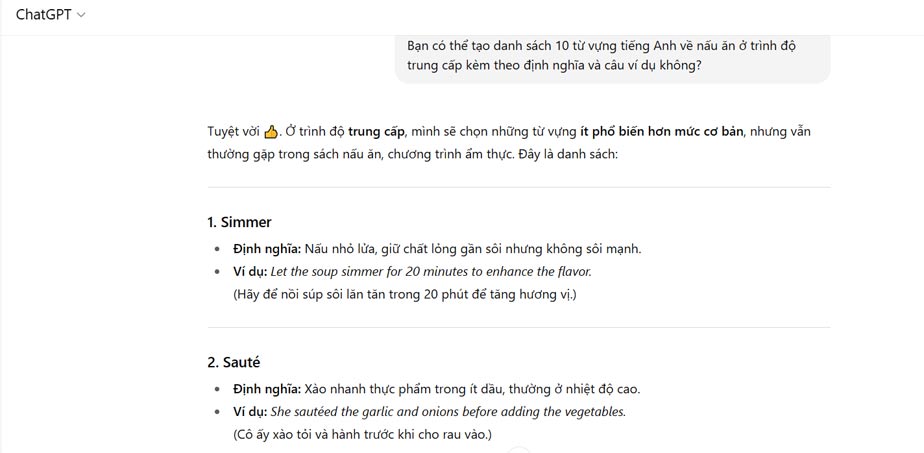
Choose a small group of words you can use immediately. Ask: “Give me five cooking verbs, simple definitions and one natural example for each. Then quiz me without showing the answers.” Write your own sentences before asking for corrections.
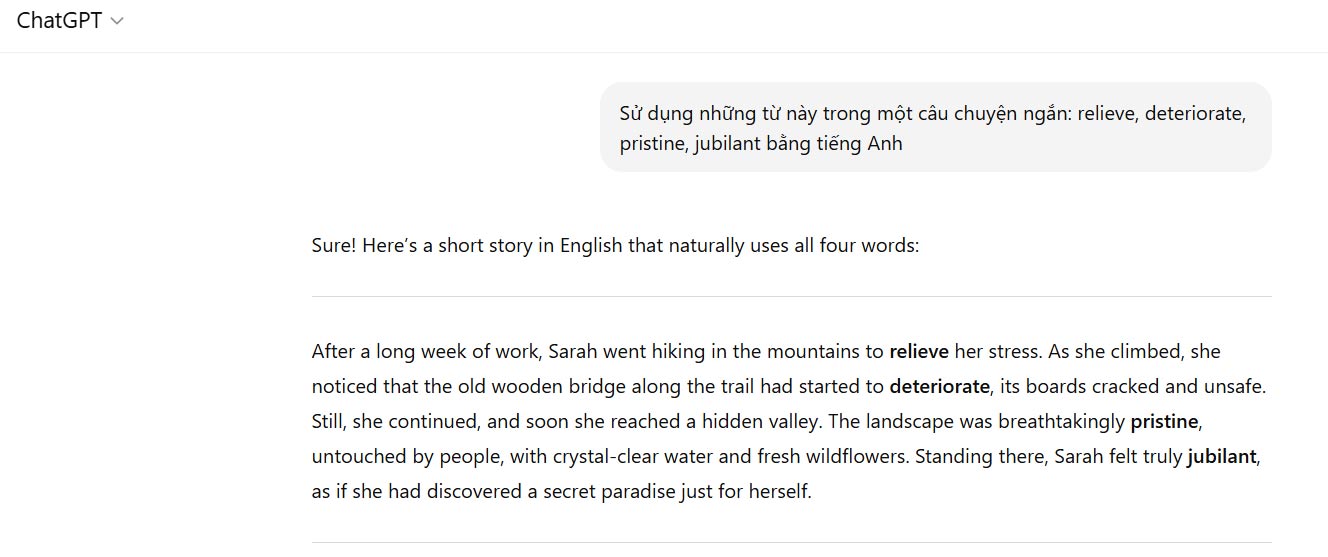
To review, request a short story with missing words from your list. Ask for examples of common word combinations as well as meanings: knowing that you “make a decision” is more useful than memorizing “decision” alone.
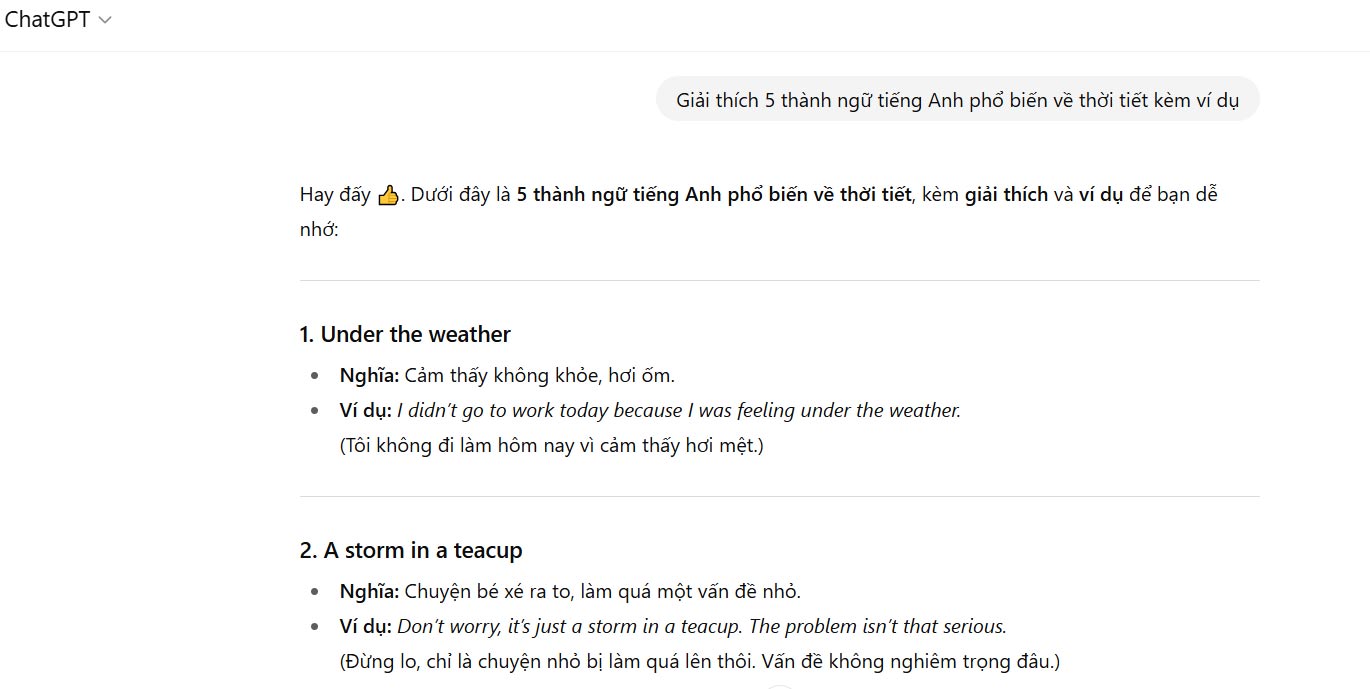
Do not treat synonyms as interchangeable. “Excellent” can replace “good” in some descriptions; “satisfied” describes a person's reaction. Ask the chatbot to explain the difference and give examples in the same situation.
Practice a conversation one turn at a time
Ask ChatGPT to play a hotel receptionist, interviewer or shop assistant. Add a constraint: “Wait for my reply. Keep the conversation to six turns. At the end, identify three errors and let me try those sentences again.” This gives you space to respond rather than reading a complete dialogue.
After the first attempt, repeat the scenario with one change, such as a fully booked hotel or an unavailable menu item. For listening material to accompany the practice, see how to create English listening dialogues.
Turn grammar explanations into exercises
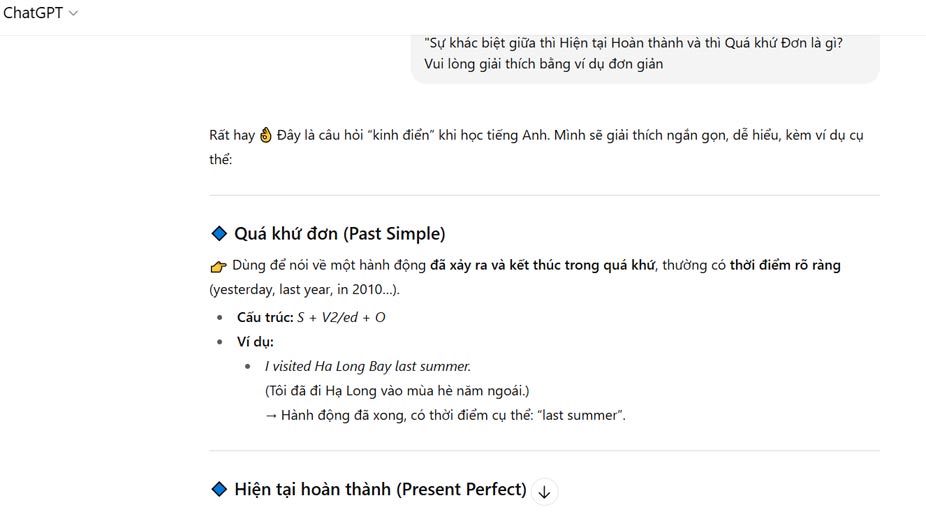
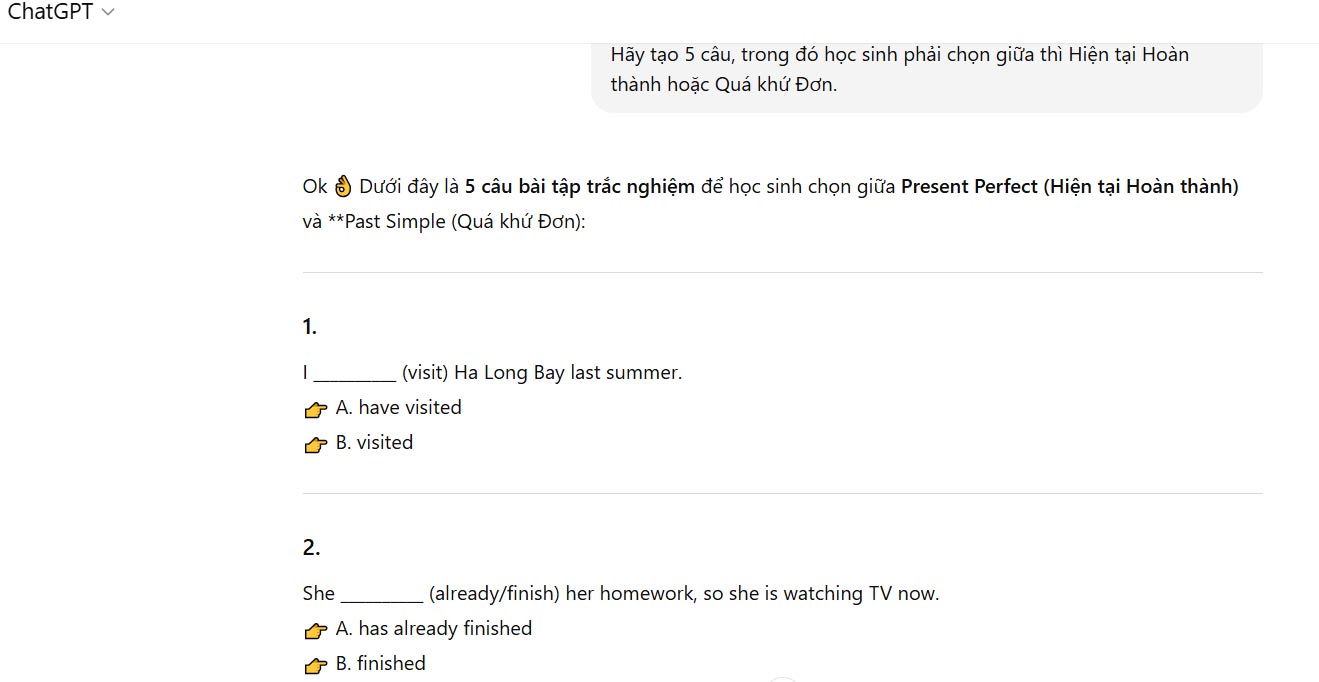
For a confusing rule, ask for a comparison and a short practice task: “Explain present perfect versus past simple using everyday examples. Then give me five gaps to complete, one at a time. Accept more than one answer if the context allows it.”
For example, “I visited London last year” uses past simple with a finished time. “I have visited London” describes experience without naming a finished time. Context matters, so ask why an alternative is wrong or whether it changes the meaning.
Keep a record of repeated mistakes. At the next session, ask for new exercises using those same patterns instead of starting a random new topic.
Use pronunciation help carefully
Text explanations can help with word stress and sound contrasts, but they cannot show whether you actually pronounced a word correctly. If voice interaction is available in your interface, use it for speaking practice; a correct transcript alone does not prove accurate pronunciation.
Check unfamiliar words against audio from a reputable learner's dictionary. Specify the variety you want, such as British or American English. Avoid relying only on English-looking respellings, which can hide sound differences.
Improve writing without handing over the work
Write your paragraph first. Then ask: “Correct only grammar and unnatural phrasing. Show my original sentence, your correction and a brief reason. Keep my meaning. Separate necessary corrections from optional style changes.”
For example, “London are a very interesting city” becomes “London is a very interesting city.” “I very like to learn English” becomes “I really like learning English.” Rewrite the paragraph yourself after reviewing the explanations.
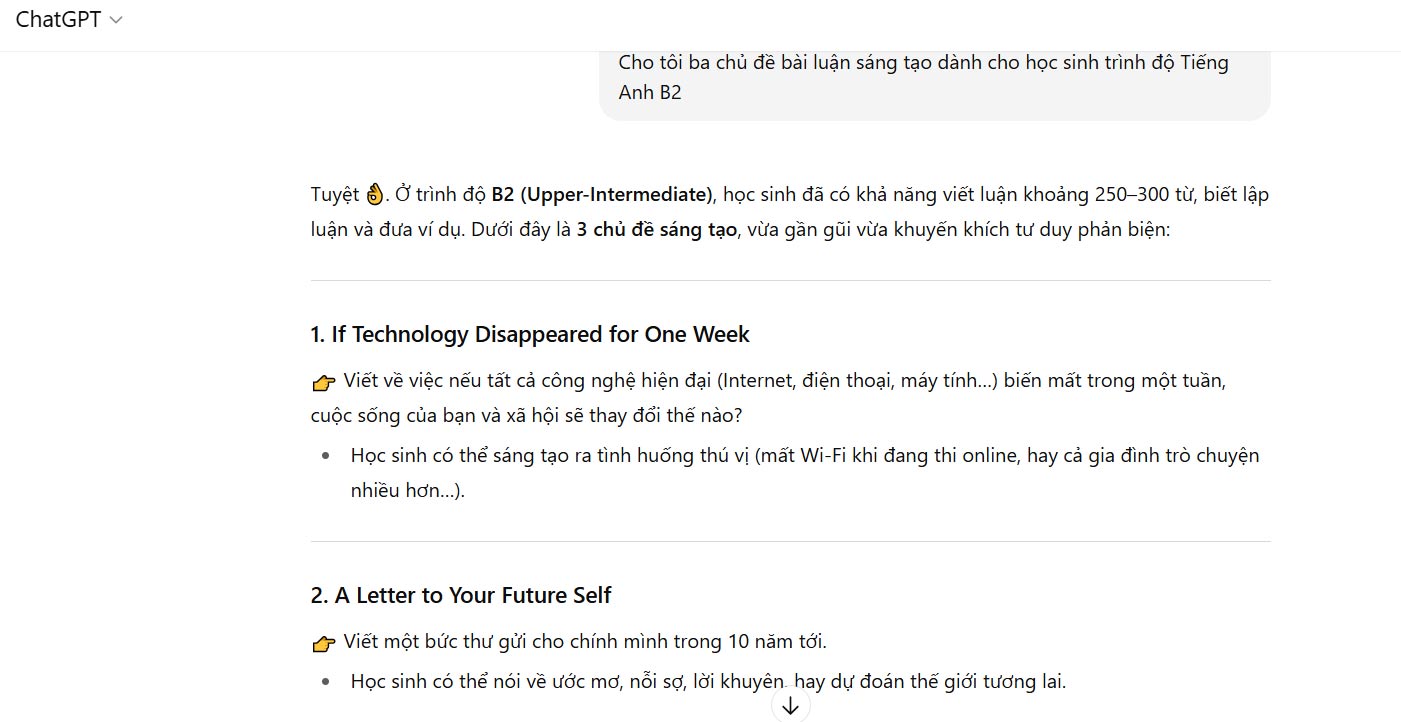
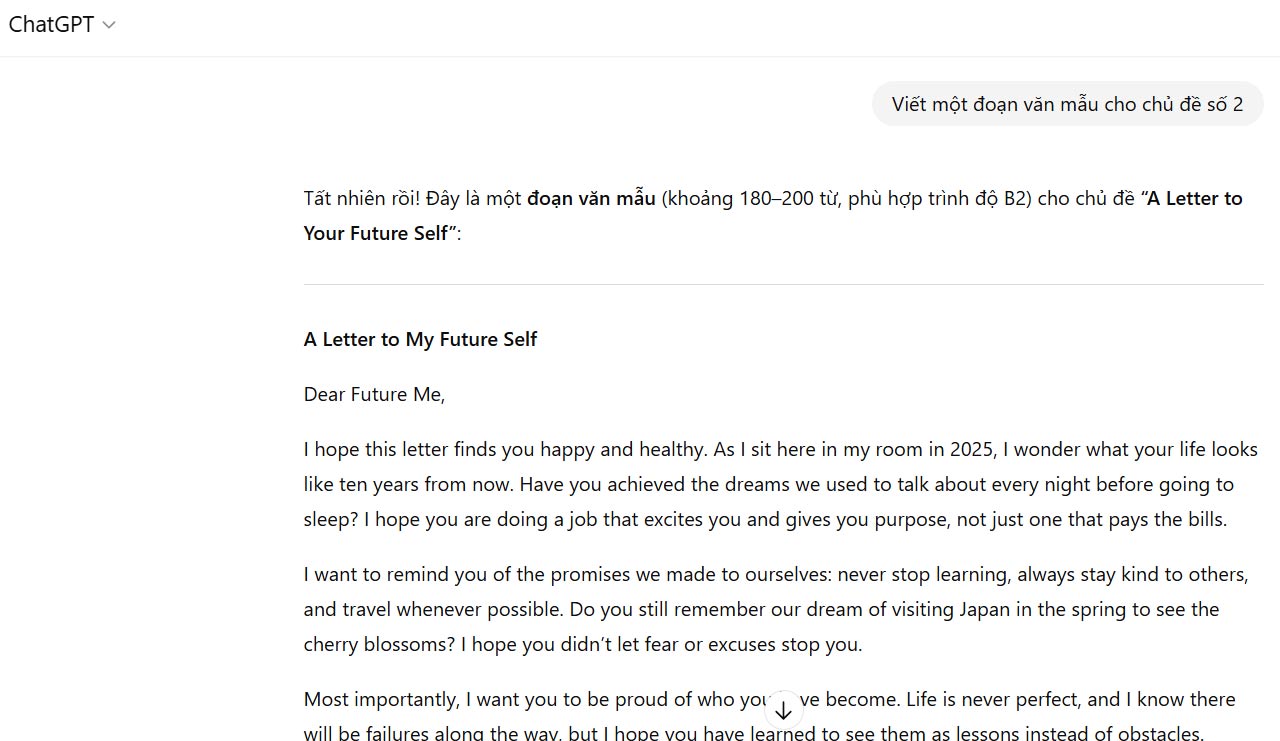
For assignments, follow your teacher's AI rules and use generated outlines or samples as study material. Do not submit them as your own work. The AI and productivity learning path offers broader guidance on checking AI output.
A focused 15-minute routine
- Spend three minutes recalling yesterday's vocabulary without help.
- Spend five minutes on a short conversation or paragraph.
- Spend four minutes reviewing two or three corrections.
- Spend three minutes retrying the task using those corrections.
If feedback seems inconsistent, ask for a contrasting example and check a grammar reference or teacher. For exam preparation, use official exam materials for format and scoring; a chatbot's practice score is only an estimate.
Related Articles
 How to learn English for free with Vndoc, from basic to advanced
 12 Facebook Pages useful for English learners
 15 websites for free and effective English learning at home
 Top 23 top English learning apps on Android and iOS
 What is GPT-4o? Capabilities, limits, and current availability
 Top 8 leading English learning applications on Android and iOS
Reader Comments 0
Sign in with email or Google to join the discussion.