Table of Contents
Tencent Gaming Buddy is now known as GameLoop. To improve PUBG Mobile VN image quality, adjust both the emulator's Engine settings and the game's own graphics menu. Increase resolution and visual effects only when the PC can keep a stable frame rate; a sharp image is not useful if aiming becomes inconsistent.
Install or update the emulator from the official GameLoop website. Menu names can vary by GameLoop version, so use the screenshots as orientation rather than an exact copy of the current interface.
1. Open GameLoop settings
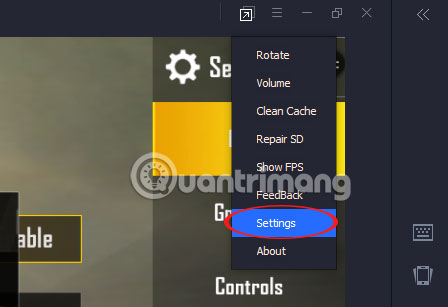
Select the menu button in the upper-right area of GameLoop and open Settings or Settings Center.
2. Configure the rendering engine
Open the Engine tab. GameLoop may offer Auto, OpenGL+, and DirectX+. Start with Auto. If PUBG Mobile displays a black screen, broken textures, or severe stutter, test OpenGL+ and DirectX+ separately, restarting the emulator after each change.
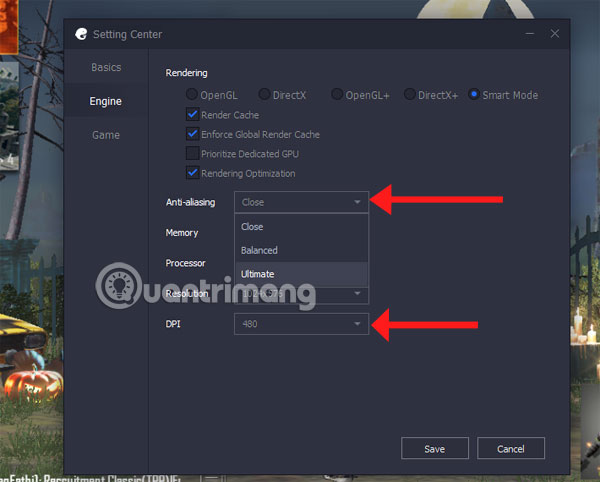
The options affect different parts of the image:
- Anti-aliasing smooths jagged edges but increases GPU workload. Leave it disabled or low when performance is the priority.
- Rendering cache can reduce repeated graphics work, though it should be turned off temporarily when diagnosing visual artifacts.
- Memory and processor allocation should leave resources for Windows. Selecting every available CPU core or all installed RAM can make the system less responsive.
- Resolution determines how many pixels the emulator renders. Higher values look sharper but require more GPU performance.
- DPI changes the scale and density of the Android interface; it is not the same as the physical DPI or sensitivity setting of a mouse.
GameLoop's official settings guide explains the rendering modes and notes that feature support differs between engines.
3. Set PUBG Mobile display quality
Open the Game tab in GameLoop. Choose the resolution and display quality supported by your monitor and graphics hardware, then select Save.

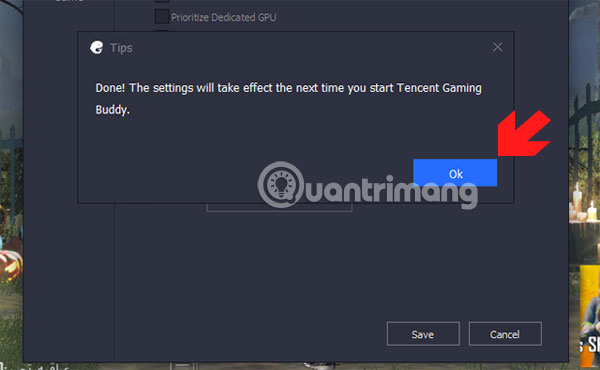
Restart GameLoop when prompted so the rendering engine and resolution are applied correctly.
4. Balance quality and frame rate in the game
Launch PUBG Mobile VN and open Settings > Graphics. Prefer a stable, high frame-rate option over a more detailed preset that causes drops during combat. If the game stutters, lower shadows and anti-aliasing first; if it remains unstable, reduce the emulator resolution or in-game graphics quality.
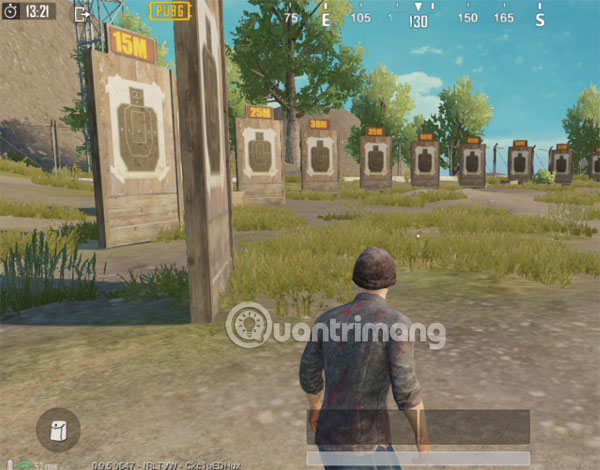
The older screenshots below show the visible difference between low settings and a higher-quality configuration.
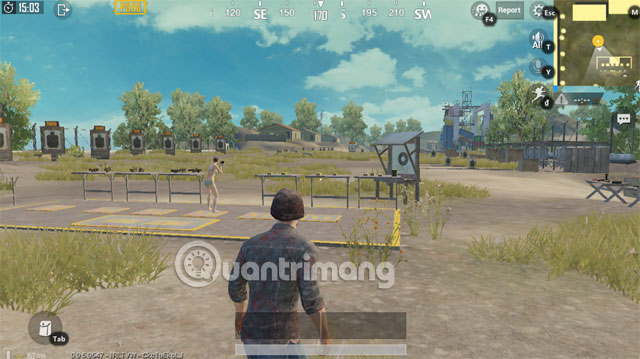
Higher settings add shadows and smooth some edges, but the improvement costs GPU performance.
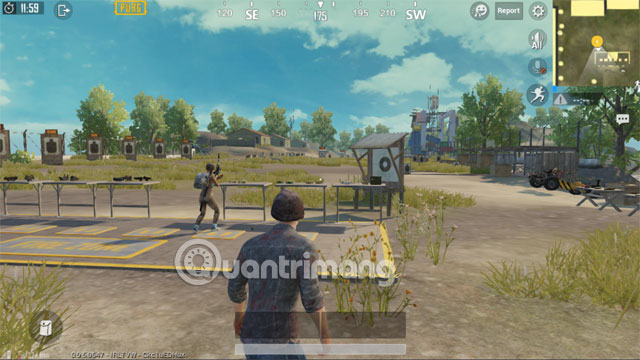
The contrast is easiest to see along thin objects and diagonal lines:

Recommended starting profiles
Lower-end or integrated graphics
- Rendering mode: Auto, then test OpenGL+ if needed
- Resolution: 720p or the lowest comfortable option
- Anti-aliasing: Off
- In-game quality: Smooth or the equivalent low preset
- Frame rate: highest option that remains stable
Mid-range or stronger dedicated GPU
- Rendering mode: Auto or the API that performs best in a training match
- Resolution: 1080p if frame pacing remains stable
- Anti-aliasing: Low or moderate, tested during combat
- In-game quality: balanced with a high frame-rate setting
There is no universal RAM or VRAM threshold that guarantees HD play because performance also depends on the processor, GPU driver, background applications, cooling, and chosen resolution. Change one option at a time and test in Training Mode.
If controls or graphics break after the change
Update the graphics driver and GameLoop, clear only the emulator cache—not game data—then return the rendering mode to Auto. Rebuild the key mapping if the emulator resets it. For an aiming-specific problem, follow the GameLoop mouse rotation troubleshooting guide. Avoid third-party graphics unlockers, modified game files, or tools that promise unsupported frame-rate modes.
Related Articles
 How to Download and Install PUBG Mobile VNG on Tencent Gaming Buddy10 minutes read
 How to Record a Video Playing PUBG Mobile on Tencent Gaming Buddy4 minutes read
 Summary of Common Tencent Gaming Buddy Errors12 minutes read
 How to Install Coalition on Your Computer with Tencent Gaming5 minutes read
 How to Fix Mouse Rotation Error on PUBG Mobile VNG5 minutes read
 Quick Update Guide Tencent Gaming Buddy4 minutes read
Reader Comments 0
Sign in with email or Google to join the discussion.