Table of Contents
Explore breakthroughs open up new hope in the fight against cancer.
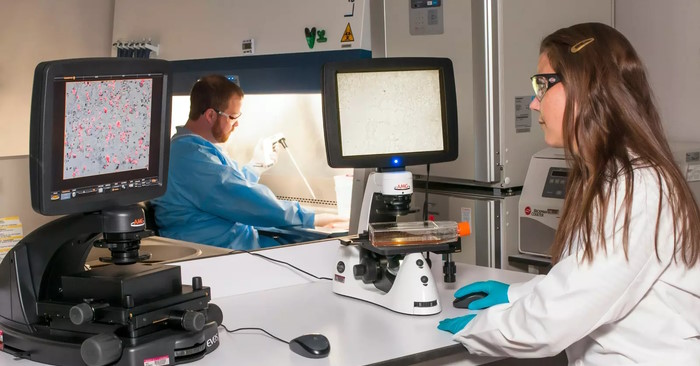
Breast, lung and colon cancers are the most common, while the number of new cancer cases each year is expected to increase by more than 75% between 2022 and 2050.
There is some good news, however. Medical advances are accelerating the fight against cancer. Here are some of the breakthroughs that are opening up new avenues of life for cancer patients.
Personalizing cancer vaccines
Thousands of cancer patients on the UK's National Health Service (NHS) could soon have access to new vaccine trials. The vaccines are designed to trigger the immune system to target cancer cells and reduce the risk of relapse. They are also expected to cause fewer side effects than conventional chemotherapy. Thirty hospitals have joined the Cancer Vaccine Launch Programme, which connects patients to upcoming trials using the same mRNA technology found in current COVID-19 jabs. More than 200 patients from the UK, Germany, Belgium, Spain and Sweden will receive up to 15 doses of the personalized vaccine in the study, which is due to be completed in 2027.
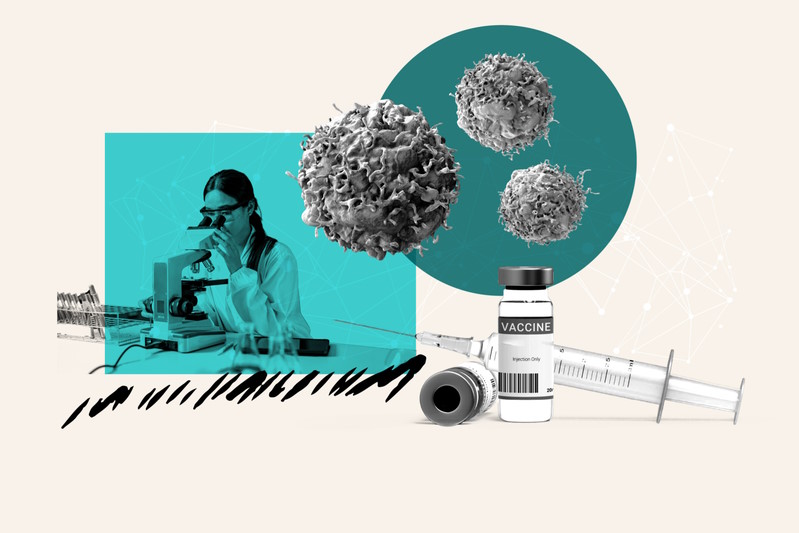
Test detects 18 types of early stage cancer
Researchers in the United States have developed a test that they say can detect 18 types of cancer at an early stage. Instead of the usual invasive and expensive methods, Novelna's test works by analyzing proteins in a patient's blood. In screening 440 people who had already been diagnosed with cancer, the test correctly identified 93% of stage 1 cancers in men and 84% in women. The researchers believe the findings " paves the way for a cost-effective, highly accurate multi-cancer screening test that could be rolled out on a population scale ." However, it is still early days. With small screening populations and a lack of information about co-morbidities, the test is currently just "a starting point for developing a new generation of screening tests for early cancer detection ."
Cancer treatment injection in seven minutes
The NHS will be the first in the world to use an injectable cancer drug that takes just seven minutes to administer, compared to the current hour-long intravenous injection. This will not only speed up treatment for patients but also save time for healthcare professionals. Atezolizumab, or Tecentriq, treats cancers including lung and breast cancer. It is expected that most of the 3,600 NHS patients in England will receive the drug intravenously.
Precision oncology
Precision oncology is ' the best new weapon to defeat cancer ,' Genetron Health CEO Sizhen Wang said in a blog post for the World Economic Forum. This involves studying the genetic makeup and molecular features of cancer tumors in individual patients. Precision oncology identifies changes in cells that can cause cancer to grow and spread. Personalized treatments can then be developed.
The 100,000 Genomes Project, an initiative of the National Health Service, studied more than 13,000 tumour samples from cancer patients in the UK, successfully integrating genomic data to more accurately identify effective treatments. Because precision cancer treatments are targeted – as opposed to generic treatments such as chemotherapy – this could mean less harm to healthy cells and fewer side effects.
Artificial intelligence against cancer
In India, World Economic Forum partners are using emerging technologies such as artificial intelligence (AI) and machine learning to transform cancer care. For example, AI-based risk profiling can help screen for common cancers such as breast cancer, leading to early diagnosis. AI can also be used to analyze X-ray images to identify cancers in places where radiologists are not available. These are two of the 18 cancer interventions that the Centre for the Fourth Industrial Revolution in India hopes to promote.
Final Thoughts
Understanding breakthroughs open up new hope in the fight against cancer makes it easier to evaluate the information and apply the most relevant recommendations. Focus on the key points above and verify details that may change over time.
FAQ
What is breakthroughs open up new hope in the fight against cancer?
Explore breakthroughs open up new hope in the fight against cancer.
What key points does this article cover?
The article focuses on Personalizing cancer vaccines, Test detects 18 types of early stage cancer, Cancer treatment injection in seven minutes, with practical explanations and examples.
How can you use this information in practice?
Use the explanations to compare options, verify important details, and make a more informed decision. Apply the recommendations that best match your goals and situation.
Related Articles
 Equip a New 'Weapon' for T Cells to Fight Cancer4 minutes read
 5 False Taboos When Caring for People with Cancer7 minutes read
 Researchers Found New Antibodies to Kill Cancer Cells4 minutes read
 Russia's Cancer Vaccine Explained: What Makes It Different6 minutes read
 Finding Compounds Can Kill 25% of All Cancers in the Test Environment4 minutes read
 Stunned to Discover Indian Long Pepper Can Fight Cancer5 minutes read
Reader Comments 0
Sign in with email or Google to join the discussion.