Table of Contents
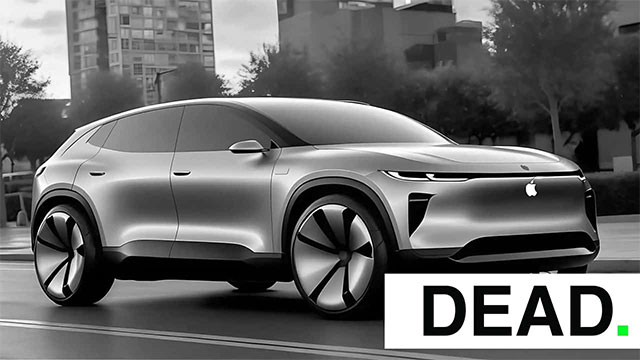
The Apple Car project cost $10 billion but ultimately failed, leaving behind many lessons about ambition, overconfidence and the risks of self-driving car technology.
A decade of secrecy, tens of billions of dollars invested, and a disappointing end. Apple's self-driving car project – once considered a 'strategic card' – has finally fizzled out, leaving a big question mark: Where did it go wrong, and is this fall a wake-up call for the entire industry?
Late, but not necessarily at the wrong time
Theoretically, there are two perspectives when it comes to when Apple enters the auto market:
- The market is already crowded with experienced giants. Is there still much room for Apple to dominate?
- On the other hand, there is also the opinion that the market is waiting for a 'push' - something Apple is very good at. Based on its existing loyal fan base, Apple can completely create a wave of artificial demand, just like Tesla did.
From 2001 to 2014, the project was kept almost completely hidden, only revealed through a few patents and recruitment rumors. It was not until 2015 that 'Project Titan' officially appeared, causing a stir in the technology world. But was it too late?
Self-driving cars – a dangerous gamble
According to NHTSA data, the US alone has recorded nearly 4,000 accidents involving self-driving cars , including at least 83 fatalities . These numbers show the huge level of risk in the industry.
Apple has entered a field fraught with legal disputes and social risks that even traditional automakers are wary of. In fact, the fact that Apple has continued the project for so many years is a testament to its boldness, even courage.
Also, internal conflicts and unclear direction also contributed to the failure of Apple. Rumors spread that the Apple Car team lacked unity. Despite the presence of personnel from Tesla, Ford, BMW, Porsche. the 'mix' of automotive experts and technology managers seemed to have created a difficult-to-reconcile hotpot.
Without a clear direction, the project fell into a spiral of delays, constant personnel changes, and skyrocketing costs – a scenario all too familiar to large-scale technology projects.
Additionally, entering the auto industry already requires huge resources, Apple is aiming straight at self-driving cars - an extremely difficult field. Perhaps they bet too much on the confidence that 'Apple will succeed in anything', forgetting that cars are not like iPhones or MacBooks.
While Tesla chose to go step by step – starting with Autopilot, lane keeping assist, adaptive cruise control… – Apple wants to jump straight to the highest level of automation.
'Too much, too soon' is probably the most accurate phrase. In the period 2000–2015, artificial intelligence technology was not mature enough to make such ambitions a reality. Sometimes, there is a fine line between confidence and arrogance. And in this case, Apple crossed that line.
The failure of Apple Car shows that having human resources and talent does not guarantee 100% success. Sometimes a team full of excellent people lacks a common direction.
Apple's retreat also reflects a harsh reality: even global tech giants must prioritize shareholders and real value. When there is no way out, 'pulling the plug' is often the cheaper option.
Ambition is necessary, but in a complex field like self-driving cars, sometimes you have to crawl before you can walk. Apple failed, but the fall is still a testament to the boldness that made its name, even if this time… not successful.
FAQ
What should you know about apple car failed?
In practical terms, the Apple Car project cost $10 billion but ultimately failed, leaving behind many lessons about ambition, overconfidence and the risks of self-driving car technology.
Why does apple car failed matter?
The article highlights that the failure of Apple Car shows that having human resources and talent does not guarantee 100% success.
What is the main takeaway?
The main takeaway is that apple failed, but the fall is still a testament to the boldness that made its name, even if this time… not successful.
Related Articles
 It's Equal Pay Day, But the Gender Pay Gap Could Be Widening4 minutes read
 Samsung Auto Launched: New Rival to Android Auto and Apple CarPlay5 minutes read
 Steps to Use Fall Detection on Apple Watch5 minutes read
 In the Know: Pros and Cons of Computer Science Degree7 minutes read
 Apple Might Delay Next Big iPhone Launch Due to Coronavirus3 minutes read
 iOS 14.5 Is Rocking the Advertising Industry5 minutes read
Reader Comments 0
Sign in with email or Google to join the discussion.