Table of Contents
Explore a cold 'copy' of earth has been found in a nearby star system.
This exoplanet, designated HD 137010b , is estimated to be only about 6% larger than Earth. However, its surface temperature is comparable to Mars – potentially dropping below -70°C.
Characteristics of the host star HD 137010
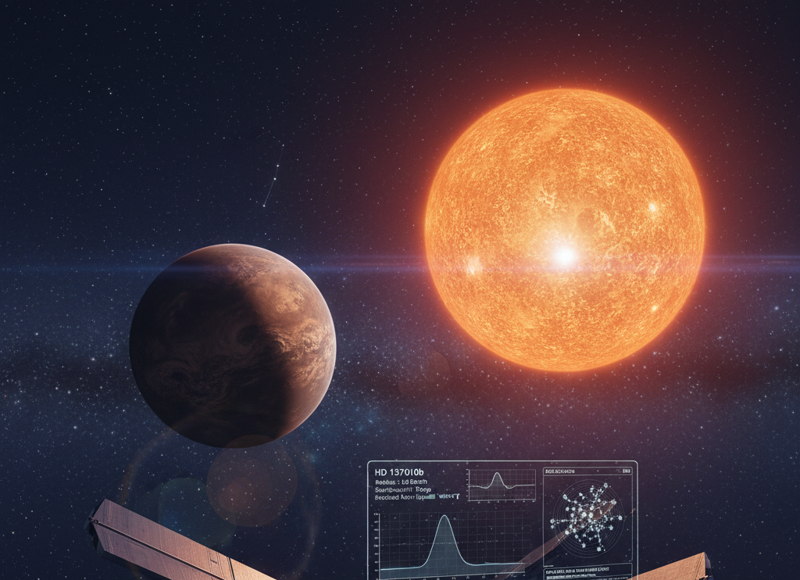
HD 137010 is a K3.5V dwarf star located approximately 146 light-years from us in the constellation Libra.
- Age: Estimated to range from 4.8 to 10 billion years.
- Activity: Low magnetic activity indicates that this is an old and relatively stable star.
- Brightness: With an apparent magnitude of 10.1, this is one of the brightest known stars possessing an Earth-sized planet with moderate orbital characteristics.
The difference compared to previous findings

During Operation K2 15 in 2017, the Kepler telescope observed this star continuously for nearly three months.
Alexander Venner, an astronomer at the University of Southern Queensland and lead author of the study, said: "Most Earth-sized planets previously found in the habitable zone orbit red dwarfs – a type of star that is much smaller and dimmer than our Sun."
He further explained that scientists are concerned that high-energy radiation from red dwarf stars could blow away the planet's entire atmosphere, rendering it unsustainable for life. Conversely, the host star HD 137010 has properties closer to the Sun, giving planet HD 137010b a higher probability of maintaining an atmosphere according to current theoretical models.
Analysis and verification process
To determine the nature of this approximately 10-hour transit signal, Dr. Venner and colleagues meticulously examined data from K2, starlight curves, archived images, radial velocity measurements, and astrometric data.
The test results confirmed that this signal originated from the target star itself and had an astrophysical origin, rather than being caused by background noise, a nearby occultation by a binary star system, or an object in the solar system.
Physical specifications of HD 137010b
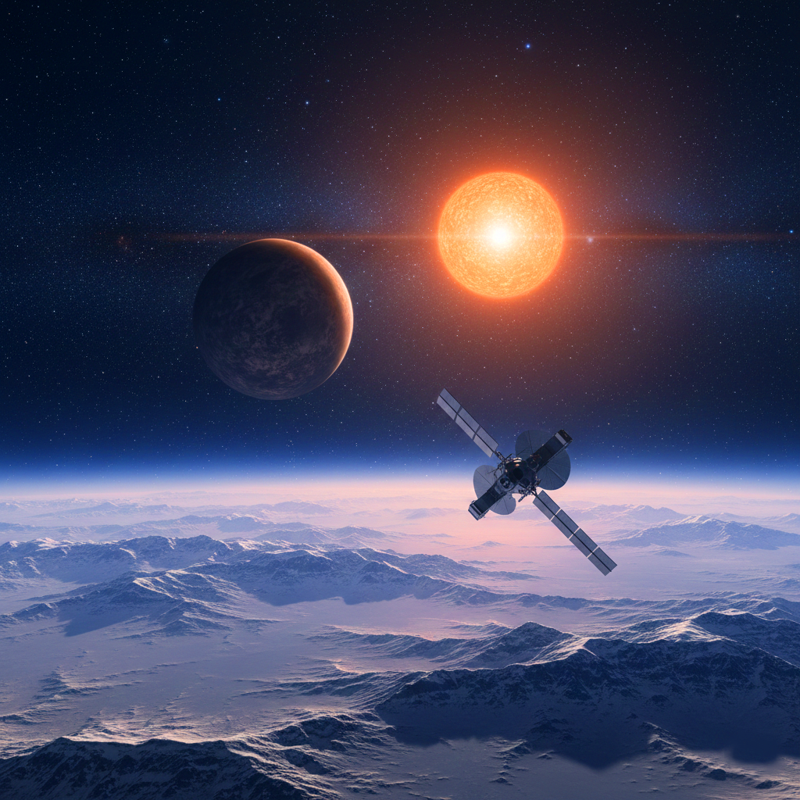
Based on the depth of the transit signal and the characteristics of the host star, astronomers have calculated:
- Radius: Approximately 1.06 times that of Earth.
- Orbital period: Estimated to be approximately 355 days (roughly one year on Earth).
- Energy received: This planet receives only about 29% of the stellar radiation that Earth receives from the Sun. This places it on the outer edge of the habitable zone around a star.
Dr. Venner stated: "If HD 137010b has an atmosphere similar to Earth or Mars, it could be colder than even the South Pole. However, if the atmosphere is thicker, it could warm the planet enough to sustain liquid water – a potential environment for life."
Future vision
Although current astronomical instruments cannot yet fully analyze the characteristics of this new planet, it will be a top target for next-generation radial velocity sensors in the search for an "Earth-like" planet.
Future space missions designed to directly image Earth-like planets, such as NASA's Habitable Worlds Observatory , may also capture actual images of HD 137010b.
This discovery has been officially published in the prestigious scientific journal Astrophysical Journal Letters .
Final Thoughts
Understanding a cold 'copy' of earth has been found in a nearby star system makes it easier to evaluate the information and apply the most relevant recommendations. Focus on the key points above and verify details that may change over time.
FAQ
What is a cold 'copy' of earth has been found in a nearby star system?
Explore a cold 'copy' of earth has been found in a nearby star system.
What key points does this article cover?
The article focuses on Characteristics of the host star HD 137010, The difference compared to previous findings, Analysis and verification process, with practical explanations and examples.
How can you use this information in practice?
Use the explanations to compare options, verify important details, and make a more informed decision. Apply the recommendations that best match your goals and situation.
Related Articles
 Discover the Black Hole Closest to Earth, Located in the9 minutes read
 Discovered Evidence That 'solar System 2.0' Has Water3 minutes read
 New Planet Appears That May Have Life Like Earth4 minutes read
 Found the Oldest Solid Material on Earth, 'Older' Than the Sun.3 minutes read
 6 Strange Facts About Proxima Centauri B - 'second Earth' You May6 minutes read
 Discover the Smallest Star in the Universe, About 600 Light-years3 minutes read
Reader Comments 0
Sign in with email or Google to join the discussion.