Table of Contents
Learn what is so special about this microchip that it helps blind people regain their means.
In a small trial, about 80% of people with vision loss due to age-related macular degeneration (AMD) were able to read letters after treatment, according to a study published Monday (October 20) in the New England Journal of Medicine.
" In the history of artificial vision, this marks a new era ," said study co-author Mahi Muqit, an ophthalmologist at University College London and Moorfields Eye Hospital in England. " Patients who are truly blind can regain central vision, which is unprecedented ."
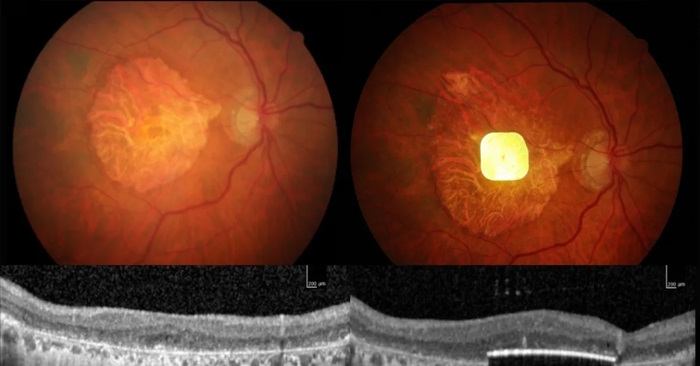
AMD is the most common cause of blindness in adults over 65. The disease affects the macula, or the central part of the retina, and leads to loss of central vision. In advanced AMD, a process called geographic atrophy causes significant damage to retinal cells, potentially leading to complete blindness in that eye. Geographic atrophy affects approximately 5 million people worldwide.
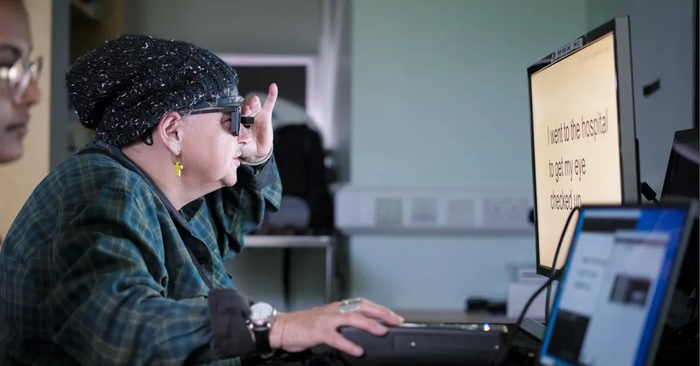
" Before the transplant, I felt like I had two black discs in my eyes, with the outer parts distorted, " said Sheila Irvine, a study participant diagnosed with AMD.
In a small-scale clinical trial, 38 AMD patients in Europe had a tiny electronic chip implanted under the center of the retina, beneath the dead cells. This chip wirelessly connected to a pair of augmented reality glasses attached to a small computer that each person wore on their waist.
This device, called a photoelectric retinal implant microarray system or PRIMA system, uses a video camera in the glasses to capture images of text. The glasses then project that image as infrared light onto an implanted chip. The chip converts the light into electrical signals, which the brain interprets as images.
Irvine shared: " This is a new way of seeing things through your own eyes. Relearning to read isn't easy, but the more time I spend, the more I learn. "
Participants in the study underwent months of training to learn to read using the new device. They also encouraged patients to practice using the device in new ways. Irvine used his device to solve crossword puzzles, while another patient used it to navigate the Paris subway system. The camera's zoom function also helped users read small print, such as on prescriptions.
However, the PRIMA system has some limitations, Dr. Demetrios Vavvas, director of retinal services at Mass Eye and Ear, who was not involved in the study, told NBC News. In its current form, the device only restores black and white vision, not color or grayscale vision, so it cannot be used for facial recognition. Additionally, it remains unclear whether the device will maintain its effectiveness after many years of use.
However, "as versions of this device improve, it could become a real solution for a group of patients with vision loss ," Vavvas told NBC.
Final Thoughts
Understanding what is so special about this microchip that it helps blind people regain their sight makes it easier to evaluate the information and apply the most relevant recommendations. Focus on the key points above and verify details that may change over time.
FAQ
What is what is so special about this microchip that it helps blind people regain their sight?
Learn what is so special about this microchip that it helps blind people regain their means.
What key points does this article cover?
The article explains the core concept, important considerations, and practical details readers should understand.
How can you use this information in practice?
Use the explanations to compare options, verify important details, and make a more informed decision. Apply the recommendations that best match your goals and situation.
Related Articles
 Science Discovered the New Blind Fish in the Cave Meghalaya Dark4 minutes read
 Apple Is Working on an AI Agent That Can Describe Street View Scenes6 minutes read
 How to Describe a Color to a Blind Person: Step-by-Step11 minutes read
 200+ First Sight Words for Children Learning English6 minutes read
 Top 10 Most Exotic Wristwatch Designs on Earth4 minutes read
 What Is a Smart Blind?4 minutes read
Reader Comments 0
Sign in with email or Google to join the discussion.