Table of Contents
This updated guide explores visa is hatching an idea for an AI credit card with practical details, clear explanations, and useful takeaways. Visa is working on a project that will allow AI to use your credit card to make purchases, a significant step forward in its ambition to move intelligent programs beyond generating text or searching for information to performing real-world tasks involving money.
AI agents (such as OpenAI's Operator) are software designed to perceive their environment, make decisions, and act toward specific goals, often operating autonomously or semi-autonomously. They can be thought of as digital assistants, capable of controlling interfaces and interacting with online services to complete tasks — like some experimental agents that browse the web automatically. To date, the main shortcoming of AI agents has generally been the ability to access secure payments.
Visa believes that connecting AI systems to their payment network can create a real revolution. Users just need to set their budget and preferences, and the AI agent will automatically find goods to buy (groceries, plane tickets.) without you having to choose "Pay".
Jack Forestell, Chief Product & Strategy Officer of Visa, likened the initiative to 'a revolutionary one, similar to the birth of e-commerce'. Visa has just announced details of the Visa Intelligent Commerce program, which aims to ensure the reliability and security of new types of shopping. The pilot project connects the Visa payment network with AI systems from Anthropic, Microsoft, OpenAI, Perplexity, Mistral (France), in collaboration with IBM, Stripe, Samsung. The expanded version is expected to launch next year.
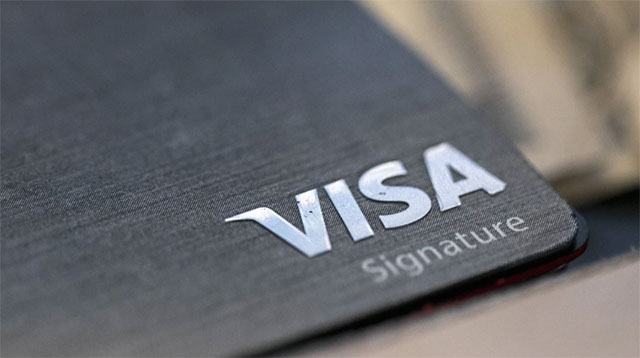
From a user perspective, the benefits are pretty clear: AI agents shop and pay within the boundaries you set. Visa spent six months working on technical and security challenges, including authentication, spending limits, and authorization. The company launched 'AI-Ready Cards' — which use tokenized digital certificates to replace sensitive card information. The system asks for explicit user consent, verifies identity, and only triggers payment when specified.
'Early versions of AI-based agent commerce are doing a great job at shopping, but they struggle with payments,' Forestell said. 'When it comes to payments, agents often ask users to handle it themselves.' By integrating with the Visa network, the AI platform can hand off payments to a proven system, leveraging Visa's experience in risk and fraud management.
To enable agents to securely process funds, Visa requires user authorization before each transaction and adherence to spending limits. Commercial signals are shared in real time, helping to monitor transactions and resolve disputes. Initially, agents will request authorization for large transactions (like airline tickets), gradually becoming autonomous within budget limits.
With user consent, the agent can access purchase history to make personalized recommendations, similar to those on e-commerce sites. Visa believes that AI agents are best suited for routine errands or complex tasks like booking travel, saving users time. By combining AI autonomy with payment expertise, Visa hopes to enable personalized commerce without manual effort. Forestell believes this idea will help shape a new standard for e-commerce — with an impact on par with the advent of online shopping.
FAQ
What is the main takeaway about Visa Is Hatching an Idea for an AI Credit Card?
The key is to understand the core idea, compare the available options, and apply the practical guidance that matches your situation.
What should beginners know about Visa Is Hatching an Idea for an AI Credit Card?
Start with the essential steps and terminology. Avoid changing advanced settings until you understand how they affect performance, privacy, cost, or compatibility.
How can I use this information in practice?
Follow the relevant section in order, test one change at a time, and confirm the result before moving to the next step or recommendation.
Related Articles
 When Should You Not Use a Credit Card for Payment?7 minutes read
 Credit Card Tips: 7 Steps to Use a Secure Credit Card Online5 minutes read
 Salespeople Use Superhuman Memory to 'Store' Information on More3 minutes read
 3 Credit Card Security Errors and How to Secure Credit Card8 minutes read
 Apple Card Vs. Amazon Prime Rewards Visa: Which Credit Card8 minutes read
 Some Things to Keep in Mind When Using Credit Cards8 minutes read
Reader Comments 0
Sign in with email or Google to join the discussion.