Table of Contents
Explore the strange history of global internet outages, including the key concepts, practical examples, important considerations, and useful guidance.

It's a reminder of how fragile the internet services we rely on are. On Monday, October 20, 2025, millions of users woke up to find their favorite apps, gaming sites, online banks, and internet tools inaccessible. The problem was blamed on a database service error provided by Amazon Web Services (AWS), the online retailer's cloud computing division.
AWS provides online computing infrastructure for millions of websites and platforms for major companies. The outage affected hugely popular games like Roblox, Fortnite, and Pokémon Go, social media platform Snapchat, productivity tools Slack and Monday.com, along with dozens of banks.
This is the latest in a series of serious incidents that have occurred on the internet in recent times. As our infrastructure becomes increasingly complex with the internet, this will not be the last catastrophic online incident. The history of computing is full of examples of the fragility of the internet, and past incidents offer some insight into how we might feel on the day the internet goes offline.
On July 19, 2024, the world woke up to what many called the worst digital crisis of all time. A faulty software update from cybersecurity giant CrowdStrike crashed some 8.5 million computers, flashing Microsoft's dreaded "blue screen of death" across the globe. Airlines canceled more than 46,000 flights in a single day, according to FlightAware. Hospitals canceled surgeries. 911 emergency services faced disruptions in the United States. Film Forum, an arthouse theater in New York, switched to cash payments when its credit card system crashed. Microsoft and CrowdStrike came up with a solution, but the disruption continued for days afterward. Frustrated IT professionals said it was a reminder never to roll out updates on Fridays.
'We pay a price for the convenience we enjoy,' said Ritesh Kotak, a technology and cybersecurity analyst. 'It will happen again, and CrowdStrike is technically pretty easy to fix. Next time, we may not be so lucky.'
An error in the matrix
One of the first major outages occurred in 1997 due to an error at Network Solutions Inc., one of the major domain registrars that assigned domain names to websites. According to the New York Times, a misconfigured database crashed all websites ending in.com or.net. It took down about a million websites, a huge chunk of the internet at that time. Some people didn't receive emails. Countless web searches ended in frustration. Some businesses couldn't reach customers, but overall, the problems were minimal.
However, with the internet now touching almost every aspect of our daily lives, any incident that comes close to the Network Solutions outage has much larger consequences. Twenty-one years later, for example, a malware attack on the community of Matanuska-Susitna, Alaska, caused a series of digital services to go down. The internet outage sent 100,000 people back in time.
We will need a larger cable
Sometimes the problem is physical. For a time, Armenia's entire internet connection depended on a single fiber-optic cable running through Georgia. If that sounds precarious, you're right. In 2011, a 75-year-old woman cut off 2.9 million Armenians' internet connection by severing that cable with a shovel near the village of Ksani, Georgia. The woman, who was looking for copper at the time, was arrested but later released due to her age. She said she had no idea the internet existed.
Others feel the absence of the internet more acutely, especially if they work in an office. There is no way to guarantee stability when you have thousands of miles of cable, which highlights the importance of building redundancy into your digital infrastructure.
This is clear evidence that, to some extent, the internet is really just a series of pipes. Pensioners aren't the only threat to those pipes, either. In 2017, the entire Zimbabwe lost internet access for half a day. Local newspapers reported that a tractor had severed a cable in South Africa.
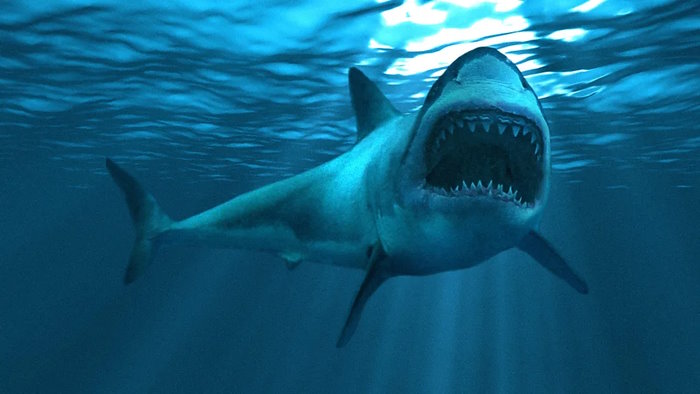
The fiber optic cables in our backyards need to be protected from humans, but the thousands of miles of fiber optic cables that stretch across the ocean floor face their own dangers. Sharks have a mysterious penchant for chewing on underwater cables, which has caused power outages in the past. There is a long history of tooth marks on these undersea cables, not just from sharks but also from other fish and barracuda. A tooth can penetrate insulation and mix with seawater to ground electrical wires. According to a report from the United Nations Environment Programme, it has been causing problems for telephone and telegraph cables since at least 1964. Today, Google is said to have covered its undersea cables with a Kevlar-like material, in part to prevent sharks and other sea creatures from biting into internet cables.
Digital consequences
A quarter of Canada's internet and phone service was shut down in 2022 due to a failure at Rogers Communications, one of the country's largest telecommunications providers. The outage gave 11 million people a preview of the CrowdStrike disaster in July 2024. Emergency services were unable to take phone calls, hospitals cancelled appointments, and businesses across the country were unable to accept debit card transactions. Canadian R&B star The Weeknd was forced to postpone a concert.
Kotak, who lives in Toronto, said the Rogers power outage didn't have a major impact on his life, but others weren't so lucky. " A friend of mine missed her bar exam ," he said. " Her whole family is Rogers clients, and she couldn't have known the exact address and exam room number because she just wrote down the information in an email ."
Lawmakers can prevent these problems by mandating safety measures in the tech and telecom industries, Kotak said. But sometimes, governments are primarily responsible for internet shutdowns.
Disabling the internet is also a common method of government censorship, both in authoritarian governments and stable democracies. ' It's a pretty serious problem ,' said Zach Rosson, a data analyst at Access Now, a digital rights advocacy group. 'By our definition, there have been more than 1,500 internet shutdowns since 2016 ,' by governments, militaries, and police forces.
In fact, the CrowdStrike disaster overshadowed an example that began the same day. Bangladesh faced a near-total internet outage after the government shut down following violent clashes between protesting students and police. The internet shutdown was accompanied by a curfew, and reporters said the lack of internet connectivity made it harder to get accurate information. At least 150 people were killed in the clashes, with some local media putting the number much higher.
There are growing efforts to understand internet access as a human right. ' Think about all the things it enables: employment, health care, education, communication, business, and simply understanding the world around you. We found that cutting off the internet actually hinders humanitarian delivery and prevents the recording of atrocities ,' Rosson said.
India may be the world leader in using internet blackouts to quell unrest, but it's a common tactic that has been deployed in at least 83 countries, including Iran, Russia, Algeria, Senegal, Tanzania, Cameroon and Venezuela, according to Access Now.

Big problem
In places where internet connectivity relies on a fiber optic cable, this creates a clear vulnerability. After decades of the internet woven into every corner of our lives via wired connections and WiFi, you might think there would be more built-in safeguards to keep the world running. But according to Casey Oppenheim, CEO of Disconnect, a cybersecurity company, the opposite is largely true.
' For me, that's the real lesson from the CrowdStrike incident ,' Oppenheim said. CrowdStrike holds a huge market share in cybersecurity, serving more than half of the Fortune 500 companies. ' The less diverse the ecosystem, the more vulnerable you are, and there's no diversity at the top of the internet supply chain. You can pick any core area of the internet and you'll see a very short list of companies that control it. '
In other words, Oppenheim said, the risk of a catastrophic internet crash is another consequence of the tech industry's "monopoly power ." When so much depends on a single company, one wrong move could bring it all down. " When the government is dealing with antitrust issues, that's something we should be thinking about ," he said.
Final Thoughts
Understanding the strange history of global internet outages makes it easier to evaluate the information and apply the most relevant recommendations. Focus on the key points above and verify details that may change over time.
FAQ
What is the strange history of global internet outages?
Explore the strange history of global internet outages, including the key concepts, practical examples, important considerations, and useful guidance.
What key points does this article cover?
The article focuses on An error in the matrix, We will need a larger cable, Digital consequences, with practical explanations and examples.
How can you use this information in practice?
Use the explanations to compare options, verify important details, and make a more informed decision. Apply the recommendations that best match your goals and situation.
Related Articles
 Warning: Global Internet May Be Interrupted in the Next 48 Hours3 minutes read
 How to Prepare for Major Power Outages: Step-by-Step Guide5 minutes read
 How to Troubleshoot Network Outages and Internet Connection4 minutes read
 Could the Global Internet Completely Shut Down: Explained5 minutes read
 Strange Dark Days in History You May Not Know About9 minutes read
 The Internet Will Only Be the Domestic Network of Countries in 20144 minutes read
Reader Comments 0
Sign in with email or Google to join the discussion.