Table of Contents
Explore internet of beings.
In the 1966 film Fantastic Voyage, a spacecraft and its crew are shrunk down to microscopic size and injected into an injured astronaut to remove a life-threatening blood clot in his brain. The Oscar-winning film – later adapted into a novel by Isaac Asimov – seemed like pure science fiction at the time. Yet it predicted what could be the next revolution in medicine: the idea of ever-smaller and more sophisticated sensors entering the body, connecting humans to the internet.
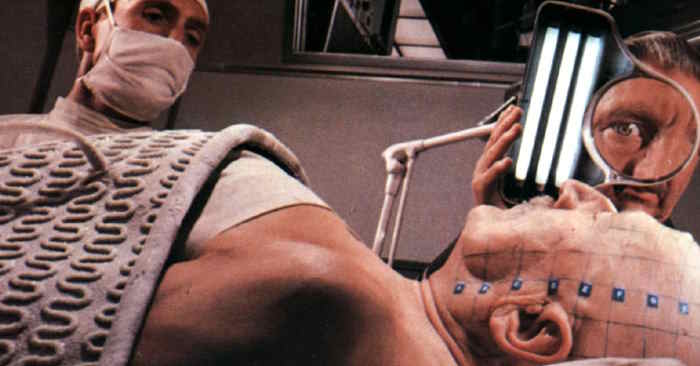
This 'Internet of Beings' could be the third and final stage in the evolution of the internet. After connecting computers in the first stage and everyday objects in the second stage, global information systems will now be directly connected to the internal organs of the human body. According to natural scientists who recently met in Dubai for a conference called Prototypes for Humanity, this scenario is becoming technically feasible. The impact on individuals, industries and society will be enormous.
The idea of digitizing the human body inspires both dreams and nightmares. Some Silicon Valley billionaires fantasize about immortality, while security experts worry that the risks of hacking the human body outweigh current cybersecurity concerns.
Advantages of the Internet of Beings
First, continuous monitoring of health conditions will make it much easier to detect diseases before they develop. Treatment is much more expensive than prevention, but sophisticated monitoring can replace many drugs with less invasive measures – dietary changes or more personalized exercise programs.
Millions of deaths could be prevented simply by sending timely warnings. In the United States alone, 170,000 of the 805,000 heart attacks each year are 'silent' because people don't recognize the symptoms.
Second, sensors—or biorobots, because they will likely be made of gel—are increasingly capable of not only monitoring the body but also actively healing it. They could release a dose of aspirin when they detect a blood clot, or trigger a vaccine when a virus attacks.
The mRNA vaccines being developed for COVID may have opened that frontier. Advances in gene editing technology could even lead to biorobots that can perform microsurgery using tiny 'scissors' made from proteins to repair damaged DNA.
Third, and most importantly, medical research and drug discovery will be completely turned upside down. Today, scientists propose hypotheses about substances that might combat certain diseases, then test them through expensive and time-consuming experiments. In the era of the internet of things, this process is reversed: huge databases create models that show which methods work for a problem, and scientists work backwards to find out why. This will make the development of solutions much faster, cheaper, and more precise in the future.

Radical transformations
The era of one-size-fits-all medicine is over, but the internet of things will go even further. Individuals could receive daily advice on medication dosages that are tailored to small changes like body temperature or sleep quality.
The organization of medical research itself will change radically. Huge amounts of data from natural living organisms may reveal that some headaches are caused by the way we walk, or that the brain and feet influence each other in unexpected ways.
Research currently focuses on specific diseases and organs. In the future, this could shift to increasingly sophisticated ' digital twins ' – virtual models of a person's biology that are updated in real time using their health data. These simulations could be used to test treatments, predict how the body will react, and detect disease before it appears. Such a shift would fundamentally change our conception of the life sciences.
The goal here is not to defeat aging, as some transhumanists claim. More specifically: to make health care accessible to all Americans, to save the UK's National Health System (NHS), to defeat cancer, to reach poorer countries, and to help people live longer without getting sick.
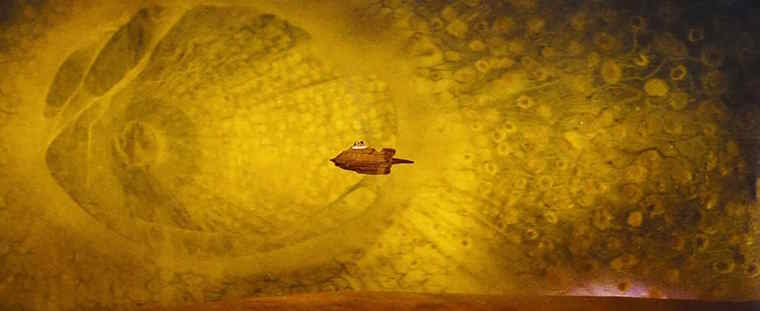
The nightmare, however, lies in losing our humanity while digitizing our bodies. The Internet of Things is one of the most exciting possibilities that technology is opening up – but we need to explore it carefully.
Final Thoughts
Understanding internet of beings makes it easier to evaluate the information and apply the most relevant recommendations. Focus on the key points above and verify details that may change over time.
FAQ
What is internet of beings?
Explore internet of beings.
What key points does this article cover?
The article focuses on Advantages of the Internet of Beings, Radical transformations, with practical explanations and examples.
How can you use this information in practice?
Use the explanations to compare options, verify important details, and make a more informed decision. Apply the recommendations that best match your goals and situation.
Related Articles
 10 Facts That Amaze You About Your Human Body6 minutes read
 18 Interesting Facts About the Human Body That Make You Say7 minutes read
 8 Solutions to Improve Health to Increase Immunity for the Body4 minutes read
 The Human Body Changes Throughout Life but Only One Part Does Not2 minutes read
 What Does the Body Shape Say About Your Health2 minutes read
 29 Interesting Facts About the Human Body11 minutes read
Reader Comments 0
Sign in with email or Google to join the discussion.