Table of Contents
A new study from NASA and Toho University uses supercomputers to predict the timeline of habitability on Earth, revealing how life might eventually disappear.
A new study by NASA and Toho University uses supercomputers to predict the timeline of habitability on Earth, revealing a scenario where life will eventually disappear due to the Sun's increasing temperature.
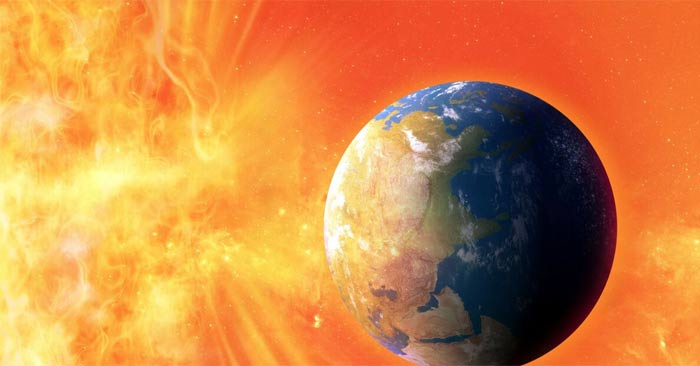
This gradual process, taking place over billions of years, would dramatically alter the atmosphere and ecosystem. While still far-fetched, the study highlights the need to prepare through technological solutions and space colonization to ensure humanity's survival.
Supercomputer calculates the time of Earth's destruction
A collaborative study by NASA and Japan's Toho University used sophisticated supercomputers to model the habitability of Earth over the next billion years. The study produced a comprehensive timeline predicting the eventual demise of life on Earth, driven by steady but irreversible environmental changes, such as the rising temperature of the sun accelerating climate change and altering atmospheric conditions.
Research identifies gradual and persistent changes to the Earth's environment that eventually render it uninhabitable, with far greater impacts on ecosystems and the survival of life than the human-caused climate crisis.

The Earth will slowly die as the sun heats up
Research shows that the ultimate cause of Earth's demise as a habitable planet is the Sun. Over the next billion years, the Sun will become increasingly more powerful. This increase in the Sun's intensity is a normal part of its life cycle, and although it currently supports life on Earth, the additional heat will eventually exceed the planet's ability to maintain conditions suitable for life.
As solar radiation increases, it will increasingly heat the Earth's surface, pushing temperatures beyond what can sustain even the most resilient life forms. Scientists predict that life on Earth will become unsustainable by the year 1,000,002,021, when the planet will reach conditions so extreme that even the most resilient organisms will no longer be able to sustain life. This is an example of the long-term nature of how Earth will eventually lose its habitability.
The decline of the Earth will begin long before it ends.
Although life on Earth will end in a little over a billion years, the planet's descent toward that goal will begin much sooner. As the Sun's energy output increases, several significant changes to Earth's atmosphere and environmental conditions will initiate the slow, irreversible decline of life.
Reduced oxygen concentration
Perhaps the most profound impact of increased solar radiation will be a dramatic decline in Earth's oxygen levels. As temperatures rise, Earth's ecosystems will face significant challenges in creating and storing oxygen. This decline in oxygen levels will exacerbate the problems for all aerobic life forms, as they will have difficulty growing in an oxygen-depleted environment.
Temperatures rise and air quality declines
Research predicts that Earth's temperature will increase exponentially as the Sun continues to radiate heat. Not only will this increase lead to warmer global temperatures, it will also have a devastating impact on air quality. Air pollution will increase as temperatures rise, causing more harm to plant and animal life. The combination of hot and cold temperatures and poor air quality will be one of the main indicators that the Earth is losing its ability to be a habitable environment.
How solar activity is shaping Earth's future?
The study's models also show that solar radiation will significantly affect Earth's climate. Increased solar activity will impact weather patterns, leading to conditions that make life increasingly unsustainable. The study suggests that this process will occur gradually over a long period of time, implying a barely perceptible but persistent change.
Research shows we are already experiencing early signs of changes that will eventually make Earth uninhabitable. Solar events, including solar storms and coronal mass ejections (CMEs), have been occurring with increasing frequency. These phenomena, in which the Sun emits large amounts of energy and charged particles, have a marked impact on Earth's magnetic field and atmosphere.
In fact, the most powerful solar storm in 20 years was recently recorded, marking a significant event in the transition to a more hostile environment. These increased solar activity are not just theoretical predictions, but provide real evidence of long-term changes that could make Earth uninhabitable. The increasing severity of these events suggests that the world is already experiencing the consequences of the Sun's shift, consequences that will only get worse over the next billion years.
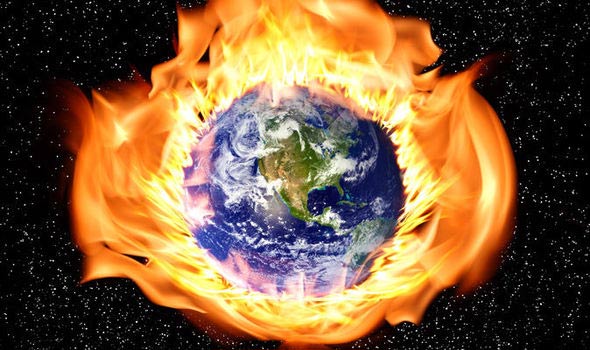
The impact of climate change on the long-term habitability of Earth
While the study's solar-driven evolution timeline is measured in billions of years, the current human-caused climate crisis could be accelerating environmental stress on much earlier timescales. Human actions, such as burning fossil fuels and deforestation, have already caused major environmental changes, such as rising global temperatures and melting polar ice caps.
The rapid acceleration of climate change suggests that Earth's environment is becoming increasingly hostile, much sooner than solar models predicted by billions of years. Rising temperatures, more extreme weather, and increasingly chaotic ecosystems are signs that the planet's ability to sustain life is declining significantly faster than originally expected. In this context, human-caused climate change is turning the already inevitable effects of solar heat into a 'double whammy' for Earth's long-term habitability.
FAQ
What should you know about when will the earth be destroyed?
In practical terms, a new study from NASA and Toho University uses supercomputers to predict the timeline of habitability on Earth, revealing how life might eventually disappear.
Why does when will the earth be destroyed matter?
The article highlights that supercomputer calculates the time of Earth's destruction A collaborative study by NASA and Japan's Toho University used sophisticated supercomputers to model the habitability of Earth over the next billion years.
What is the main takeaway?
The main takeaway is that the study produced a comprehensive timeline predicting the eventual demise of life on Earth, driven by steady but irreversible environmental changes, such as the rising temperature of the sun accelerating climate change.
Related Articles
 Will the Earth Be Affected if the Comet Once Destroyed5 minutes read
 What Is Supercomputer Used For?4 minutes read
 Google's Quantum Supercomputer Can Solve the 'Impossible'3 minutes read
 Intel Unveiled Frontera, the Fastest Academic Supercomputer in11 minutes read
 What Is the Most Devastating Natural Disaster That the Earth Has Experienced?9 minutes read
 Calculated the Time When the 'moon Touched the Earth'3 minutes read
Reader Comments 0
Sign in with email or Google to join the discussion.